
CVS will fill a prescription with no insurance on file, and the price charged for that fill isn’t fixed. Without a plan attached to the claim, CVS bills what’s called the cash price, and a pharmacist can run the same fill through a discount card, check for a generic, or flag a manufacturer program before you pay.
The order matters. Once a fill is processed, switching payment methods usually means a second trip to the counter. This guide breaks down what actually moves the price at a CVS pharmacy, in the sequence a pharmacist would check it, and touches on why prices on the same drug swing so widely.
Key Takeaways
A few facts settle most of the confusion people run into at the counter:
- CVS fills prescriptions for uninsured customers at a cash price, and that price is quotable before the fill is processed.
- A prescription discount card is not insurance. It swaps the cash price for a pre-negotiated network rate and can’t be combined with insurance on the same fill.
- Comparing the cash price, a discount card price, and the generic version before paying is the single biggest lever most people skip.
- ExtraCare rewards at the pharmacy are free to join, but the ExtraBucks Rewards they generate can’t be applied to prescriptions or copays.
- A 90-day supply isn’t automatically cheaper without insurance. Check the cost per day, not just the total.
- Money paid through a discount card doesn’t count toward an insurance or Medicare deductible or out-of-pocket maximum.
- CVS’s own Rx Savings Finder tool checks for a cheaper generic or a manufacturer discount automatically when a prescription is processed.
Can You Fill a Prescription at CVS Without Insurance
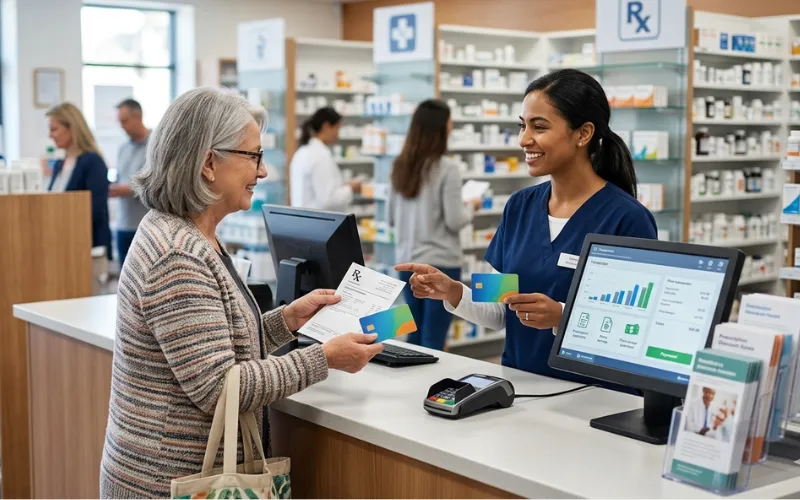
Yes. CVS doesn’t require insurance to dispense a prescription. With no active plan on file, the pharmacy processes the fill as a cash transaction, sometimes listed as the usual and customary price. You need a valid prescription from a licensed prescriber, and payment is due at pickup.
What changes without insurance is that no plan absorbs part of the cost, so the full price shows on the receipt unless a discount is applied first. That’s why the order you ask questions in at the counter changes what you end up paying.
How Much Does a CVS Prescription Cost Without Insurance
There’s no fixed price list, and any article that publishes one is guessing. Cash prices shift by medication, strength, quantity, store location, and the date you fill. Many generics for chronic conditions run cheap, while a brand-name drug with no generic equivalent can run into the hundreds each month.
CVS states on its own prescription savings page that 85% of its prescriptions cost less than $10 a month, though that figure blends insured and uninsured customers and counts a 90-day fill as three 30-day fills. The only number worth trusting is the one quoted for your exact drug, dose, and quantity.
Ask for the Cash Price Before the Fill Is Processed
Call ahead or ask at drop-off, before the prescription is completed. Give the drug name, strength, quantity, and the prescription number if you have it. The number speeds up the lookup, and it’s also what a technician needs to reprocess a fill under a discount card.
Ask two things: what the cash price is, and whether a lower price is available under anything the pharmacy can run right now. Reversing a paid claim to apply a card afterward is possible but slower, and some stores won’t do it same-day.
Compare a Prescription Discount Card Against the Cash Price
A discount card works like a coupon that swaps the cash price for a rate its administrator has already negotiated with the pharmacy network. You show the card, physical or digital, and the technician enters the group, BIN, and PCN numbers printed on it before finalizing the claim, a process covered in more depth here.
- A discount card is not insurance and doesn’t satisfy a coverage requirement.
- Prices differ by card, drug, and pharmacy, since each administrator negotiates its own rates.
- A card can’t be combined with insurance on the same fill, and usually can’t be stacked with a second card.
- Money paid under a card doesn’t count toward an insurance or Medicare deductible or out-of-pocket maximum.
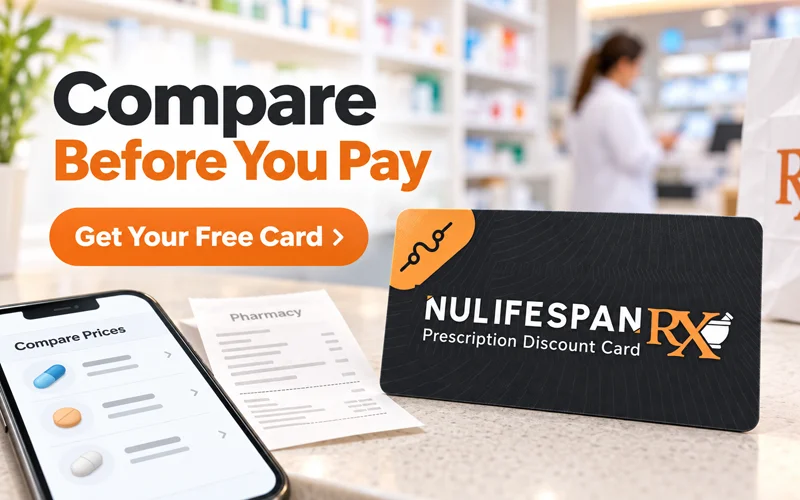
NuLifeSpanRx is one such program: free to use, not insurance, and accepted at CVS within a network of more than 35,000 pharmacies. Under its published program terms, you’re charged the lesser of the pharmacy’s cash price or the program’s discounted rate, so the card never raises what you’d have paid anyway. If cards make you uneasy in general, this addresses the usual concerns.
Other programs may still price a specific drug lower than any single card, which is why comparing takes priority over picking one and sticking with it for every prescription. A wider breakdown of stacking these methods goes deeper on that comparison.
Check Your Price Before You Go
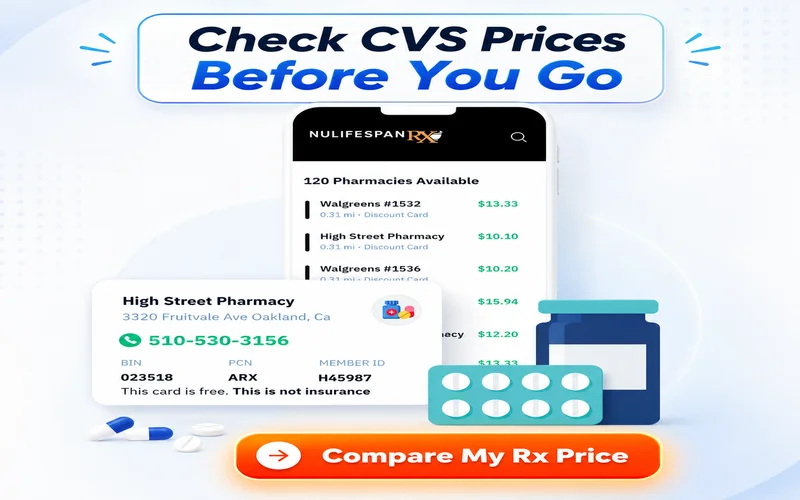
Prices change often and differ between nearby stores. Look up your exact drug, dose, and quantity with the NuLifeSpanRx pricing tool before you drive to CVS, then compare that number with whatever the pharmacist quotes at the counter. Whichever is lower is the one to use; figures online are estimates confirmed at pickup.
Let CVS’s Own Rx Savings Finder Do Some of the Work
CVS pharmacists have access to an internal system called Rx Savings Finder, built into both the pharmacy software and the CVS app. When a prescription is processed, it checks the drug against a lower-cost generic, a therapeutic alternative, a manufacturer discount tied to that medication, and whether a 90-day fill would cost less per day than a 30-day one.
The tool leans toward insured patients for formulary matching, but the generic and supply-length comparisons still apply when you’re paying cash. Ask the pharmacist directly whether it’s flagging anything for your prescription. If it is, they can contact your prescriber to confirm a switch before you pay.
Ask About a Generic or Lower-Cost Alternative

Generic drugs account for roughly 90% of prescriptions filled in the U.S. and meet the same FDA standards for quality, strength, and performance as their brand-name counterparts. For many prescriptions, switching from brand to generic is the single largest price drop available at the counter.
Pharmacists can’t make every substitution alone. In most states, a pharmacist may dispense a therapeutically equivalent generic unless the prescriber restricted it, but moving to a different drug in the same class usually needs the prescriber’s sign-off. Never split, stretch, or stop a medication to save money without talking to your pharmacist first.
Occasionally a higher strength costs less than a lower one. Why a higher dose can cost less covers the mechanics, and the cash price breakdown of a fluticasone propionate HFA inhaler shows one brand-name product where it’s worth asking.
Compare 30-Day and 90-Day Costs
A 90-day supply is often cheaper per day, but not always when you’re paying cash. CVS frames the saving around insured fills, and some discount card rates price per transaction, so three 30-day fills can occasionally beat one 90-day fill. A closer look at lowering a monthly prescription bill covers other angles worth checking.
Ask for both quotes, divide each by the days it covers, and compare. Confirm the medication is actually suited to a longer supply, too. Controlled substances, drugs still being titrated, and short courses are usually filled 30 days or less.
Check Manufacturer and Federal Savings Programs for Brand-Name Drugs
These get confused constantly, and mixing them up costs money. A manufacturer copay card comes from the drug’s maker, applies to one specific brand, and is usually limited to people with commercial insurance. It’s typically unavailable if you’re uninsured or on Medicare or Medicaid.
A patient assistance program, run by a manufacturer or nonprofit, can supply a drug at low or no cost to people who meet income and coverage criteria, though applications take time and often need your prescriber’s involvement. TrumpRx is a federal platform that launched February 5, 2026, listing discounted cash-pay prices on more than 40 brand-name medications, and CVS has stated it accepts these prices at its locations.
As with a discount card, TrumpRx pricing can’t be combined with insurance and doesn’t count toward a deductible, and it isn’t available at CVS stores in California or Massachusetts, where prescription coupons aren’t permitted under state law.
| Option | Who can use it | Works on | Counts toward a deductible |
|---|---|---|---|
| CVS cash price | Anyone | Any drug | No |
| Prescription discount card | Anyone, no eligibility check | Brand and generic | No |
| Manufacturer copay card | Usually commercial insurance only | Specific brand drugs | Varies by plan |
| Patient assistance program | Income and coverage criteria apply | Specific brand drugs | Not applicable |
| TrumpRx | Cash-pay patients outside CA and MA | Listed brand drugs | No |
If your medication is a newer, expensive brand-name drug, check the manufacturer’s own site and TrumpRx before assuming a discount card is automatically the cheaper route. The difference between a copay card and a discount card is worth understanding before comparing the two.
Understand CVS’s Own ExtraCare Rewards at the Pharmacy
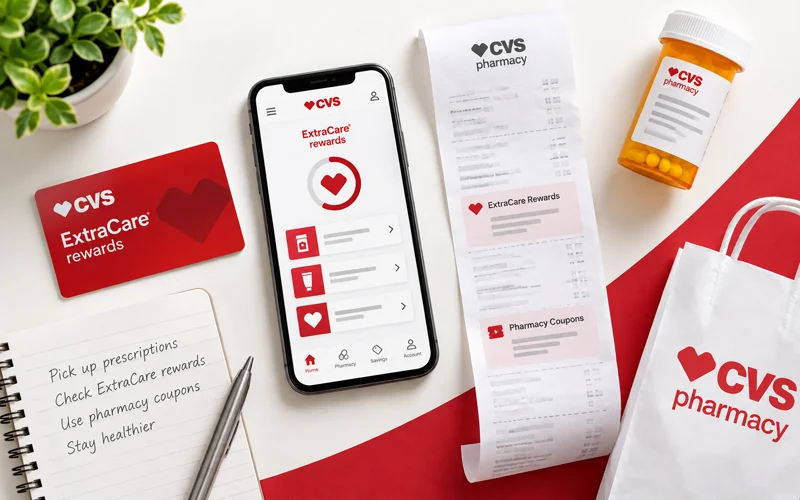
ExtraCare is free, and members can opt into rewards at the pharmacy separately, which requires signing a CVS Pharmacy marketing authorization since it lets CVS use prescription information to run the program. Under current ExtraCare terms, you earn credits for eligible activity and receive $2 in ExtraBucks Rewards for every 4 credits, capped at $50 per person a year. A 30-day fill earns 1 credit, a 90-day fill earns 3, a vaccination earns 3, and adding a family member earns 1.
Two limits matter if you’re uninsured. ExtraBucks Rewards can’t be redeemed on prescriptions, copays, or MinuteClinic services, so they offset other purchases, not your medication bill. Rewards at the pharmacy also aren’t available in Arkansas, New Jersey, or New York, and don’t apply to controlled substances or fills transferred in from stores in Alabama, Illinois, Mississippi, Oregon, or Tennessee.
CVS is also piloting a different structure in Oregon, Pennsylvania, and Washington: $5 in ExtraBucks Rewards per patient per month instead of credits, capped at $60 a year. The pilot ended in Massachusetts, Ohio, and South Carolina in February 2026. Terms shift, so confirm what’s live at your store.
Medicare, Medicaid, and OTC Allowances
Some Medicare Advantage and Medicaid plans include an allowance for over-the-counter items that can be spent at CVS. That’s a plan benefit, not a CVS-wide one, and it typically covers non-prescription items like pain relievers or first-aid supplies rather than prescription medication itself. Check your plan’s own materials for what’s eligible. Separately, the Part D coverage gap, once called the donut hole, no longer exists. Part D now runs on a single annual out-of-pocket cap, $2,100 for covered drugs in 2026.
Vaccines and MinuteClinic Visits
CVS offers vaccines for people age 3 and up, with availability varying by state. MinuteClinic charges self-pay patients a set price per visit, and any labs, tests, or medication are billed separately. Published price lists go stale fast, so check the current figure on the MinuteClinic pages or ask the clinic directly rather than trusting a number from an article. A prescription written during that visit can still go through a discount card at the pharmacy counter the same trip.
Compare CVS With Other Pharmacies Nearby
The same prescription can carry very different cash and card prices at two pharmacies a mile apart, since each chain negotiates its own network rates. Independent, supermarket, and warehouse-club pharmacies are all worth a quick call, a comparison covered in full here.
Don’t assume CVS will match a lower price found elsewhere. CVS doesn’t publish a prescription price-matching policy, and staff aren’t obligated to honor a competitor’s quote. If a maintenance medication is meaningfully cheaper somewhere else, transferring the prescription is the more reliable move.
Longs Drugs in Hawaii Works the Same Way
Longs Drugs stores in Hawaii are owned by CVS Health and run on the same pharmacy systems and ExtraCare program, so a discount card is accepted there the way it would be at any mainland CVS. Ask for the Longs Drugs cash price and the card price separately, since pricing can still differ store to store even within the same chain.
Myth vs. Fact: Paying at CVS Without Insurance
A few habits and assumptions get repeated so often they start to sound true. Here’s where they break down.
Myth: The pharmacist automatically applies the cheapest price.
Fact: Pharmacy software defaults to whatever payment method is presented first. Nothing runs a comparison unless you ask for one.
Myth: A 90-day supply is always the better deal without insurance.
Fact: Some discount rates price per fill, so three 30-day fills occasionally beat one 90-day fill. Divide by days covered and compare before assuming.
Myth: Insurance always beats paying cash.
Fact: With a high, unmet deductible, a cash or discount price can be lower than what insurance would charge for that same fill.
Step-by-Step CVS Savings Checklist
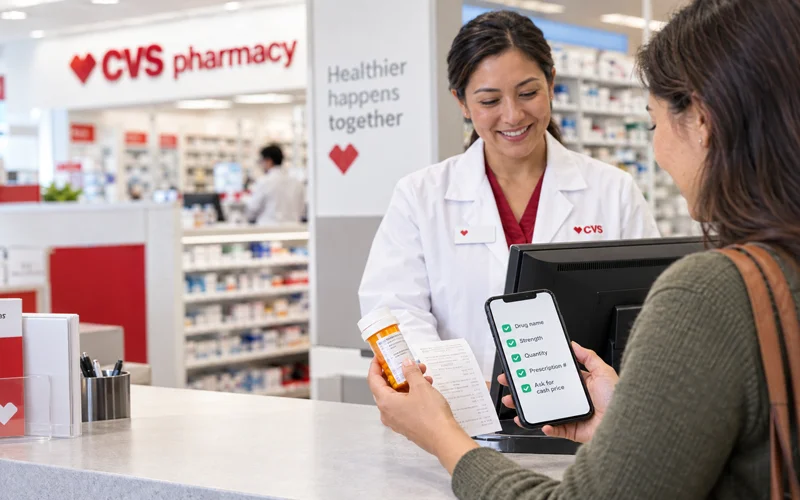
Here’s the order to work through at the counter, start to finish:
- Confirm the drug name, strength, quantity, and prescription number.
- Ask CVS for the cash price before the fill is processed.
- Compare that price against a reputable discount card for the same drug and quantity.
- Ask the pharmacist whether Rx Savings Finder shows a cheaper generic or manufacturer discount.
- Confirm whether a generic or lower-cost alternative is available.
- Compare 30-day and 90-day totals by the day, not just the total.
- Check manufacturer or TrumpRx pricing if the drug is a newer brand-name medication.
- Choose the lowest legitimate option and confirm the final price before paying.
Questions Worth Asking at the Counter or an AI Assistant
If you’re comparing prices from your phone before you even walk in, these are useful prompts:
- “What’s the difference between a cash price and a discount card price at a pharmacy?”
- “Is there a generic version of [drug name], and how much less does it cost?”
- “Does [drug name] have a manufacturer copay program for uninsured patients?”
- “Can I use a prescription discount card if I already have insurance?”
The Bottom Line
Saving at CVS without insurance comes down to a sequence, not a single trick: get the cash price, compare a free discount card such as NuLifeSpanRx for the same drug and quantity, ask about a generic and whether Rx Savings Finder shows anything cheaper, check supply length, and look at manufacturer or federal programs for brand-name drugs. Pay the lowest option and confirm the total before the transaction closes.
Prices move and programs change, so the pharmacist in front of you is the person best placed to say what applies to your prescription today. Reviewed by our Pharmacist Advisory Team, which checks all prescription savings content against current pharmacy pricing practices and FDA generic drug standards.
NuLifeSpanRx is a free prescription discount program. It is not insurance and it is not a Medicare prescription drug plan. Discounts vary by prescription and pharmacy. Purchases made under the program do not count toward insurance or Medicare deductibles or out-of-pocket maximums. Speak with your pharmacist or prescriber before changing any medication, dose, or refill quantity.
Frequently Asked Questions
These are the questions people ask most often after their first cash-pay fill at CVS.
Can I fill a prescription at CVS without insurance?
Yes. CVS fills prescriptions for uninsured customers and charges its cash price. You need a valid prescription, and you pay in full at pickup. Asking for the cash price before the fill is processed gives you the chance to apply a discount first.
Does CVS accept prescription discount cards?
Yes. CVS pharmacies process claims from major prescription discount programs. You present the card, physical or digital, and the technician enters the identifying numbers before finalizing the claim. Acceptance doesn’t guarantee a lower price on every medication.
Is the CVS cash price cheaper than a discount card price?
Sometimes. For inexpensive generics, the cash price is occasionally lower, while for brand-name drugs the card rate is often lower. Ask for both numbers and pay whichever is less.
Can I use ExtraCare rewards to pay for a prescription?
No. ExtraBucks Rewards can’t be redeemed on prescriptions, copays, or MinuteClinic services. You can earn credits for filling prescriptions once you opt in to rewards at the pharmacy, but the rewards themselves are spent on other items in the store.
Can I use an HSA or FSA card for a cash-pay prescription?
Generally, yes. Prescription medication is normally an eligible expense, and paying cash rather than using insurance doesn’t change that. Eligible item lists vary by benefits administrator, so confirm with your plan and keep the receipt.
Does CVS match prescription prices from another pharmacy?
CVS doesn’t publish a prescription price-matching policy, so don’t count on it. If another pharmacy quotes a lower price for the same drug and quantity, transferring the prescription is more reliable than asking for a match.
Can Medicare patients use a prescription discount card at CVS?
Yes, on a cash-pay basis, and it can be worth doing when a drug isn’t covered by the plan or when the card price beats the copay. The card and Medicare can’t be applied to the same fill, and card purchases don’t count toward a Part D deductible or the annual out-of-pocket cap.
Does CVS have its own prescription discount card for uninsured customers?
CVS doesn’t run its own branded prescription discount card, but it accepts outside discount card programs, and its Rx Savings Finder tool checks for lower-cost generics and manufacturer discounts automatically at the counter.
Can I use CVS ExtraCare coupons on prescriptions?
No. ExtraCare coupons and ExtraBucks Rewards apply to store purchases, not to prescription copays or cash prices. A prescription discount card is the tool that lowers the price of the medication itself.
Does CVS offer an age-based discount on prescriptions?
No, CVS doesn’t run its own age-based prescription discount. Some membership organizations offer their own free discount cards, which are accepted at CVS the same way any other discount card would be.




Trackbacks/Pingbacks