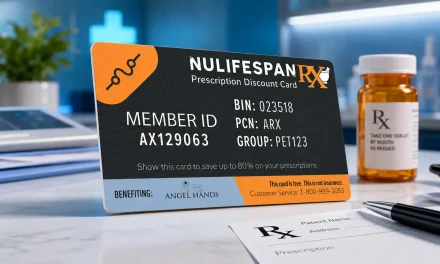
Pharmacy discount networks work by connecting consumers to pre-negotiated drug prices through partnerships between Pharmacy Benefit Managers (PBMs), pharmacies, and discount card providers. When you present a discount card at the pharmacy counter, you are tapping into a pricing system that was built long before you walked through the door.
The Players Behind the Price You See
Most people assume the price on a discount card is simply a coupon. In reality, it reflects a layered set of agreements between organizations that most consumers never interact with directly.
The three main parties involved are:
- Pharmacy Benefit Managers (PBMs), who do the heavy lifting of negotiating with drug manufacturers and pharmacies
- Pharmacies, who agree to honor discounted prices in exchange for increased foot traffic
- Discount card providers, who serve as the consumer-facing layer on top of those existing agreements
PBMs have been central to the U.S. prescription drug market since the 1960s. They use their bulk purchasing power to drive down acquisition costs, and that leverage is what makes significant savings on prescription medications possible for ordinary consumers.
How Network Formation Actually Happens
A pharmacy does not simply sign up and start offering discounts. Joining a discount network involves agreeing to reimbursement rates that are set by PBMs through formal network agreements. These agreements function similarly to insurance contracts, requiring pharmacies to honor a predetermined price when a discount card is presented.
Here is how network participation typically breaks down by pharmacy type:
- Large chain pharmacies join readily because high transaction volume offsets the reduced margin on each prescription
- Big-box retailers absorb the lower reimbursements by cross-selling non-prescription products to the same customers
- Independent pharmacies often struggle to participate because the fees charged by PBMs and discount card companies can eat into already thin profit margins
This is one reason drug prices vary so dramatically between pharmacy locations. Not every pharmacy is in every network, and even within the same network, the reimbursement rates can differ by location, chain, and volume tier.
The Negotiation Process That Sets Your Price
Before a single discount card is printed or downloaded, PBMs have already negotiated the rates you will see at the counter. They do this through several mechanisms working in parallel.
The process involves:
- Formulary management, where PBMs push specific generic drugs that cost less to procure, steering both pharmacies and patients toward lower-cost options
- Rebate negotiations with manufacturers and wholesalers, which reduce the net cost of brand-name drugs
- Reimbursement rate agreements, which set the ceiling on what pharmacies can charge when a discount card is used
Larger pharmacy chains accept lower reimbursement rates because the volume of customers these networks bring in compensates for the reduced per-transaction profit. That volume incentive is precisely why independent pharmacies sometimes offer better base pricing on certain medications outside of network agreements, while chain pharmacies may be more competitive on others.
How Consumers Actually Use These Programs
From a consumer standpoint, using a pharmacy discount network is straightforward. You obtain a card, either free through a provider’s website or app, and present it at the pharmacy alongside your prescription. No income verification, no insurance status check, and no prior approval is required.
The steps are simple:
- Download or print a discount card from a provider
- Search for your medication to compare prices at nearby pharmacies
- Present the card at the counter when filling your prescription
- Pay the discounted price directly, with no claims to file afterward
The most important habit to build is comparing prices before you commit to a pharmacy. What pharmacists are not required to tell you is that the cash price through a discount card is sometimes lower than your insurance copay, and they have no obligation to point that out. The comparison is yours to make.
Why Medication Prices Differ Even With a Discount Card
Even within the same discount network, the price for a given medication can vary from one pharmacy to the next. This surprises many people, but the explanation is straightforward once you understand how the network tiers work.
PBMs negotiate different rates with different pharmacy groups. A large national chain may have agreed to a different reimbursement structure than a regional chain, even though both accept the same discount card. On top of that, Walmart pharmacy prices behave differently from other chains because of Walmart’s own internal pricing model, which does not always align with standard PBM network rates.
This is why checking the price at multiple locations before filling a prescription is not just a good idea but a genuinely money-saving habit. The variation can be significant even for common generics.
How Pharmacies Get Compensated
For consumers, the transaction feels simple. For pharmacies, it is more complicated. When a discount card is used, the pharmacy receives the discounted price minus a small transaction fee paid to the PBM and the discount card issuer. On lower-cost generics, this can result in minimal profit or sometimes a small loss.
The financial reality for pharmacies breaks down like this:
- Independent pharmacies often lose money or break even on discounted transactions, which is why many are selective about which networks they join
- Chain and big-box pharmacies accept the reduced margins because they recoup through non-prescription sales and the long-term loyalty of the patients who come in
- Discount card issuers earn a transaction fee from the pharmacy on every discounted prescription filled
Despite the financial pressure, pharmacies that participate generally see benefits in patient retention. A customer who fills prescriptions regularly, even at a lower margin, is also buying vitamins, personal care products, and over-the-counter medications. That broader economic relationship is what keeps the network model sustainable.
The Role of PBMs and Why They Are Controversial
PBMs occupy a unique position in the drug pricing system. They sit between manufacturers, pharmacies, and consumers, negotiating on all sides simultaneously. That central position gives them enormous influence over which drugs get used, what pharmacies get paid, and ultimately what consumers pay.
Their core functions include:
- Negotiating rebates from drug manufacturers, which reduce net costs but are not always passed to the consumer
- Managing formularies that determine which drugs are covered or preferred within a plan
- Assembling the pharmacy networks that determine where patients can fill prescriptions at discounted rates
The lack of transparency in how PBMs pass along savings has drawn significant scrutiny. Understanding why a medication costs what it does often requires tracing back through these layers, since the price at the counter reflects negotiations that happened months or years earlier in a process consumers never see.
Practical Ways to Get More From Discount Networks
Knowing how the system works opens up better strategies for using it. Rather than defaulting to a single card or a single pharmacy, consumers who understand the network structure can make more deliberate choices.
A few practical approaches worth considering:
- Compare the same medication across multiple cards, since different providers have different PBM partnerships and rates will vary
- Check prices at both chain and independent pharmacies, as independents occasionally offer better rates on specific drugs outside standard network tiers
- Look into programs that let you earn cashback or rewards on prescription purchases, which layer additional savings on top of the discounted price
- If your deductible is high, understand that using a discount card alongside a high-deductible plan can be more cost-effective than running every prescription through insurance
For those without coverage entirely, knowing how to access medications affordably without insurance starts with understanding that the discount network system was largely built with uninsured and cash-paying patients in mind.
Discount Networks and Pet Medications
The same PBM-backed discount networks that cover human prescriptions often extend to veterinary medications filled at retail pharmacies. Many pet owners are unaware that discount cards apply to pet prescriptions at the same pharmacies they use for themselves.
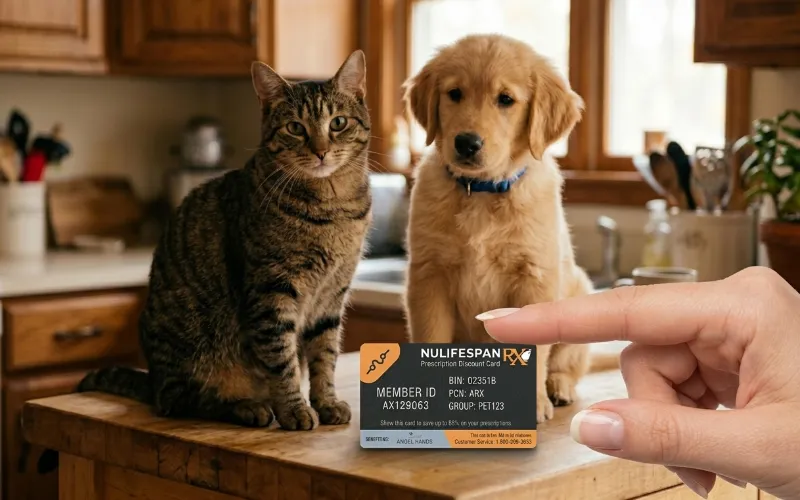
For pet owners managing ongoing treatments, strategies for reducing chronic pet medication costs often follow the same logic as human prescription savings: compare prices, choose the right network, and avoid the assumption that the vet’s in-house pharmacy is always the most affordable option.
Frequently Asked Questions
Do pharmacy discount networks work the same way at every pharmacy
No. Participation varies by pharmacy and network. Large chains participate broadly, while independent pharmacies may opt into select networks or none at all. The discounted price you see for a medication can differ between locations even within the same chain because of how individual stores are categorized within a network agreement.
Can discount cards be used for mail-order prescriptions
Yes, some discount networks have partnerships with mail-order pharmacies. The process mirrors in-store use: you apply the card at checkout for the discounted rate. Not all cards cover all mail-order providers, so it is worth confirming before placing an order.
Why does the same discount card show different prices at different pharmacies
Because pharmacies negotiate individual reimbursement agreements with PBMs, the rate a given card secures at one location may differ from another. A pharmacy’s size, transaction volume, and network tier all influence the final price, which is why comparing across locations consistently produces savings.
Do discount networks cover brand-name drugs as well as generics
Yes, though the savings tend to be larger on generics. Brand-name drugs can still carry significant discounts through PBM-negotiated rates, particularly when manufacturer rebates are factored in. The card price on a brand-name drug is always worth checking against the insurance copay.
Is my personal data protected when I use a discount card
Discount card providers are not bound by the same HIPAA protections as insurers. They may collect and share data about prescription purchases. Reading the privacy policy of any card provider before using it is a reasonable precaution, particularly if data sharing is a concern.
The Bottom Line
Pharmacy discount networks are not a simple loyalty program or a coupon system. They are a structured marketplace where PBMs, pharmacies, and card providers have negotiated terms that ultimately benefit the consumer at the point of sale. Understanding how the pricing layers connect gives you the foundation to use these tools more deliberately and get more from them every time you fill a prescription.