
Saxenda (liraglutide) is one of the older GLP-1 medications approved for weight management, and it remains a common prescription for patients whose insurance does not cover newer options like Wegovy or Zepbound. Because cash prices for Saxenda vary widely by pharmacy, it is worth comparing pharmacy prices near you before assuming the list price is your only option. If you do not have insurance coverage for Saxenda, here is what the medication actually costs, why prices differ so much from one pharmacy to the next, and what options exist to bring the price down.
What Is Saxenda Commonly Prescribed For?
Saxenda is a daily injectable medication FDA-approved for chronic weight management in adults with obesity, or in adults who are overweight with at least one weight-related medical condition such as high blood pressure or type 2 diabetes. It is also approved for certain adolescents. Saxenda works by mimicking a naturally occurring gut hormone (GLP-1) that helps regulate appetite and slows digestion, which can reduce overall food intake.
Saxenda Cost Without Insurance
Novo Nordisk’s list price for Saxenda is approximately $1,349 for a 30-day supply, which includes five prefilled pens delivering the standard maintenance dose. Without insurance, most patients paying cash at a retail pharmacy can expect a price in a similar range:
| Payment Scenario | Estimated Monthly Cost |
| List price (manufacturer’s published price) | About $1,349 |
| Retail cash price, no discounts | Roughly $1,300 to $1,700, depending on pharmacy and location |
| With a pharmacy discount card | Often modestly below retail cash price, though specialty injectables like Saxenda typically see smaller discount-card savings than common generics |
| With commercial insurance and an approved prior authorization | Highly variable; some patients pay $25 to $300 per month depending on plan design |
These figures are estimates. The exact price you are quoted can vary meaningfully by pharmacy chain, ZIP code, and whether the pharmacy applies any manufacturer coupon automatically.
Why Saxenda’s Price Varies So Much
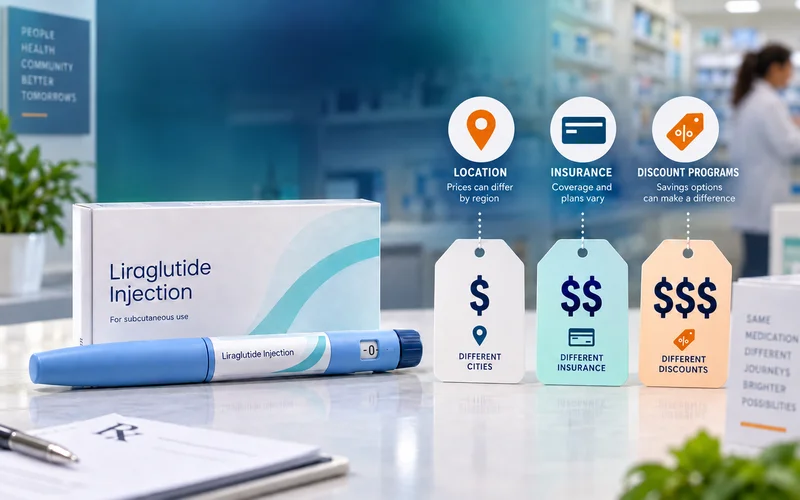
A few factors explain the wide price range patients report for Saxenda:
- No insurance coverage at all. Many commercial and most government plans exclude weight-loss medications from coverage entirely, which pushes patients to full cash price.
- Pharmacy markup differences. Independent and chain pharmacies set their own cash prices on top of what they pay their wholesaler, so the same box of Saxenda pens can be priced differently within the same city.
- Dose and pack size. Saxenda comes in a titration pack for new patients and a maintenance pack for ongoing use; these are priced differently.
- Manufacturer program status. Manufacturer savings card programs for older, established drugs like Saxenda are updated periodically, and eligibility or discount amounts can change or be discontinued without much notice, so a discount you read about online may no longer be active by the time you fill a prescription.
Brand-Name vs. Generic: Is There a Generic Saxenda?
A generic version of liraglutide (Saxenda’s active ingredient) has begun reaching some markets, which can eventually put downward pressure on price. Ask your pharmacist directly whether a generic liraglutide product is available and covered under your plan, since generic availability and pricing can differ by region and change throughout the year.
Insurance Coverage Considerations
Because Saxenda is FDA-approved specifically for weight management rather than diabetes, many insurance plans treat it as a “lifestyle” drug and exclude it from the standard formulary, regardless of medical necessity. If your plan does cover it, expect:
- A prior authorization requirement, where your doctor must document your BMI, related health conditions, and sometimes prior weight-loss attempts.
- Possible step therapy, meaning your insurer may require you to try a different, often less expensive, weight-management medication first.
- A specialty-tier copay or coinsurance, which is usually higher than what you would pay for a generic pill, even with coverage.
If your plan denies coverage, ask your doctor’s office about submitting an appeal with additional clinical documentation. Appeals are sometimes successful, particularly when a patient has a qualifying weight-related condition.
Manufacturer Savings Card and Patient Assistance Options

Novo Nordisk has offered a manufacturer savings card for commercially insured Saxenda patients in the past, and separately runs a patient assistance program for people who are uninsured or underinsured and meet income eligibility requirements.
Because program terms, discount amounts, and even whether a specific savings card is currently active can change, confirm the latest details directly at novocare.com rather than relying on older articles or advertisements, some of which describe amounts or programs that are no longer accurate. For more on how these copay programs work and who typically qualifies, see how manufacturer savings cards work for GLP-1 drugs.
Prescription Discount Card Options
A prescription discount card can be shown at the pharmacy counter alongside, or instead of, insurance to potentially lower your out-of-pocket cost. Discount cards tend to produce the biggest savings on widely available generic medications, and the savings on a specialty injectable like Saxenda may be smaller, but it costs nothing to ask your pharmacist to check the discounted price before assuming you must pay full retail.
NuLifeSpan Rx vs. Novo Nordisk’s Own Programs
It is worth understanding how a free discount card compares to Novo Nordisk’s own savings and assistance programs before deciding which route to try first. A NuLifeSpan Rx card costs nothing to use, works instantly at the pharmacy counter with no application or income documentation, and can be applied to any prescription you or your family take, not just Saxenda.

Novo Nordisk’s savings card and patient assistance program, by contrast, are specific to Saxenda, may require an application or income eligibility check, and can produce a lower price when you qualify. A practical approach is to ask your pharmacist to check both the manufacturer program and your NuLifeSpan Rx discount price side by side, and use whichever comes out lower for your specific situation.
How to Compare Pharmacy Prices for Saxenda
Because cash price varies so much by pharmacy, it is worth checking more than one location before filling a Saxenda prescription. Comparing prescription prices at pharmacies near you can help you see which participating pharmacy in your area currently has the lowest listed cash price, rather than assuming your regular pharmacy is the cheapest option.
Important Limitations
The prices described here are estimates drawn from published 2026 sources and are not a guarantee of what you will be charged. Saxenda pricing, insurance coverage rules, and manufacturer program availability can all change.
This article is for general informational purposes and is not medical advice. Speak with your doctor about whether Saxenda, another GLP-1 medication, or a non-medication approach is the right fit for your health goals, and speak with your pharmacist about the most current pricing and any available discount programs before you pay out of pocket.
Compare Prices Before You Fill Your Prescription
Pharmacy prices for Saxenda can differ by hundreds of dollars for the exact same medication. Compare prescription prices near you with a free NuLifeSpan Rx discount card before you pay out of pocket, and talk with your doctor about whether a manufacturer savings program or patient assistance option could apply to your situation.
Frequently Asked Questions
How much does Saxenda cost per month without insurance?
Without insurance, Saxenda’s list price is around $1,349 for a 30-day supply, though actual retail cash prices commonly range from about $1,300 to $1,700 depending on the pharmacy.
Is Saxenda cheaper than Wegovy or Zepbound?
List prices for these GLP-1 medications are broadly similar, generally in the $1,000 to $1,400 range before discounts. The cheapest option for you will depend on which manufacturer self-pay or savings program you qualify for, not the sticker list price alone.
Does GoodRx or a discount card work for Saxenda?
Discount cards can sometimes provide a modest reduction of cash price for specialty injectables like Saxenda, though the savings are often smaller than what the same type of card offers on common generic pills. It is still worth checking, since pharmacies price Saxenda differently.
Is there a generic version of Saxenda?
A generic version of liraglutide has started to become available in some markets. Ask your pharmacist whether a generic option is available and how its price compares to brand-name Saxenda.
Will my insurance cover Saxenda?
It depends on your plan. Many commercial and government plans classify weight-management drugs as excluded or requiring prior authorization. Check your plan’s formulary or ask your insurer directly.
What if I cannot afford Saxenda even with a discount?
Ask your prescriber’s office about Novo Nordisk’s patient assistance program for income-eligible, uninsured, or underinsured patients, and discuss whether a different, more affordable medication might achieve similar results for your specific health profile.











Trackbacks/Pingbacks