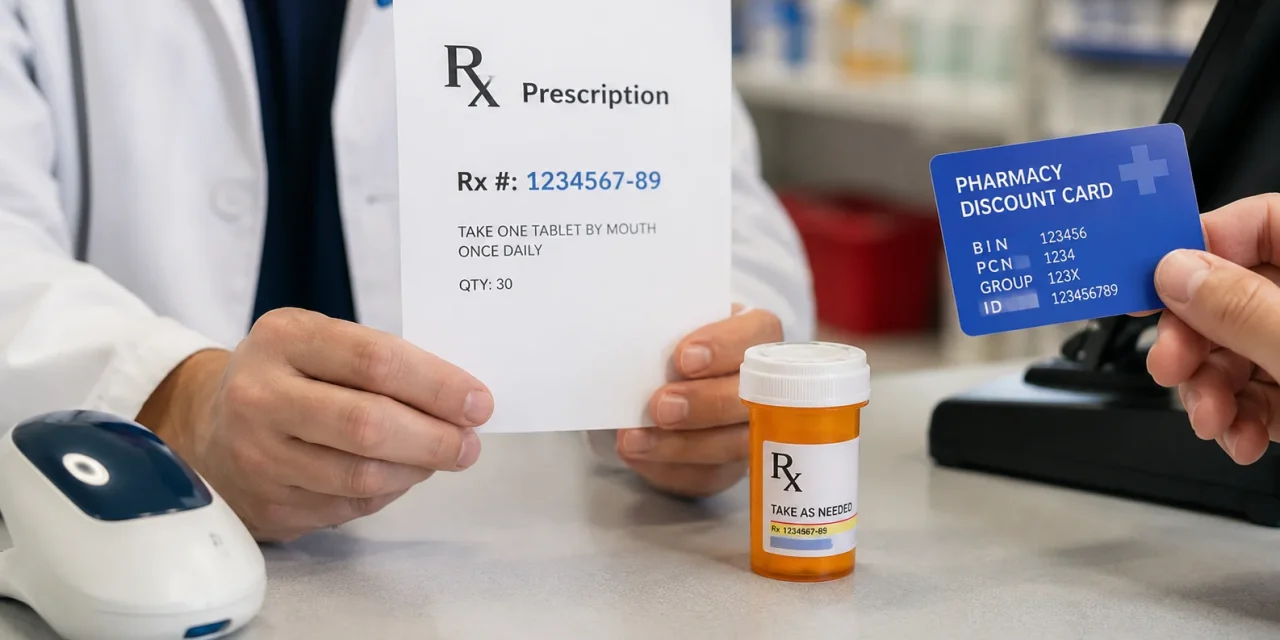
A prescription number, often labeled “Rx #” on your medication bottle, is the unique identifier your pharmacy assigns to that specific prescription order. It matters when using a discount card because the pharmacist needs it to pull up the correct prescription record, confirm the drug, strength, and quantity, and apply the discount card’s negotiated rate to that exact fill. Without it, you can still get help at the counter, but having the number on hand speeds up refills, transfers, and price comparisons considerably.
If you’ve ever glanced at your pill bottle and wondered what that string of digits next to “Rx” actually means, you’re not alone. Most patients never think about their prescription number until they need to call in a refill, transfer a prescription to a new pharmacy, or ask a pharmacist to check pricing options. Once you start using a prescription discount card regularly, that number becomes more useful than most people realize, even though it works a little differently than the insurance identifiers you may be used to.
What a Prescription Number Actually Is
A prescription number is an internal tracking number that a pharmacy generates the moment it processes a new prescription order. Every retail, mail-order, and hospital pharmacy assigns one, and the format varies by pharmacy chain and by the software system that pharmacy uses. Some are five digits, others are seven or eight, and some include letters. What stays constant is the purpose: the number links a specific medication, strength, quantity, prescriber, and refill count to your patient profile at that particular pharmacy location.
You’ll typically find it printed on the label directly after “Rx” or sometimes after “No.” It sits alongside other label information such as the drug name, dosage instructions, the prescriber’s name, the number of refills remaining, and the pharmacy’s contact information.
It’s worth being clear about what a prescription number is not. It is not the same as:
- An NDC (National Drug Code), which identifies the specific drug product, manufacturer, and package size, and is standardized across the entire U.S. drug supply.
- A DEA number, which identifies a prescriber or pharmacy authorized to handle controlled substances.
- An Rx BIN or PCN number, which are routing codes used by insurance and discount card processors to send your claim to the correct payer electronically.
What Is Rx in Medical Terms covers the broader history and meaning behind the “Rx” symbol itself, if you’re curious where the abbreviation comes from.
The prescription number is specific to that one pharmacy’s internal system. If you fill the same medication at two different pharmacies, each will assign its own separate prescription number, even though the drug and dosage are identical.
Why This Number Exists

Pharmacies process an enormous volume of prescriptions daily, and each one needs a way to track that a specific patient received a specific drug, in a specific quantity, from a specific prescriber, with a specific number of refills authorized. The prescription number is the anchor point for all of that.
When you call a pharmacy to request a refill, the pharmacist doesn’t need your full name, address, insurance information, and date of birth read aloud over the phone. They just need the prescription number, which pulls up everything else instantly in their system. This is also the number a new pharmacy will ask for if you want to transfer a prescription from one location to another, since it tells the receiving pharmacy exactly which record to request from the original one.
How the Prescription Number Interacts With a Discount Card
This is where the practical value shows up for anyone using a prescription discount card. A discount card is not insurance. It’s a tool that allows the pharmacy to bill a transaction at a pre-negotiated cash rate instead of running it through an insurance claim. Prescription discount cards cannot normally be combined with insurance on the same purchase; you use one or the other for a given fill.
When you present a discount card at the counter for a new prescription, the pharmacist enters the drug, dosage, and quantity information along with the card’s BIN, PCN, group, and ID numbers to process the transaction as a cash claim at the discounted rate. A prescription number is then generated for that fill, just as it would be for an insurance-billed prescription.
The number becomes genuinely useful on your second and future interactions with that prescription. If you want to check whether the discount card price has changed, ask about a refill, or compare pricing at a different pharmacy, having the prescription number on hand lets the pharmacist look up the exact details of what you’re filling without you needing to remember the drug name, strength, and quantity from memory. This matters more than it sounds, since many patients don’t know the exact milligram strength or day-supply of a maintenance medication off the top of their head, especially if they take several.
Using Your Prescription Number to Compare Prices
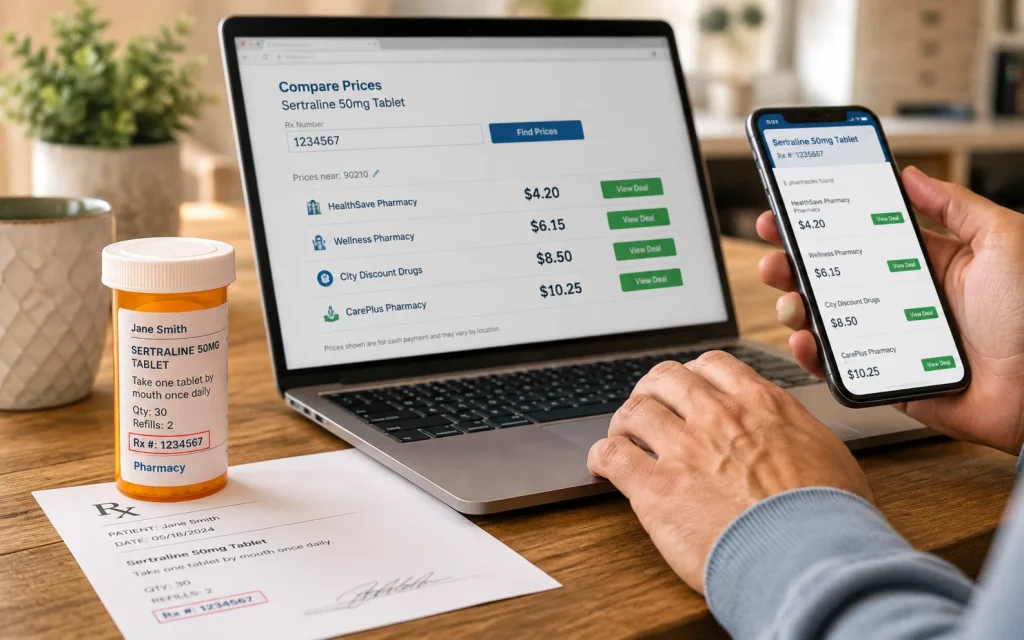
One of the more practical habits for anyone trying to get the lowest available price on a medication is calling a second or third pharmacy before filling or refilling a prescription. Having your prescription number ready streamlines this conversation considerably. You can read the number to the new pharmacy, and in many cases they can look up the necessary drug information directly, or you can supply the drug name, strength, and quantity from the same label if the pharmacies aren’t in the same network and can’t pull the record directly.
Comparing prices across pharmacies before filling a new or high-cost prescription consistently produces better outcomes than defaulting to whichever location is most convenient, since the same discount card can price the same medication differently depending on the pharmacy.
What to Do If You Don’t Have Your Prescription Number
Losing the bottle or misplacing the label doesn’t mean you’re stuck. A few reliable ways to retrieve the number include:
- Logging into your pharmacy’s app or online account, if the pharmacy offers one, where prescription history is usually listed with the associated Rx numbers.
- Calling the pharmacy directly and providing your name, date of birth, and the medication name; most pharmacy systems can locate the record without the number.
- Asking your prescriber’s office, since some practices keep a record of what was sent to which pharmacy.
In practice, most pharmacists can help you refill or transfer a prescription even without the number in hand. It simply takes a bit longer, since the staff has to search by name and date of birth rather than pulling the record up instantly.
A Quick Word on Privacy
Your prescription number itself does not reveal your medical information to anyone who doesn’t already have access to the pharmacy’s system, but the prescription record it points to does contain personal health details. Treat old prescription labels the way you would any document with personal health information: dispose of empty bottles by removing or blacking out the label rather than tossing them in the trash intact.
Making the Most of Your NuLifeSpan Rx Discount Card
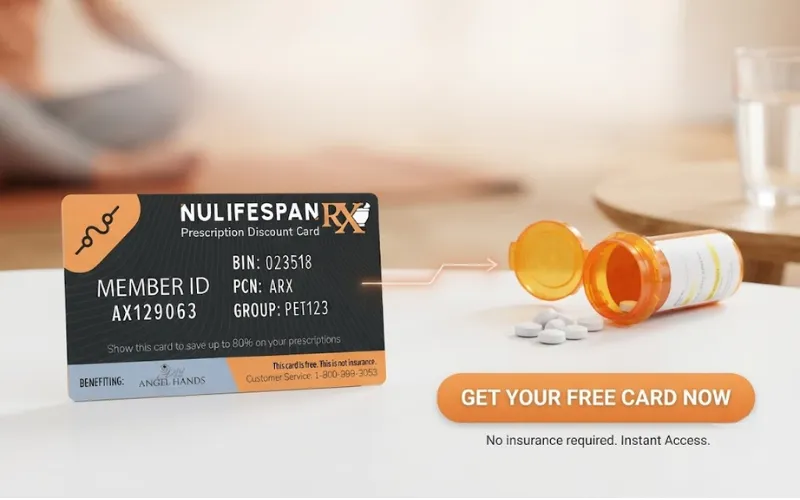
Whether you’re filling a new prescription or managing a refill, having your prescription number ready alongside your discount card helps the pharmacist move through the transaction quickly. The NuLifeSpan Rx prescription discount card is free, never expires, requires no sign-up, and is accepted at over 35,000 pharmacies nationwide. It’s worth asking your pharmacist to check the discount card price against your insurance copay or the standard cash price before you finalize any fill, since the lower of the two isn’t always obvious in advance.
Compare eligible prescription prices with the NuLifeSpan Rx card and present it at the counter if the discounted rate is the better deal.
Frequently Asked Questions
Is my prescription number the same at every pharmacy?
No. Each pharmacy location assigns its own prescription number when it processes your prescription, even for the exact same medication, strength, and quantity. If you fill the same prescription at two different pharmacies, or transfer a prescription from one pharmacy to another, the new location will generate a different number for its own records.
Can I use my prescription number to get a discount card price without visiting the pharmacy in person?
Some pharmacies allow you to check pricing online or over the phone using the prescription number and drug details, but the discount is generally applied when the transaction is actually processed at the counter or through the pharmacy’s fulfillment system. Understanding how discount cards are processed at the pharmacy counter explains the underlying mechanics of how the card’s negotiated rate gets applied to a specific fill.
Does my prescription number expire?
The number itself doesn’t expire, but the prescription it’s tied to does once all authorized refills are used or the prescription reaches its expiration date, which is typically one year from when it was written in most states, though this varies. Once that happens, you’ll need a new prescription from your prescriber, and the pharmacy will assign a brand-new prescription number for the new order.
Do I need my prescription number to use a discount card for a brand-new prescription?
No. A prescription number only exists after a pharmacy has processed the prescription for the first time. For a brand-new prescription, you simply hand the pharmacy your written or e-prescribed order along with your discount card, and the pharmacist generates a prescription number as part of filling it.
Is a discount card the same thing as insurance, and does my prescription number work with both?
No, a prescription discount card is not health insurance. It’s a separate savings program that applies a pre-negotiated cash rate instead of billing an insurance plan. The prescription number itself works the same way regardless of whether the fill was billed to insurance or processed with a discount card. What changes is which BIN, PCN, and group numbers the pharmacy uses to route the transaction, not the prescription number assigned to your record.
Conclusion
Your prescription number is a small piece of information that makes a real difference in how smoothly refills, transfers, and price comparisons go at the pharmacy. Keeping it handy, whether by saving old labels, checking a pharmacy app, or simply asking your pharmacist to look it up, puts you in a stronger position to compare options and get the medication you need without unnecessary delays. Pairing that habit with a free discount card and a quick price check at the counter is one of the simplest ways to make sure you’re not paying more than necessary on any given fill.
Medical information disclaimer: This article is for general informational purposes only and is not medical, legal, or financial advice. Pharmacy procedures, labeling formats, and prescription expiration rules vary by state and by pharmacy. Always consult your pharmacist or prescriber with specific questions about your medications.