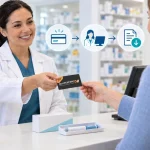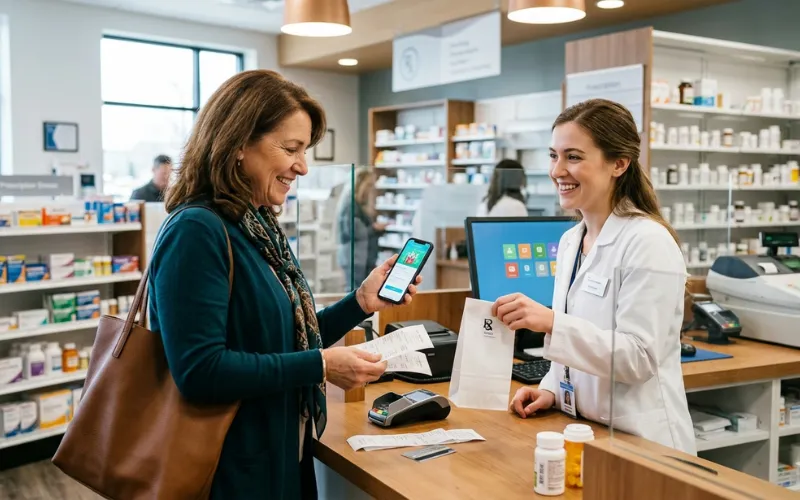
You can get cashback or equivalent savings on prescription drugs through pharmacy loyalty reward programs, free prescription discount cards, manufacturer copay assistance programs, credit card cashback at eligible pharmacy merchants, and cashback apps that accept pharmacy receipts. Combining two or more of these methods consistently delivers the highest return on every fill.
Prescription drug costs in the United States place a significant financial burden on millions of households. The good news is that the savings landscape has expanded considerably over the past decade. Between pharmacy reward programs, free discount cards, manufacturer assistance, and everyday cashback tools, most patients can recover a meaningful portion of what they spend on medications, including brand-name drugs that were once considered untouchable.
This guide covers every legitimate method available in 2025, how each one works, and how to combine them for the best overall outcome.
Why Prescription Drugs Cost So Much and Why Cashback Matters
Understanding why prescription medication prices are so high is the first step toward addressing them effectively. In the United States, drug pricing is largely unregulated, meaning manufacturers can set prices based on market conditions rather than production costs. Brand-name drugs are protected by patents that prevent generic competition for years after launch, and pharmacy benefit managers add another layer of complexity between the manufacturer price and what consumers actually pay at the counter.
For most people, the goal is not just to find a lower price once but to build a repeatable system that reduces spending on every fill, every month. Cashback and rewards programs are a core part of that system because they convert routine pharmacy spending into actual money returned to your household, which compounds meaningfully over the course of a year.
Pharmacy Loyalty and Reward Programs
Many large retail pharmacy chains operate loyalty programs that award points or cash-equivalent rewards for prescription fills and pharmacy activities. These programs function similarly to retail loyalty cards: every qualifying transaction earns credits that can be redeemed against future purchases.
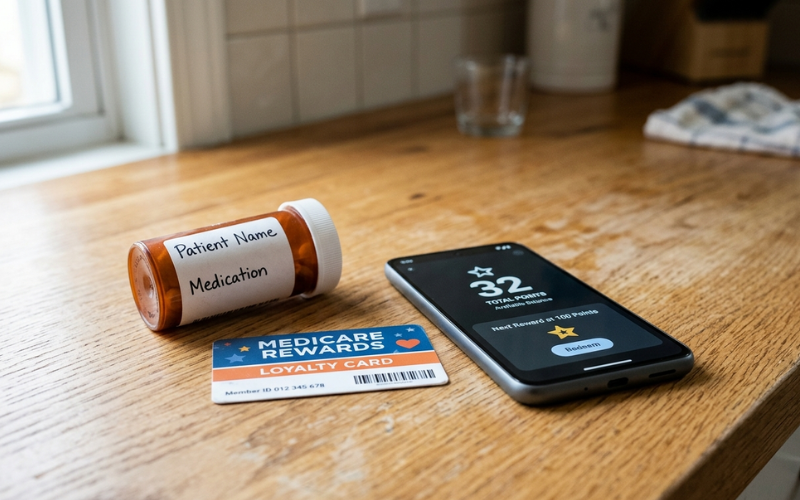
Typical program structures include earning a fixed dollar amount in rewards per prescription filled, earning bonus rewards for filling a set number of prescriptions within a defined time window, and receiving rewards for health-related activities such as flu shots or diabetes consultations in addition to drug fills. Some programs award as much as $50 in redeemable rewards over the course of a year for a patient filling several chronic medications regularly.
To make the most of these programs, enroll in the loyalty program of the pharmacy you use most frequently and ensure your account is linked every time you fill. Reward balances that are not actively managed often go unused and expire. Review your statement periodically and redeem credits before they lapse.
Key point: Loyalty rewards vs. discount card savings
Pharmacy loyalty rewards are additive on top of the price you pay. A prescription discount card, by contrast, reduces the price you pay in the first place. When both are available, use the discount card to reduce the purchase price and then apply any loyalty rewards against the discounted total.
Not all pharmacies allow both to be used simultaneously on a single transaction, so verify the stacking rules at your specific pharmacy before relying on this approach.
Free Prescription Discount Cards
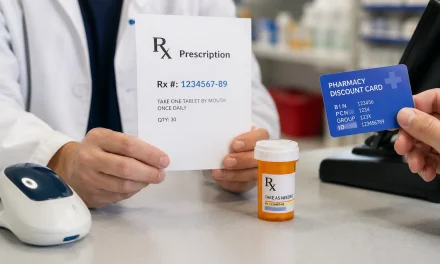
Prescription discount cards are one of the most accessible and high-impact tools for reducing out-of-pocket prescription costs. They are free to obtain, require no insurance, have no enrollment fees, and are accepted at thousands of pharmacies nationwide. The mechanics of how discount cards reduce the price at the pharmacy counter involve negotiated rates between the card network and participating pharmacies, rates that are often significantly lower than the standard retail cash price.
Savings through discount cards can reach 20 to 80 percent depending on the medication, the specific card, and the pharmacy location. For generic medications, the discounted price is sometimes under $10 for a 30-day supply. For certain brand-name medications, the discount reduces but does not eliminate the gap between insurance copays and the full retail price.
Important practical notes on discount cards:
- You cannot use a prescription discount card at the same time as insurance on the same transaction at most pharmacies. You must choose one or the other. In many cases for uninsured patients, or patients with high deductibles, the discount card price is actually lower than the insurance copay.
- The card price varies by pharmacy location. The same card may produce a different price at two pharmacies in the same zip code, which is why comparing prices across pharmacies before filling any prescription is worthwhile.
- Discount cards are accepted for pet medications at many retail pharmacies, making them useful well beyond human prescriptions.
The NuLifeSpan Rx Prescription Discount Card: Free Savings on Every Fill
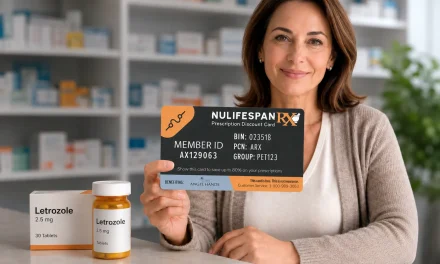
The NuLifeSpan Rx prescription discount card is accepted at over 35,000 pharmacies nationwide. It requires no sign-up, no insurance, and no membership fee, and it never expires. Simply present it at the pharmacy counter alongside your prescription for an immediate reduction in out-of-pocket cost, with savings of up to 80 percent on thousands of covered medications.
It works for both human and veterinary prescriptions at participating locations, making it the single most versatile tool in your prescription savings toolkit.
Manufacturer Copay Assistance and Cashback Programs
Pharmaceutical manufacturers frequently offer copay assistance programs, also called patient assistance or copay cards, for their brand-name drugs. These programs are designed to reduce the out-of-pocket cost for commercially insured patients who would otherwise pay a high copay or coinsurance amount.
How they typically work: the manufacturer’s program pays a portion of your out-of-pocket cost directly, either as a rebate check mailed after the purchase or as an instant reduction applied at the pharmacy counter. Some programs cap the annual savings at a set dollar amount (for example, up to $6,000 to $8,000 per year for expensive specialty medications), while others have no annual limit.
Key eligibility conditions that apply to most manufacturer programs:
- You must have commercial (private or employer-sponsored) insurance. Most programs explicitly exclude patients on Medicare, Medicaid, or other government-funded plans.
- You must have a valid prescription for the specific drug and indication covered by the program.
- Income or other qualification criteria may apply depending on the program.
To find whether a manufacturer program exists for a medication you take, visit the drug’s official manufacturer website directly and look for a “savings,” “patient support,” or “copay card” section. Your prescribing physician’s office often has enrollment materials on hand as well.
Patient Assistance Programs for the Uninsured
For patients without insurance, manufacturer-sponsored patient assistance programs (PAPs) provide a different type of support. These programs, offered by most major pharmaceutical companies, provide qualifying patients with free or deeply discounted brand-name medications. Eligibility is typically based on income thresholds.
A physician prescription is required, and the application process involves submitting income verification along with the prescription. Programs like NeedyMeds and the Patient Advocate Foundation maintain updated directories of available PAPs organized by medication name, making it easier to identify which programs apply to your specific prescriptions.
Government and Medicare Savings Opportunities
Several government programs provide meaningful prescription drug cost relief for qualifying individuals, and some function similarly to cashback by returning money already spent or capping future out-of-pocket exposure.
Medicare Extra Help (Low-Income Subsidy)
Medicare’s Extra Help program, also called the Low-Income Subsidy, significantly reduces Part D prescription drug costs for eligible beneficiaries with limited income and resources. In 2026, qualifying individuals pay no more than $12.65 per prescription for covered Part D drugs.
Enrollment is through the Social Security Administration and is available year-round. If you qualify but are not yet enrolled, retroactive cost recovery may be possible through Medicare’s Limited Income Newly Eligible Transition (LI NET) program, which allows you to request a refund for covered Part D drugs purchased after your eligibility date.
Medicare Savings Programs
Medicare Savings Programs, administered at the state level, help eligible individuals with limited income cover Part A and Part B premiums, deductibles, and cost-sharing. By eliminating or reducing these upstream costs, they free up household funds that would otherwise go toward healthcare expenses including prescriptions. Applications are submitted through your state Medicaid agency. Eligibility criteria vary by state and program tier, so apply even if you are unsure whether you qualify.
State Pharmaceutical Assistance Programs
Many states operate their own prescription assistance programs for residents who do not qualify for federal programs or who need supplemental support. These programs vary significantly in scope, with some covering specific drug categories, others providing flat annual benefit amounts, and others targeting particular populations such as seniors or people with chronic conditions.
Search your state’s health department website or contact your State Health Insurance Assistance Program (SHIP) for a current list of available options.
Credit Card Cashback on Pharmacy Purchases
Many general-purpose and category-specific credit cards offer elevated cashback rates for purchases made at pharmacies or drugstores. Depending on the card, you may earn 2 to 5 percent cashback on all pharmacy transactions, which applies to prescription purchases the same way it applies to over-the-counter products.
The critical technical detail is the merchant category code (MCC). When you swipe at a standalone pharmacy (a location whose primary business is pharmacy retail), your transaction is typically coded under the drugstore or pharmacy MCC, which qualifies for the elevated cashback rate. When you purchase medications at a grocery store pharmacy or a warehouse club pharmacy, the transaction may be coded under the grocery or warehouse category instead, which may earn a different cashback rate depending on your card.
To maximize pharmacy cashback on a credit card: verify which MCC applies to your preferred pharmacy before relying on the bonus rate, pay your balance in full each month so interest charges do not offset the cashback earned, and consider whether a card with a general high flat-rate cashback structure offers more predictable value than a tiered card with specific pharmacy bonuses.
Cashback Apps and Receipt Programs
Several cashback apps and receipt-scanning platforms accept pharmacy receipts and provide rewards for prescription and pharmacy purchases. These apps work in one of two ways: either by offering pre-activated cashback offers that apply when you upload a qualifying receipt, or by awarding general points for any receipt uploaded that can be redeemed for gift cards or cash equivalents.
Apps in this category include general receipt-scanning platforms that accept pharmacy receipts alongside grocery and retail receipts, and prescription-specific apps that pair with pharmacy loyalty accounts. The rewards per transaction are modest compared to a discount card or manufacturer program, but they require almost no effort and stack well with other savings methods since they operate post-purchase on the receipt rather than at the point of sale.
Switching to Generic Medications: The Highest-Impact Savings Move
While not technically cashback, switching from a brand-name drug to a therapeutically equivalent generic is the single highest-impact cost reduction available to most patients. Generics contain the same active ingredient at the same strength and dosage form as the brand-name original, are required by the FDA to meet the same standards for bioequivalence, and are approved through a rigorous review process. They cost 80 to 85 percent less than their brand-name equivalents on average.
Generic medications accounted for approximately 90 percent of all prescriptions dispensed in 2024 but represented only about 12 percent of total prescription drug spending, which illustrates how dramatically they reduce costs. Most common chronic medications for conditions like hypertension, high cholesterol, diabetes, and depression have generic equivalents available at most pharmacies for under $30 per month, and many fall below $10 with a discount card applied.
To determine whether a generic exists for a medication you currently take on brand, ask your pharmacist directly during your next fill. Your prescriber can also write the prescription generically rather than brand-specifically, which allows the pharmacy to automatically dispense the lowest-cost equivalent available.
Understanding all the tools available for managing prescription costs without insurance helps you construct a savings strategy that applies regardless of your coverage status.
Comparing Pharmacy Prices Before Every Fill
One of the most consistently underused savings behaviors is price comparison before filling a prescription. Pharmacy prices for the same drug at the same strength and quantity are not standardized. Why the same medication costs different amounts at different pharmacy locations comes down to regional pricing structures, independently negotiated supply agreements, and varying adoption of discount programs.
A systematic price comparison before each fill involves: knowing the exact drug name, strength, and quantity you need; calling at least two or three pharmacies to ask for the cash price and the discounted price with a discount card applied; and factoring in any location-specific considerations such as whether the pharmacy charges a dispensing fee on top of the drug cost.
The payoff from this habit compounds significantly over the course of a year, particularly for patients managing multiple chronic prescriptions. Navigating the pricing structure at major retail pharmacies and knowing where discount programs deliver the steepest reductions makes every comparison more actionable.
NuLifeSpan Rx Pet Prescriptions: Cashback-Style Savings for Your Entire Household
Prescription savings do not stop at human medications. The NuLifeSpan Rx pet prescriptions program extends the same discount card benefits to veterinary medications for dogs, cats, and other pets at participating retail pharmacies nationwide.
Whether you are managing a chronic condition for a family member or filling a long-term prescription for a pet, the same free card and the same network of 35,000+ pharmacies delivers consistent savings on every transaction, every month.
Paid Membership Programs for Frequent Prescription Users
For households that fill prescriptions frequently, paid pharmacy membership programs can deliver a stronger return than free discount cards on certain high-volume medications. These programs typically charge an annual or monthly subscription fee in exchange for access to a curated list of medications at very low fixed prices, often under $10 per prescription for a 30-day supply on over 1,000 generic drugs.
The math works in your favor when the combined savings across your regular prescriptions exceed the subscription cost over the year. Before enrolling, list your current medications and compare the membership price against the discounted price you already get with a free discount card. If the membership price is meaningfully lower on the drugs you fill most often, the membership is worth considering. If the savings difference is modest, the free card likely serves you just as well.
Combining Strategies: The Highest-Return Approach
No single cashback or savings mechanism delivers the maximum possible reduction in isolation. The most effective long-term strategy stacks complementary tools so that each one contributes without requiring significant additional effort.
| Strategy | Who Benefits Most | Effort Required | Potential Savings |
| Prescription discount card | Uninsured, high-deductible, or anyone comparing prices | Very low (present at counter) | 20% to 80% off retail price |
| Manufacturer copay card | Commercially insured patients on brand-name drugs | Low (one-time enrollment) | $0 to $8,000+ annually depending on drug |
| Pharmacy loyalty rewards | Regular pharmacy customers | Very low (scan card) | $10 to $50+ annually |
| Credit card pharmacy cashback | Cardholders with pharmacy bonus categories | Low (use card consistently) | 2% to 5% back on spend |
| Cashback receipt apps | Anyone with a smartphone | Low (upload receipt) | Modest per transaction; cumulative over year |
| Generic switch | Anyone currently filling a brand-name with an equivalent generic | Low (one conversation with prescriber) | 80% to 85% vs. brand-name price |
| Medicare Extra Help / state programs | Eligible Medicare beneficiaries with limited income | Medium (application required) | Substantial; caps costs at $12.65/prescription in 2026 |
| Paid membership program | High-volume generic users | Low (annual enrollment) | Fixed low prices; beats discount card on some drugs |
The combination that works best for most uninsured or underinsured patients is: free discount card plus generic whenever available plus pharmacy loyalty enrollment plus credit card cashback. That four-part stack requires almost no ongoing effort and covers every fill automatically. Extending the same multi-strategy logic to pet prescriptions compounds household savings further, since pets often take the same medications that are available at retail pharmacies.
If you have a pet on long-term medication, using a retail pharmacy discount card for your dog’s or cat’s prescriptions often produces lower prices than filling through a veterinary clinic, where medications carry the highest markup in the entire supply chain.
Frequently Asked Questions
Do prescription discount cards work without insurance?
Yes. Prescription discount cards are specifically designed to work without insurance and are among the most effective tools available for uninsured and underinsured patients. They function as a negotiated-rate agreement between the card network and participating pharmacies. When you present the card at the counter, the pharmacy charges the discounted network rate rather than the standard retail cash price. No insurance card, no income verification, and no prior enrollment are required. You simply present the discount card alongside your prescription.
Which types of prescriptions get the best discount card savings?
Generic medications consistently yield the strongest discount card savings, often reducing retail prices by 60 to 80 percent or more. Many common generics for chronic conditions such as high blood pressure, high cholesterol, type 2 diabetes, thyroid disorders, and anxiety fall below $10 per month with a discount card applied.
Brand-name medications also receive discounts through these cards, typically in the 15 to 40 percent range, though the discounted price remains considerably higher than a generic equivalent where one exists. Specialty and biologic medications are the category where discount cards have the least impact, though they are still worth applying.
Can I use a pharmacy discount card for my pet’s prescriptions?
Yes, at many retail pharmacies. Veterinary prescriptions filled at participating retail pharmacy locations are eligible for the same discount card pricing as human prescriptions. To use this, ask your veterinarian for a written prescription rather than purchasing the medication directly from the clinic. You can then take the prescription to a retail pharmacy and present a discount card for a reduced price.
This approach is particularly valuable for pets on long-term medications such as thyroid drugs, allergy medications, or insulin, where the cost difference between filling at a vet clinic versus a discount-card-equipped retail pharmacy can be $30 or more per fill. Additional strategies for saving money on pet prescriptions are worth reviewing for any household with animals on ongoing medications.
Do cashback credit cards work for pharmacy purchases?
Yes, provided the pharmacy where you fill your prescriptions is classified under the drugstore or pharmacy merchant category code (MCC). Standalone pharmacy locations, meaning stores whose primary business is pharmacy retail, typically receive this classification, which triggers elevated cashback rates of 2 to 5 percent on cards that include pharmacy as a bonus category.
What are patient assistance programs and am I eligible?
Patient assistance programs (PAPs) are initiatives run by pharmaceutical manufacturers to provide free or heavily discounted brand-name medications to patients who cannot afford them. Eligibility is typically based on income relative to the federal poverty level, though criteria vary by manufacturer and drug. Most programs require a valid prescription, proof of income, and confirmation that the patient does not have insurance coverage that would otherwise cover the medication.
Does switching to a generic medication affect how the drug works?
Generic medications contain the same active ingredient at the same strength as the brand-name original and are required by the FDA to demonstrate bioequivalence, meaning they are absorbed into the body at a rate and extent comparable to the original. The inactive ingredients (fillers, binders, coatings) may differ, which occasionally matters for patients with specific allergies or sensitivities to certain excipients, but the therapeutic effect of the active ingredient is the same. d.
Conclusion
Getting cashback and meaningful savings on prescription drugs is achievable for nearly every patient, regardless of insurance status. The most impactful combination for most households is a free prescription discount card applied at the pharmacy counter, a switch to generics wherever clinically appropriate, enrollment in pharmacy loyalty programs, and a cashback credit card used for every pharmacy transaction. For commercially insured patients on brand-name drugs, layering in a manufacturer copay card can dramatically reduce or eliminate the copay entirely.
The key is building these habits into your routine rather than applying them selectively. Every fill is an opportunity to recover money you would otherwise leave on the table. Visit the NuLifeSpan Rx prescription savings blog for additional detailed guides on specific medications, pharmacy chains, and programs that can further reduce what your household pays for prescriptions every month.