Rapamycin and aging research draws attention because rapamycin, also called sirolimus, is one of the best-studied drugs for extending lifespan in laboratory animals. In people, the picture is very different. No study has shown that rapamycin slows aging or helps healthy adults live longer, and the U.S. Food and Drug Administration (FDA) has approved it only for preventing kidney transplant rejection and treating a rare lung disease called lymphangioleiomyomatosis (LAM).
Rapamycin is also a powerful immune-suppressing medicine, so curiosity about it deserves careful thought. Older adults have extra reasons for caution, because aging changes how the body absorbs, breaks down, and clears medications. A dose that seems modest on paper can behave differently in a 70-year-old than in a 30-year-old.
This guide explains what rapamycin is, what animal and human studies actually show, which safety concerns are documented, and what to ask a doctor. It does not recommend rapamycin for anyone, and it does not provide a dose.
Check Prices Before Your Next Fill
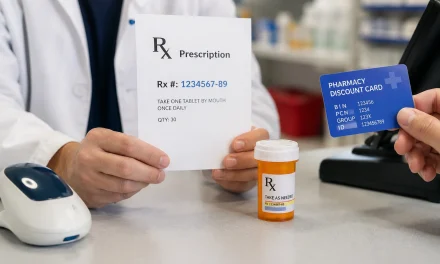
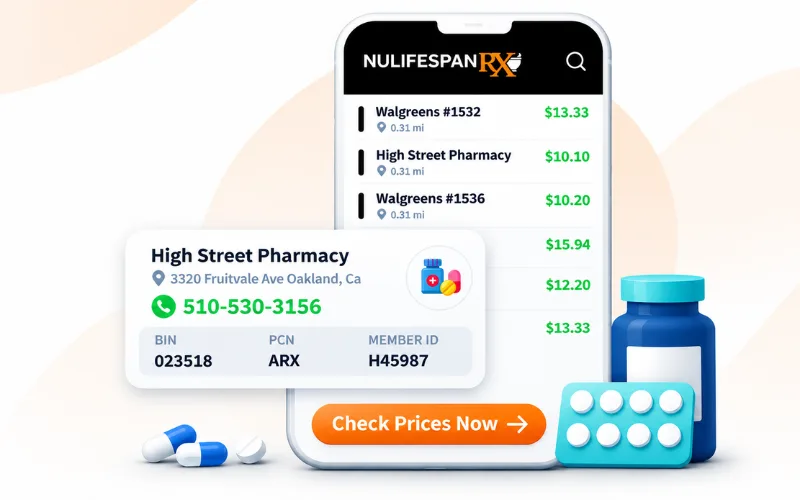
Prescription costs add up, especially for older adults who take several medicines. Compare participating pharmacy prices for your prescribed medications with the free NuLifeSpan Rx pricing tool before your next fill.
What Is Rapamycin and How Does It Work?
Rapamycin and sirolimus are two names for the same molecule. Rapamycin is the original scientific name, sirolimus is the generic drug name, and Rapamune is the brand-name product. Related drugs called rapalogs, such as everolimus, are chemical relatives that act on the same cellular pathway.
The compound was found in the 1970s in a soil bacterium from Easter Island, known locally as Rapa Nui, which is where the name comes from. It was first recognized for antifungal and immune-suppressing properties, according to a 2025 review in Frontiers in Aging. Current U.S. labeling lists prevention of organ rejection in kidney transplant patients aged 13 and older and treatment of LAM, based on the FDA prescribing information.
What mTOR does in the body
Rapamycin works by blocking a protein complex called mTOR, short for the mechanistic target of rapamycin. Think of mTOR as a cell’s resource manager. When nutrients and growth signals are plentiful, mTOR tells cells to grow, divide, and build proteins. When it is turned down, cells shift toward conservation and cleanup, including autophagy, the process cells use to break down and recycle worn-out parts.
Researchers became interested because overactive mTOR signaling has been linked in laboratory work to conditions such as cancer, atherosclerosis, diabetes, and declining immune function. The idea is that partly lowering mTOR activity might slow some of those processes. That remains a hypothesis. mTOR also supports normal immune responses, wound healing, and protein building in muscle, which is one reason blocking it carries costs.
Why Are Scientists Studying Rapamycin for Aging?
Interest began with simple organisms. Lowering TOR signaling extended lifespan in yeast, roundworms, and fruit flies. The result that moved the field came in mammals. In 2009, the National Institute on Aging’s Interventions Testing Program reported in Nature that rapamycin extended median and maximum lifespan in male and female mice, even when feeding started late in life at 600 days of age.
The effect appeared at three independent test sites, in genetically diverse mice chosen to avoid quirks of a single strain. Later experiments starting at a younger age produced a similar degree of lifespan extension. Few other compounds have matched that record in rigorous mouse testing, which explains the enthusiasm.
Why mouse results do not automatically apply to people

Mice live about two to three years, are housed in controlled laboratory conditions, and age differently than humans. A lifespan gain in mice does not show that a person would gain years, or that the same dose would be tolerable for decades. Most of these animals also did not face the combination of chronic conditions, multiple medicines, and infections that older adults often manage.
Dosing is another gap. A critical appraisal published in Aging in 2025 concluded that clinical benefit from low-dose rapamycin in healthy adults has not been established, and that no proven regimen exists for anti-aging use.
What Does Human Research Actually Show?
Human studies of rapamycin and related drugs are few, small, and mostly short. The table below summarizes the main types of evidence and why each one falls short of proving a longevity benefit.
| Study or evidence type | Population | Outcomes studied | Main findings | Key limitations |
| Mouse Interventions Testing Program (Harrison et al., Nature, 2009) | Genetically diverse mice at three labs | Lifespan | Median and maximum lifespan increased in both sexes | Animal data only; no human dose or benefit can be inferred |
| Everolimus immune study (Mannick et al., 2014) | Healthy adults 65 and older | Antibody response to flu vaccine after 6 weeks of treatment | Vaccine response rose by about 20% at relatively well-tolerated doses | Short; lab marker of immunity; used everolimus, not rapamycin; industry-sponsored |
| Phase 2a TORC1 inhibitor trial (Mannick et al., 2018) | 264 adults 65 and older | Self-reported infections over one year; flu vaccine response | Fewer reported infections with a two-drug combination (1.49 vs 2.41 per person) | Infections were self-reported; experimental drug combination, not rapamycin alone |
| PEARL trial (Moel et al., Aging, 2025) | 114 healthy adults ages 50 to 85 who completed the study | Visceral fat (primary), lean mass, blood markers, surveys, safety | Primary outcome did not change significantly; lean mass and pain improved in women taking 10 mg; adverse events were similar across groups | Small; compounded product with lower absorption; sponsored by a longevity telehealth company; many secondary outcomes |
| Systematic review (Lee et al., Lancet Healthy Longevity, 2024) | Human studies of rapamycin and rapalogs | Aging-related measures across body systems | Some improvement in immune, cardiovascular, and skin measures; no significant effect on endocrine, muscular, or neurological measures | Varied study designs; long-term exposure not assessed |
| RAPA-EX-01 (Stanfield et al., 2026) | 40 sedentary adults ages 65 to 85 | Gains from a 13-week exercise program with weekly sirolimus or placebo | Sirolimus did not enhance exercise improvements compared with placebo | Small and short; one regimen; not a lifespan study |
Surrogate markers are not health outcomes
Most human studies measure surrogate endpoints, such as antibody levels, body scans, or blood tests. These are stand-ins. They can move without any change in outcomes that matter to patients, such as fewer heart attacks, fewer fractures, preserved independence, or longer life.
The 2025 appraisal in Aging found fewer than a dozen trials of low-dose rapamycin or rapalogs in healthy adults and noted possible signals that call for caution. The 2024 Lancet Healthy Longevity review found no serious adverse events attributed to these drugs in healthy people, but more infections and higher cholesterol and triglycerides in people with age-related diseases.
What the PEARL trial can and cannot tell you
PEARL, registered as NCT04488601 on ClinicalTrials.gov, is the longest randomized trial of rapamycin in healthy aging adults so far. It ran 48 weeks, and its published results showed no significant change in its primary outcome, visceral fat. Improvements in lean tissue and pain appeared only in women taking the higher dose.
The authors also reported that the compounded rapamycin used in the trial was absorbed less than commercial formulations. That makes it hard to compare PEARL’s doses with regimens used elsewhere. It was a safety and feasibility study with hints of possible benefit, not evidence that rapamycin extends life.
The immune findings and the 2026 exercise trial
Studies of everolimus in older adults (2014 and 2018) suggested better vaccine responses and fewer reported infections at low doses. That is surprising for a class of drugs known to suppress immunity, and it is still not settled. The results apply to a different drug at specific doses.
The 2026 RAPA-EX-01 trial shows how early excitement can fade. Weekly sirolimus did not improve the benefits of a supervised exercise program in sedentary older adults. No human trial has yet tested whether rapamycin extends lifespan, so the convincing evidence for that claim does not exist.
Is Rapamycin FDA Approved for Anti-Aging?
No. The FDA has not approved rapamycin or sirolimus to slow aging, extend lifespan, or prevent age-related disease. Its labeled uses are preventing organ rejection in kidney transplant patients and treating LAM. The label also carries a boxed warning, the FDA’s most serious type, about immunosuppression, increased infection risk, and lymphoma and other cancers. No drug in the rapamycin family has an approved anti-aging indication.
Doctors are legally allowed to prescribe an approved drug for a use that is not on its label. This is called off-label prescribing, and it is common in medicine. It means a prescriber used clinical judgment. It does not mean the FDA reviewed evidence of safety or benefit for that purpose.
So a prescription for longevity does not establish that rapamycin is safe or effective for longevity. Compounded versions are not FDA-approved products either, and PEARL showed that their absorption can differ from commercial tablets. You can check the current label by searching sirolimus on DailyMed.
Keep Your Prescription Savings Within Reach
If your doctor prescribes any medication, get your free NuLifeSpan Rx discount card and check potential savings on eligible prescriptions at participating pharmacies. It is not insurance, and purchases generally do not count toward Medicare deductibles or out-of-pocket totals.

Rapamycin Side Effects and Safety Concerns
Safety information falls into two groups. One is what the drug label documents, mostly from transplant and LAM patients taking regular daily doses. The other is what is known about long-term low-dose use in otherwise healthy people, which is far more limited.
Risks documented on the drug label
The boxed warning says immunosuppression raises susceptibility to infection and may allow lymphoma and other malignancies to develop. The label also lists latent viral infections as a concern.
Mouth ulcers (stomatitis) are the most common reaction in LAM patients, reported in 20% or more, and appear less often in transplant trials. High cholesterol and triglycerides are also common. In transplant trials, hypercholesterolemia occurred in 43% to 46% of patients and hypertriglyceridemia in 45% to 57%, and many patients needed lipid-lowering treatment.
Wound healing can be impaired. The label reports delayed healing, wound separation, and fluid accumulation, with a possibly higher risk when body mass index is above 30. That matters for anyone with a planned surgery. Blood count changes are listed too, including anemia, low platelets, and low white blood cells.
The label also warns about declining kidney function and protein in the urine, so periodic urine checks are advised. For the liver, it calls for lower maintenance doses in hepatic impairment.
Drug interactions, vaccines, and pregnancy
Strong CYP3A4 and P-gp inhibitors, such as ketoconazole and voriconazole, and strong inducers, such as rifampin and rifabutin, should be avoided. Grapefruit juice must not be taken with sirolimus.
Vaccines may work less well during treatment, and live vaccines should be avoided. Ask which vaccines to update beforehand. For pregnancy, the label says the drug may cause fetal harm, and women who could become pregnant should use effective contraception during treatment and for 12 weeks afterward.
Why risk differs by indication, dose, and person
Transplant patients take daily doses alongside other immune-suppressing drugs, so their risk profile does not transfer neatly to a healthy person on a weekly schedule. In PEARL, adverse events were similar across groups over 48 weeks, although the rapamycin groups reported more stomach symptoms. That is reassuring for a small, closely monitored group over one year, but it cannot rule out uncommon or long-term harms.
Rapamycin vs. Metformin for Longevity
Metformin is the other drug most often mentioned beside rapamycin. Our full guide to metformin for longevity and the TAME trial covers that drug in depth, so this section only highlights how the two differ.
| Feature | Rapamycin (sirolimus) | Metformin |
| FDA-approved use | Preventing kidney transplant rejection; LAM | Type 2 diabetes |
| Main aging-related mechanism studied | Directly blocks mTOR | Activates AMPK and indirectly dampens mTOR signaling |
| Human evidence for longer life | None; small trials of surrogate markers | None; the TAME trial is designed to test it |
| Main safety concerns | Immunosuppression, high lipids, mouth ulcers, slow wound healing | Stomach upset, kidney function limits, low vitamin B12 with long use |
The practical difference is how much is known about safe use. Metformin has decades of experience in people with diabetes. Rapamycin has long experience in transplant medicine, but at doses and with companion drugs unlike anything proposed for healthy aging. Neither drug has been shown to extend human life.
Who Should Be Especially Cautious About Rapamycin?
Several situations call for extra care and specialist input: current or frequent infections, a history of cancer, planned surgery or slow-healing wounds, high cholesterol or triglycerides, kidney or liver problems, pregnancy or plans to conceive, and a possible need for a live vaccine.
Medication lists matter just as much, so a pharmacist’s interaction review is worth requesting. Older adults who are frail or take many medicines face added uncertainty, because most research enrolls healthier people. The Beers Criteria show how seriously clinicians treat medication risk in this age group.
Any use outside transplant or LAM care should involve a clinician experienced with immunosuppressants. A telehealth form or online quiz is not a substitute.
What to Ask Your Doctor Before Considering Rapamycin
Bring a written medication and supplement list, your vaccination history, and any upcoming procedures. These questions can guide the conversation:
- Is there a medically appropriate reason for me to take rapamycin? A clear diagnosis is different from a general wish to slow aging.
- What human evidence supports the benefit you have in mind? Ask whether it comes from patient outcomes or from lab markers.
- What are the known and unknown risks for someone with my health history? Ask the doctor to separate label-documented risks from open questions.
- Could it interact with my medications or supplements? Include over-the-counter products.
- What monitoring would I need, and how often? Ask about blood counts, cholesterol and triglycerides, kidney function, and urine protein.
- Are there evidence-based alternatives for my goal? Exercise, blood pressure control, and vaccination have far stronger records.
- Would insurance cover the prescription and the monitoring tests? Coverage for off-label longevity use is uncertain, so ask for costs up front.
- What happens if I develop side effects, and how do I stop safely?
Evidence-Based Ways to Support Healthy Aging
Physical activity has the strongest record. The CDC recommends that adults 65 and older get at least 150 minutes of moderate aerobic activity weekly, muscle-strengthening on at least 2 days, and balance activities. The RAPA-EX-01 trial is a useful reminder: the exercise program, not the drug, drove the gains.
Beyond movement, a varied diet with vegetables, fruit, whole grains, and enough protein supports muscle and heart health, and consistent sleep supports memory and mood. Preventive care counts too, including screenings, up-to-date vaccinations, and treatment of high blood pressure, cholesterol, and blood sugar. Taking prescriptions as directed also helps, and our guide to medication adherence in older adults explains why doses get missed and how to fix that.
Conclusion
Rapamycin is a fascinating research tool, and its results in mice have shaped modern aging science. For patients, the honest summary is simpler. No human trial has shown that it extends life, it is not approved for anti-aging, and its documented risks are real.
If the topic interests you, bring your medication list to your doctor, ask the questions above, and focus first on strategies with strong evidence. Exercise, vaccinations, screenings, and well-managed chronic conditions are within reach today. If you do receive a prescription for any condition, compare pharmacy prices before you fill it.
Frequently Asked Questions
Does rapamycin extend human lifespan?
There is no evidence that it does. Rapamycin extended lifespan in mice, but no human trial has tested whether it helps people live longer. Human studies so far are small and short, and they measure markers such as vaccine response or body composition rather than survival. Rapamycin remains a research interest, not a proven longevity treatment.
Is rapamycin FDA approved for anti-aging?
No. The FDA has approved sirolimus for preventing kidney transplant rejection and for treating lymphangioleiomyomatosis. Its labeling includes a boxed warning about immunosuppression, infection, and certain cancers. No rapamycin-family drug has an approved indication for slowing aging, extending lifespan, or preventing age-related disease in healthy people. Ask your doctor to explain any claim that suggests otherwise.
Can a doctor prescribe rapamycin off-label for longevity?
Legally, a licensed prescriber can prescribe an approved drug off-label if they judge it appropriate. That does not mean the FDA has reviewed evidence for longevity use, and it does not prove safety or benefit. If a clinician suggests it, ask what evidence supports the plan, how you will be monitored, and what the alternatives are.
What are the most common rapamycin side effects?
Label-documented effects include mouth ulcers, high cholesterol and triglycerides, swelling, slow wound healing, and low blood counts. The boxed warning highlights infection and cancer risk because the drug suppresses the immune system. Kidney changes and protein in the urine are also possible. How often these occur depends on the dose, the reason for use, and the person.
What monitoring is needed for people taking rapamycin?
Monitoring depends on the reason for treatment. The label points to blood counts, cholesterol and triglycerides, kidney function, and urine protein, and transplant patients also have drug levels checked. For any off-label use, a clinician should explain which tests are needed, how often, and what results would prompt a change.
Should healthy people take rapamycin for anti-aging?
Current evidence does not support taking it for anti-aging. Potential benefits are unproven in humans, while documented risks include infection, high lipids, and delayed healing. Healthy adults gain far more from proven steps such as regular exercise, vaccinations, screenings, and controlling blood pressure. Anyone still curious should discuss it with a doctor before buying or starting anything.
This article is for general education only and is not medical advice, diagnosis, or treatment. Rapamycin (sirolimus) is a prescription drug with serious risks. Do not start, stop, or change any medication without talking to a licensed healthcare professional. NuLifeSpan Rx is a prescription discount program, not insurance, and it does not recommend any particular medication.