
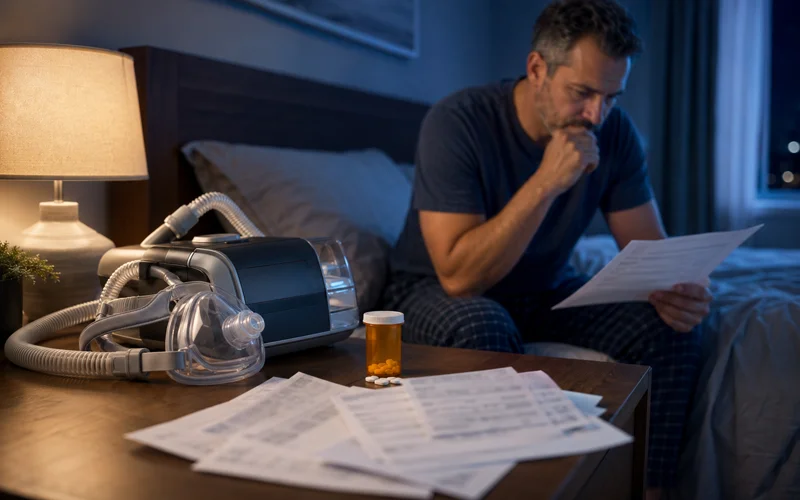
Sleep apnea is a common condition in which breathing repeatedly stops and starts during sleep, most often because the airway becomes partially or fully blocked. Left unaddressed, it can lead to poor sleep quality, daytime fatigue, and, over time, added strain on the heart and other organs.
What makes sleep apnea treatment costs unusual compared to many other conditions is that they typically come from two completely separate billing systems rather than one. A CPAP machine is purchased through a durable medical equipment supplier, while any prescribed medication is filled at a pharmacy. Each system prices things differently, which means a patient can face two very different cost conversations depending on which part of their treatment plan they are looking at.
Patients who only budget for one side of treatment are often caught off guard by the other. Someone who has planned carefully for a CPAP machine may not expect a separate medication bill if daytime sleepiness continues, while someone focused on medication costs may overlook the ongoing expense of mask replacements and filters. Understanding that split matters most for people who are uninsured, underinsured, or paying out of pocket. Programs such as NuLifeSpan Rx offer a free prescription discount card that helps people compare prices and find more affordable options for eligible medications, including some of the prescriptions used to manage sleep apnea symptoms.
What Is Sleep Apnea?
According to the National Heart, Lung, and Blood Institute, obstructive sleep apnea happens when the upper airway becomes blocked repeatedly during sleep, reducing or completely stopping airflow for brief periods throughout the night. This is the most common form of the condition. A related but less common type, central sleep apnea, occurs when the brain does not send the signals needed to keep breathing steady, rather than the airway being physically blocked.
Risk factors for obstructive sleep apnea include excess body weight, an anatomically narrow airway, enlarged tonsils, and certain hormonal changes. Left untreated, the condition is linked to a higher long-term risk of high blood pressure, heart disease, and stroke, which is part of why doctors generally recommend addressing it rather than living with the symptoms.
Diagnosis typically involves a sleep study, either at a sleep center or through an at-home testing device, and a doctor uses the results, along with the severity of the condition and the patient’s overall health, to build a treatment plan. Severity is generally described in mild, moderate, and severe categories based on how often breathing is disrupted each hour, and that severity rating often influences which treatment path a doctor recommends first. This article provides general educational information about treatment costs and is not a substitute for a diagnosis or treatment plan from a licensed healthcare provider.
CPAP and Other Device-Based Treatment Costs
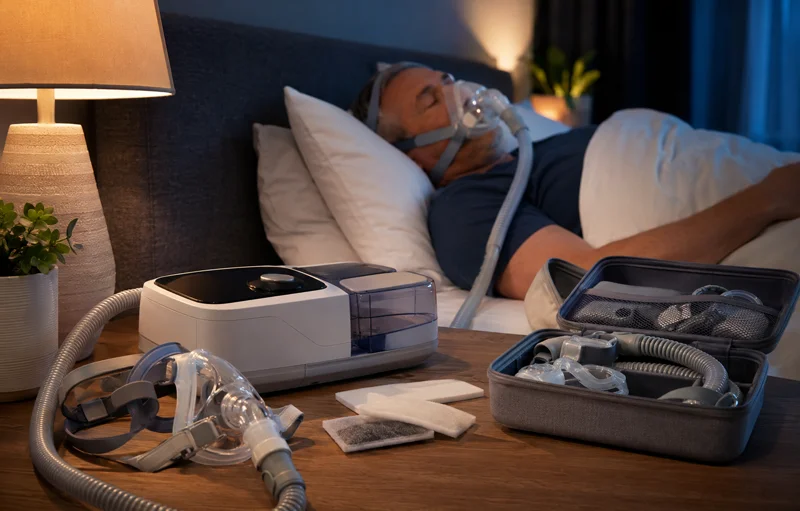
For most patients, the first-line treatment is a continuous positive airway pressure, or CPAP, machine, which uses steady air pressure to keep the airway open during sleep. CPAP equipment and ongoing supplies, such as masks, tubing, and filters, are almost always obtained through a durable medical equipment supplier rather than a retail pharmacy. This matters for cost purposes because equipment suppliers set pricing and payment terms independently of any pharmacy discount program, and financing or rental arrangements are common for the machine itself. Some suppliers structure the first several months as a rental period tied to a compliance program that tracks usage, which can affect both the total cost and the payment schedule compared to purchasing the machine outright.
Patients who cannot tolerate CPAP, or whose case is mild to moderate, sometimes use a dentist-fitted oral appliance instead, which repositions the jaw to help keep the airway open. This is typically billed through a dental or sleep specialist’s office rather than a pharmacy or a DME supplier, adding a third possible billing path depending on the treatment chosen. Because oral appliances are custom fitted, pricing tends to reflect the provider’s own fee schedule rather than a standardized retail rate. In select cases where a specific physical cause of the blockage can be corrected, a doctor may recommend surgery, which follows standard medical and surgical billing rather than either of the paths above, and typically involves separate costs for the procedure, anesthesia, and facility fees.
Sleep Apnea Medication Costs
Medication is not usually the first step in treating sleep apnea, but it plays an important role for certain patients, and unlike equipment or surgery, it is priced and filled through the pharmacy system, which is where a prescription discount card becomes relevant.
Wake-Promoting Medications for Daytime Sleepiness
Some patients continue to experience excessive daytime sleepiness even after consistent CPAP use. For these cases, a doctor may prescribe a wake-promoting medication such as modafinil, armodafinil, or solriamfetol. These medications are approved to improve daytime alertness in people with obstructive sleep apnea, but they work alongside primary treatment rather than replacing it, and they do not treat the airway blockage itself. Pricing depends on which specific medication is prescribed, whether a generic version is available, and the dosage schedule a doctor recommends.
A Newer Option for Moderate-to-Severe Cases
In late 2024, the FDA approved a new use for the injectable medication tirzepatide, sold under the brand name Zepbound, for adults with moderate-to-severe obstructive sleep apnea and obesity. It is used together with a reduced-calorie diet and increased physical activity, and it works by supporting weight loss, which can in turn reduce the severity of the airway blockage. Patients considering this option should know that it is not a substitute for CPAP or a diagnosis, and any change to an existing treatment plan should be guided by a doctor and a follow-up sleep evaluation rather than made independently. This class of medication generally carries a higher list price than older sleep apnea prescriptions such as modafinil or armodafinil, which is worth raising directly with a doctor when weighing options.
Why Equipment Pricing and Pharmacy Pricing Work So Differently
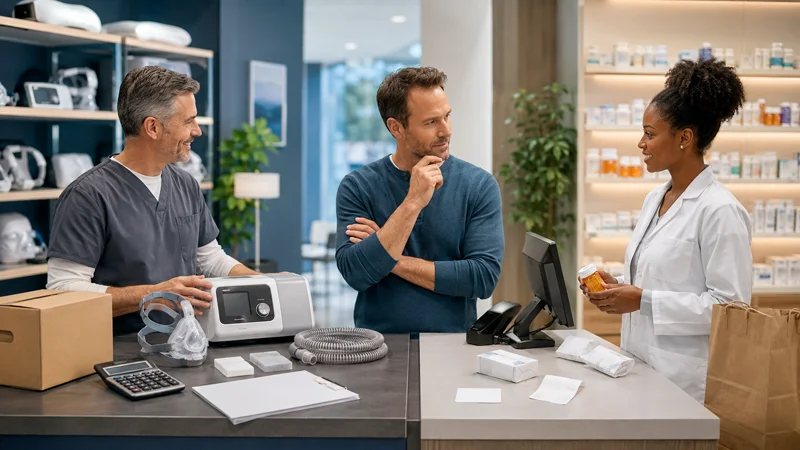
Because CPAP machines and medications move through entirely separate billing systems, the pricing logic behind each one is different, and that has direct implications for where a patient can realistically expect to save money.
Durable medical equipment pricing is often built around a purchase or rental structure, sometimes bundled with a compliance program that tracks usage data before insurance, when applicable, will continue paying toward the equipment. Suppliers set their own cash-pay rates for patients without applicable coverage, and those rates are not standardized the way pharmacy list prices tend to be, which is why calling more than one supplier before committing to a machine can be worthwhile. Pharmacy pricing, by contrast, follows a more familiar retail model: each pharmacy sets a standard cash price for a given medication, and that price can vary from one location to another based on factors such as supplier contracts and local competition.
This is also the pricing layer where generic availability, dose strength, and a prescription discount card can make a measurable difference, since none of those levers apply to equipment purchased from a DME supplier. A patient managing both sides of treatment at once is effectively working within two different negotiating environments at the same time, which is part of why a single savings strategy rarely covers the full cost of care for this condition.
How a Prescription Discount Card Fits Into This
NuLifeSpan Rx provides a free prescription discount card that anyone can use, regardless of insurance status, with no enrollment fee and no requirement to have existing health coverage. The card applies to eligible prescription medications filled at a network of participating pharmacies, which can include certain sleep apnea medications depending on the specific prescription. Because CPAP machines and supplies are handled through a DME supplier rather than a pharmacy, the card’s value for sleep apnea patients centers specifically on the medication side of treatment.
The way this works in practice is straightforward. Pharmacies set a standard cash price for patients with no insurance and no discount card, while a discount program negotiates a separate, usually lower, rate directly with pharmacies in its network. That rate is applied automatically when a patient presents a valid card at checkout, and it generally cannot be combined with insurance on the same transaction. Before filling a new prescription, patients can compare prescription prices to see whether a participating pharmacy offers a better rate than the standard cash price. The gap between the two can be meaningful, particularly for higher-cost medications such as newer injectable options, since these price tiers are often set independently of the underlying cost of the drug itself. Reading more on prescription costs without insurance can help patients understand this variation before they need to fill a prescription urgently.
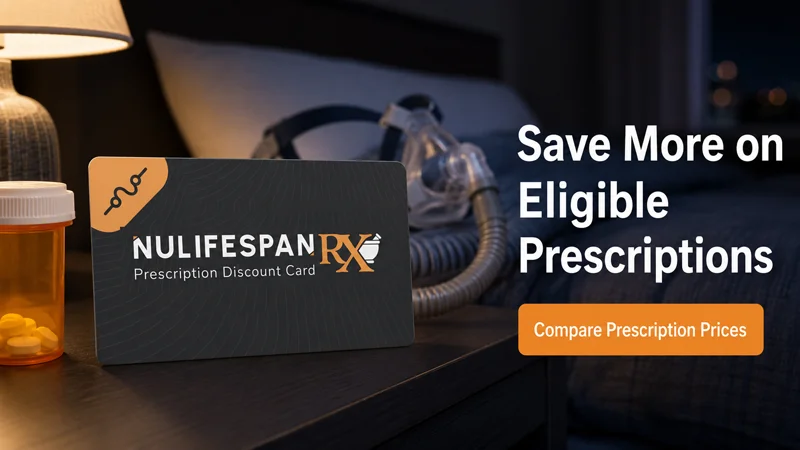
NuLifeSpan Rx is designed for individuals and families alike, and the card can be used by more than one household member. A digital version is also available for mobile wallet access, so patients do not need to carry a physical card to benefit from potential savings.
Before Your Next Refill or Equipment Purchase
A few habits can help keep both sides of sleep apnea treatment, equipment and medication, more predictable over time, since the condition is often managed for years rather than resolved in a single course of treatment.
On the medication side, checking a prescription discount card before filling a new prescription and asking the doctor whether a generic version is appropriate are the two most direct levers available. Patients enrolled in Medicare may also want to review what government cost-help programs are available to them. Medicare.gov outlines programs that can lower prescription drug costs for people who qualify, which can work alongside a discount card depending on the situation. Reading more on how to save money on medications can offer additional strategies beyond what is covered here.
On the equipment side, it helps to ask the DME supplier directly about cash-pay pricing or payment plans before committing to a machine, and to confirm what is included in ongoing supply costs such as masks and filters, since these recurring items are easy to underestimate when budgeting for the first year of treatment. Setting a calendar reminder for medication refills also gives enough lead time to compare pharmacy pricing before checkout instead of making a rushed decision when a prescription runs out unexpectedly.
Conclusion
Sleep apnea treatment costs are shaped by which part of a treatment plan is involved. Equipment and oral appliances follow DME or dental billing, while medication follows pharmacy pricing, and each responds to different strategies for managing cost. Patients without insurance, or with coverage that does not fully apply to their treatment, often face higher out-of-pocket expenses across both categories than those with full coverage.
Taking the time to ask questions, compare pharmacy pricing, and understand how equipment and medication costs work differently can make a meaningful difference over the course of a treatment plan. NuLifeSpan Rx provides a straightforward way to check potential prescription savings before filling a prescription, without requiring insurance or an enrollment fee.
Start saving on eligible prescriptions with your download your free NuLifeSpan Rx card today.
Frequently Asked Questions
Why do CPAP costs and sleep apnea medication costs work so differently?
CPAP machines and supplies are typically obtained through a durable medical equipment supplier, which sets its own cash-pay rates and often bundles equipment with a compliance program rather than pricing it like a retail item. Sleep apnea medications, by contrast, are filled at a pharmacy and follow a more standard retail pricing model, where the price of the same drug can vary between pharmacies based on factors like supplier contracts and local competition. Because these are separate billing systems, tools that help with one, such as a prescription discount card, generally do not apply to the other.
How much does sleep apnea treatment cost without insurance?
Sleep apnea treatment costs without insurance vary widely depending on which part of the treatment plan is involved. A CPAP machine and its ongoing supplies are priced through a durable medical equipment supplier and are separate from prescription medication costs. If a doctor prescribes medication, such as a wake-promoting drug for daytime sleepiness or a newer injectable option for moderate-to-severe cases, the price depends on the specific medication, the dosage, and the pharmacy where it is filled. Because there is no single fixed price across treatment types, patients paying out of pocket benefit from comparing costs for each part of their treatment plan separately.
Does a prescription discount card cover CPAP machines?
Generally, no. CPAP machines and related supplies are typically obtained through a durable medical equipment supplier rather than a retail pharmacy, so a prescription discount card such as the one offered by NuLifeSpan Rx does not usually apply to that type of purchase. Discount cards are designed for eligible medications filled at participating pharmacies, which can include certain sleep apnea prescriptions depending on the medication. Patients looking to manage CPAP costs specifically should ask their equipment supplier directly about cash-pay pricing or available payment plans.
Are sleep apnea medications like Zepbound expensive without insurance?
Newer injectable medications approved for moderate-to-severe obstructive sleep apnea, such as Zepbound, generally carry a higher list price than older sleep apnea medications like modafinil or armodafinil. The exact price a patient pays depends on the pharmacy, the dose prescribed, and whether any savings resource applies to that specific medication. Patients considering this type of treatment should discuss both the clinical fit and the cost with their doctor, since it is prescribed alongside diet and activity changes rather than as a standalone treatment.
Can NuLifeSpan Rx help reduce sleep apnea medication costs?
NuLifeSpan Rx offers a free prescription discount card that allows patients to compare pricing for eligible medications, which can include certain sleep apnea prescriptions, at a network of participating pharmacies. The card is available to anyone, regardless of insurance status, and does not require an enrollment fee. NuLifeSpan Rx is a discount program, not health insurance, and it works by giving patients access to negotiated pharmacy pricing rather than replacing the coverage an insurance plan would provide, and it does not apply to equipment purchased from a durable medical equipment supplier.
How can I save money on sleep apnea treatment overall?
Because sleep apnea treatment often involves both equipment and medication, savings strategies differ by category. For medication, comparing pharmacy prices, checking a prescription discount card such as NuLifeSpan Rx, and asking about generic alternatives are the most direct steps. For CPAP equipment, asking the supplier about cash-pay pricing or payment plans is typically more effective, since that cost is handled outside the pharmacy system. Patients enrolled in Medicare may also want to review available government cost-help programs, which can work alongside other savings options depending on the situation.







Trackbacks/Pingbacks