
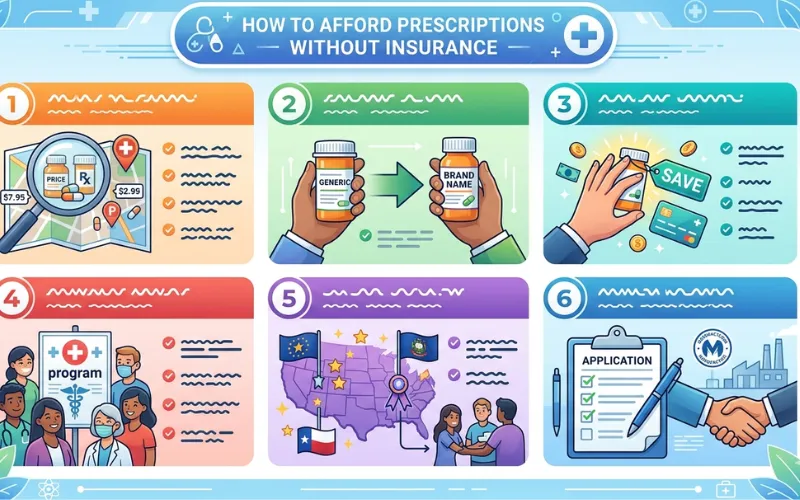
If you have a prescription and no insurance, you are paying the pharmacy’s cash price, and that price is rarely fixed. Before you hand over the prescription, you can confirm the exact drug details, ask your prescriber or pharmacist whether an FDA-approved generic or another appropriate option exists, compare cash prices at more than one pharmacy, check a prescription discount card price, and look into pharmacy generic programs or assistance programs.
Not every step applies to every medication. No single approach is cheapest for everyone. But working through them in order is the most reliable way to avoid paying more than you need to, and it takes less time than most people expect.
Why the Price You Are Quoted Is Not the Only Price
Prescription prices vary by drug, strength, dosage form, quantity, pharmacy and location. Two pharmacies a few streets apart can quote different amounts for the same medication because cash prices differ between pharmacies depending on how each one sets its retail pricing and which discount networks it participates in.
Cost affects whether people take their medication at all. Federal survey data shows that a meaningful share of US adults do not take medication as prescribed because of what it costs, including people who skip doses, take less than directed or delay filling a prescription, and that uninsured adults are more likely than insured adults to do this.
Knowing that several different prices exist for the same prescription is the practical starting point.
The Five Prices You Might Be Offered
These are separate things, and confusing them is the most common reason people overpay.
| Price type | What it is | Available if you are uninsured |
|---|---|---|
| Retail cash price | What the pharmacy charges someone paying out of pocket with nothing applied. Usually the highest number. | Yes |
| Prescription discount card price | A pre-negotiated rate that participating pharmacies honor for cash-paying customers. It is not insurance. | Yes, no enrollment or eligibility check |
| Pharmacy generic program price | A fixed price the pharmacy itself sets for medications on its own published list. | Yes, if your drug is on that pharmacy’s current list |
| Manufacturer copay card price | An offer from the drug’s manufacturer that commonly requires commercial insurance. | Often not, many programs exclude cash-paying patients |
| Patient assistance program price | Free or heavily reduced medication supplied by a manufacturer or nonprofit to people who apply. | Yes, if you meet the program’s eligibility rules |
You will usually end up choosing between these rather than combining them. Ask the pharmacist which one produces the lowest total for your exact prescription.
Step 1: Confirm Exactly What You Have Been Prescribed
Before you can compare anything, you need six details. Ask your prescriber’s office or read them off the prescription:
- The drug name, and whether it is the brand or the generic
- The strength
- The dosage form, such as tablet, capsule, inhaler or solution
- The quantity
- The days’ supply
- Whether the prescriber has marked it as brand-only
That last one matters. Prescribers can indicate that a specific product must be dispensed rather than a substitute, which removes the pharmacy’s ability to swap in a generic. If you are unsure what the notations on your prescription mean, what the abbreviations on your prescription mean covers the common ones.
Every price quote you get afterwards depends on these details being right. A quote for a different strength or quantity is not a comparison.
Step 2: Ask Whether an FDA-Approved Generic or Lower-Cost Option Exists
Ask your prescriber or pharmacist directly whether an approved generic is available and appropriate for you.
Generics are widely used. According to the FDA, the large majority of prescriptions filled in the United States are for generic drugs, and the agency requires approved generics to meet the same standards for quality, strength and performance as the brand product.
Two things to keep in mind:
- Not every medication has a generic version. Newer brand-name drugs often do not.
- Even where a generic exists, whether it is right for you is a clinical decision, not a pricing one. Some medications warrant closer monitoring when a product is changed.
There may also be a different medication in the same treatment category that costs less. Only your prescriber can judge whether that is appropriate. Ask the question, then let them answer it. If you want the fuller picture first, whether a generic is the right choice goes into the detail.
Step 3: Compare Cash Prices at More Than One Pharmacy
Call two or three pharmacies before you fill. Give each one the same six details from Step 1 and ask for the cash price.
Include different types of pharmacy in your comparison, because they price differently:
- Large retail chains
- Supermarket pharmacies
- Warehouse club pharmacies
- Independent community pharmacies
No chain is cheapest for every drug. A pharmacy that is lowest on one medication can be higher on the next, which is why the comparison has to be done per prescription rather than once. If you want a repeatable method, finding the cheapest pharmacy for your drug sets one out.
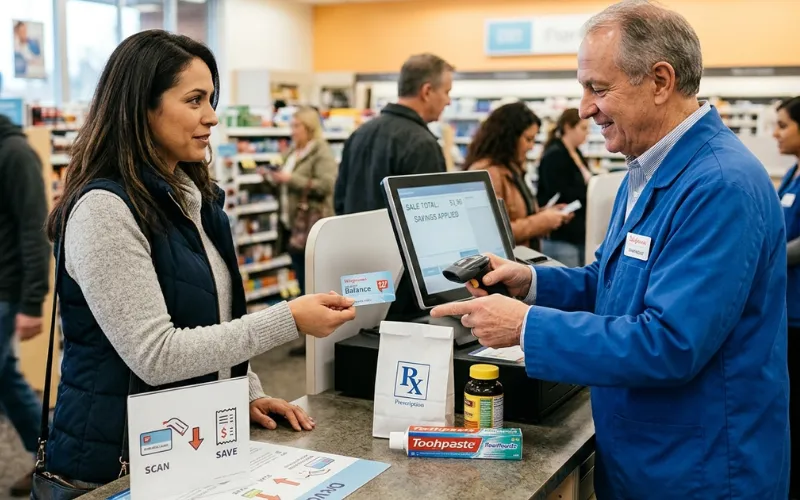
Step 4: Check the Discount Card Price for Your Exact Prescription
A prescription discount card gives cash-paying customers access to a pre-negotiated rate at participating pharmacies. There is no enrollment requirement and no eligibility check.
Three things are worth being clear about:
- A discount card is not insurance. It provides no coverage, no deductible and no out-of-pocket maximum, and it does not satisfy any insurance requirement. A discount card is not health insurance explains the distinction in full.
- It generally cannot be combined with insurance on the same transaction. If you have coverage, the pharmacist can price the prescription both ways so you can choose the lower one, but only one applies to a given claim.
- The discount is not the same on every drug. It varies by medication, pharmacy and location. Check your specific prescription rather than assuming a general rate.
You have to present the card before the pharmacist processes the transaction. Many pharmacies cannot apply it afterwards. For the mechanics, how discount cards work at the counter walks through it.
Step 5: Ask About the Pharmacy’s Own Generic Program
Some pharmacies maintain their own list of generic medications at set prices, independent of any discount card.
These programs are worth asking about, but check the current terms rather than relying on what you have heard:
- The medication list varies by pharmacy and changes over time
- Only certain strengths, dosage forms and quantities are usually included
- Prices differ between programs and are not always the same low figure
- Participation and availability can vary by location and by state
- Some programs require a paid membership, and some have been discontinued
Ask the pharmacy directly whether your specific medication, at your strength and quantity, is on their current list and what the price is. Then compare that against the discount card price and the plain cash price. Do not assume the three can be stacked. In most cases you are choosing one.
Step 6: Ask What a Longer Supply Would Cost
A 90-day supply is sometimes cheaper per dose than three 30-day fills, because dispensing costs are spread across more doses. Sometimes it is not.
Ask the pharmacy to quote both. A few things affect the answer:
- Your prescriber has to write the prescription for the longer supply. The pharmacy cannot extend it on its own.
- Some medications, including certain controlled substances, have supply limits set in law or state regulation.
- A longer supply is only sensible for a medication you have already been established on and expect to continue.
- Discount and program pricing can apply differently to a 90-day quantity than a 30-day one.
Quantity and pricing interact in ways that are not always obvious, and why one strength can cost less than another covers a related point worth understanding before you ask.
Telehealth and Mail-Order Pharmacy Options for Lower-Cost Prescriptions
Telehealth platforms have added another route to a lower price, particularly for common maintenance medications. Some connect you with a prescriber for a low-cost or free visit and then fill the prescription through an affiliated mail-order pharmacy at a set cash price, which can undercut a local retail pharmacy on select drugs. For medications such as GLP-1s, where the cash price without insurance varies enormously by source, comparing a telehealth mail-order price against your local pharmacy quote is worth the extra step.
Treat a telehealth or online pharmacy option the same way you would treat any other price source, meaning confirm it before you commit:
- Check that the pharmacy is licensed in your state. The National Association of Boards of Pharmacy accreditation listings referenced later in this article cover online pharmacies as well as retail ones.
- Confirm the total price, including any consultation fee and shipping, before assuming it beats a local quote.
- Ask whether the medication ships as the same strength, quantity and dosage form your prescriber ordered.
- Factor in shipping time. Mail order is not a fit for a medication you need to start immediately.
Telehealth pricing is not automatically cheaper. It is one more price to check alongside the retail cash price, the discount card price and the pharmacy’s own generic program price from the steps above, not a replacement for comparing them.
Step 7: For Expensive Brand-Name Drugs, Look at Manufacturer Assistance
If your medication is a brand-name drug with no generic available, the manufacturer is often the best route.
Patient assistance programs supply medication free or at reduced cost to people who apply and qualify. They are generally aimed at patients with limited income and no coverage, which describes many uninsured readers. Expect to provide income documentation and a prescription, and expect the review to take time, so apply as early as you can rather than when you run out.
Manufacturer copay cards are a different thing and often will not help you. Many require commercial insurance and specifically exclude uninsured, cash-paying and government-program patients. Terms vary by manufacturer, so read the eligibility rules on the official program page before assuming you can use one. How copay cards differ from discount cards sets out the difference.
Start on the manufacturer’s own website for your medication. Nonprofit organizations that maintain searchable databases of assistance programs can also help you find the right one. Eligibility rules are set by each program, and meeting them is never automatic.
Using Medicaid, Medicare Part D and State Prescription Assistance
If you qualify for Medicaid, prescription drug coverage is included in every state, though the specific drugs covered and the copay amount vary by state program. Income limits are often wider than people assume and change periodically, so it is worth applying even if you were previously turned down or assumed you would not qualify.
If you are on Medicare without Part D, or your current Part D plan is not covering a medication well, the Extra Help program, also called the Low-Income Subsidy, can reduce premiums, deductibles and copays for people who meet income and resource limits. It is separate from Medicaid and worth checking on its own.
Some states also run their own prescription assistance programs on top of Medicaid, often aimed at seniors, people with specific health conditions, or people just above the Medicaid income cutoff. Availability and rules vary by state, so check what your state offers directly. Other ways to lower prescription costs without insurance covers additional state and nonprofit options worth checking alongside these.
None of these programs are automatic, and being uninsured does not by itself qualify you for any of them. Apply directly through your state Medicaid office or Medicare.gov, and expect to provide income documentation as part of the process.
Step 8: Check Community and Safety-Net Options
If cost remains a barrier, look at providers that serve patients regardless of ability to pay.
- Federally qualified health centers and community health centers offer care on a sliding fee scale based on income and household size. Many also help patients access medications.
- 340B-covered providers. Under a federal program administered by the Health Resources and Services Administration, certain providers can purchase outpatient drugs at significantly reduced prices. Whether and how those savings reach you depends on the individual provider and on your being a patient there.
- State and local assistance. Some states run their own medication assistance programs. Rules vary considerably.
- Nonprofit assistance organizations. Several maintain free databases of programs organized by medication.
None of these are automatic. Each has its own eligibility criteria, and being uninsured alone does not guarantee acceptance. Contact the provider or program directly and ask what applies to you.
Step 9: Tell Your Prescriber if It Is Still Unaffordable
If you have worked through the steps above and the medication is still out of reach, say so to the person who prescribed it. Do this before you run out.
Prescribers can only account for cost if they know it is a problem. Depending on your situation they may be able to review whether a different appropriate option exists, adjust the prescription so it fits a lower-cost quantity or form, direct you to a program they have used with other patients, or document medical necessity to support an assistance application.
This conversation is routine. It is not an imposition, and it is a great deal safer than the alternatives.
What Not to Do When You Cannot Afford a Medication
Cost pressure leads people toward decisions that carry real risk. Avoid these:
- Do not skip or stretch doses to make a supply last. Contact your prescriber instead.
- Do not split tablets unless a pharmacist or prescriber has confirmed it is appropriate. Many tablets cannot be split safely, including extended-release and coated products.
- Do not substitute a different medication yourself, including anything left over from a previous prescription or borrowed from someone else.
- Do not buy from unverified online sellers. Any site that ships prescription medication without requiring a prescription is operating outside the rules. Before using an online pharmacy, verify its state licensure and check it against the accreditation listings maintained by the National Association of Boards of Pharmacy.
- Do not import medication on the assumption it is legal or safe. Products bought outside the regulated US supply chain may not be what they claim to be.
- Do not stay silent. If cost is affecting whether you take a medication, that is clinical information your prescriber needs.
This article is general information about prescription pricing. It is not medical advice. Decisions about your medication, including whether a generic or an alternative product is appropriate, are for your prescriber or pharmacist.
How NuLifeSpan Rx May Help
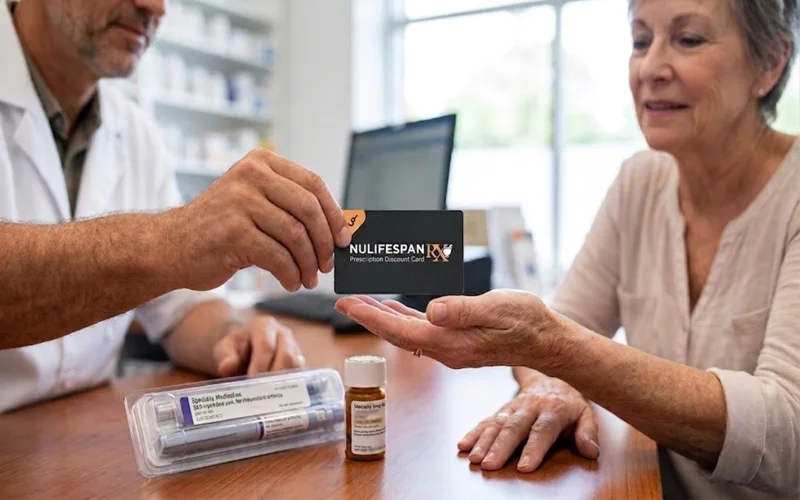
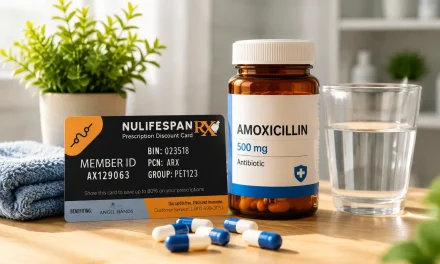
NuLifeSpan Rx is a free prescription discount card that gives cash-paying customers access to discounted rates at participating pharmacies. It is not insurance, it does not require enrollment or eligibility verification, and it can be used for household members and for pet prescriptions filled at retail pharmacies.
You can look up your exact drug, strength and quantity to see the discounted price at pharmacies near you, then compare that against the cash price and any pharmacy program price you have been quoted.
It will not be the lowest price on every medication at every pharmacy. Nothing is. It is one of the prices worth checking before you pay, which is why it belongs in the comparison rather than in place of it.
A Checklist to Use Before You Go to the Pharmacy
- Write down the drug name, strength, dosage form, quantity and days’ supply
- Check whether the prescription is marked brand-only
- Ask your prescriber or pharmacist whether an approved generic or another appropriate option exists
- Call two or three different types of pharmacy for the cash price
- Check the discount card price for the same drug, strength and quantity
- Ask each pharmacy whether your medication is on its own generic program list, and at what price
- Ask what a 90-day supply would cost, if a longer supply is appropriate for you
- For an expensive brand-name drug, look up the manufacturer’s patient assistance program
- Check whether a community health center or 340B provider serves your area
- Tell your prescriber if the medication is still unaffordable, before you run out
- Check whether you qualify for Medicaid, Medicare Part D Extra Help or a state prescription assistance program
- Compare a telehealth or mail-order price against your local pharmacy quote for maintenance medications
Final Takeaway
Pick one prescription and work through the first four steps today. Confirm the details, ask about a generic, call two pharmacies for the cash price, and check the discount card price for the same drug and quantity. That alone tells you whether you have been overpaying, and it takes under half an hour.
If you are filling several prescriptions every month rather than one, reducing what you spend on prescriptions each month covers the recurring side of the problem.
Frequently Asked Questions
Can I fill a prescription without health insurance?
Yes. Pharmacies dispense prescriptions to patients paying cash. Insurance affects what you pay, not whether you can have the medication. You will need a valid prescription from a licensed prescriber, and you pay the full amount at the counter.
How much do prescriptions cost without insurance?
There is no single answer. Prices depend on the drug, its strength, the dosage form, the quantity, the pharmacy and your location, and the same prescription can cost noticeably different amounts at two pharmacies in the same area. The only reliable figure is a quote for your exact prescription from a specific pharmacy.
Can an uninsured person use a prescription discount card?
Yes. Discount cards are designed for people paying cash, so being uninsured is not a barrier. There is no enrollment requirement and no eligibility check. The card is not insurance and provides no coverage.
Are generic prescriptions always cheaper?
Usually, but not always, and not every medication has a generic version. Occasionally a manufacturer offer makes a brand product cost less than its generic for a particular patient. Whether a generic is appropriate for you is a clinical decision for your prescriber or pharmacist.
Can I use a manufacturer copay card without insurance?
Often not. Many manufacturer copay cards require commercial insurance and specifically exclude uninsured, cash-paying and government-program patients. Terms vary by program, so check the eligibility rules on the manufacturer’s official page. If you are uninsured, a patient assistance program is more likely to be the relevant route.
Can I compare a discount card price with a pharmacy cash price?
Yes, and you should. Ask the pharmacist to quote the retail cash price and the discount card price for your exact drug, strength and quantity, then choose the lower one. They apply as alternatives on a single transaction rather than together.
Is a 90-day prescription always cheaper?
No. A longer supply is often cheaper per dose but not always, and it has to be prescribed that way. Some medications have supply limits set in law. Ask the pharmacy to quote both a 30-day and a 90-day price before deciding.
What should I do if I still cannot afford my medication?
Contact the person who prescribed it, before you run out. Explain that cost is preventing you from filling or continuing the prescription. They may be able to review whether another appropriate option exists, help with an assistance application, or point you to a program. Do not skip doses or stop taking a medication without speaking to them first.
Can Medicaid or Medicare Part D help pay for prescriptions if I do not have other insurance?
Yes, if you qualify. Medicaid includes prescription drug coverage in every state, though covered drugs and copays vary by state. If you are on Medicare, the Extra Help program can lower Part D premiums, deductibles and copays for people who meet income and resource limits. Apply directly through your state Medicaid office or Medicare.gov, since eligibility is not automatic.
Are telehealth prescriptions cheaper than getting the same medication at a local pharmacy?
Sometimes. Some telehealth services combine a low-cost visit with a mail-order pharmacy price that undercuts local retail for certain maintenance medications, but this is not guaranteed. Compare the total telehealth price, including any consultation fee and shipping, against your local pharmacy’s cash price and discount card price before choosing.





Trackbacks/Pingbacks