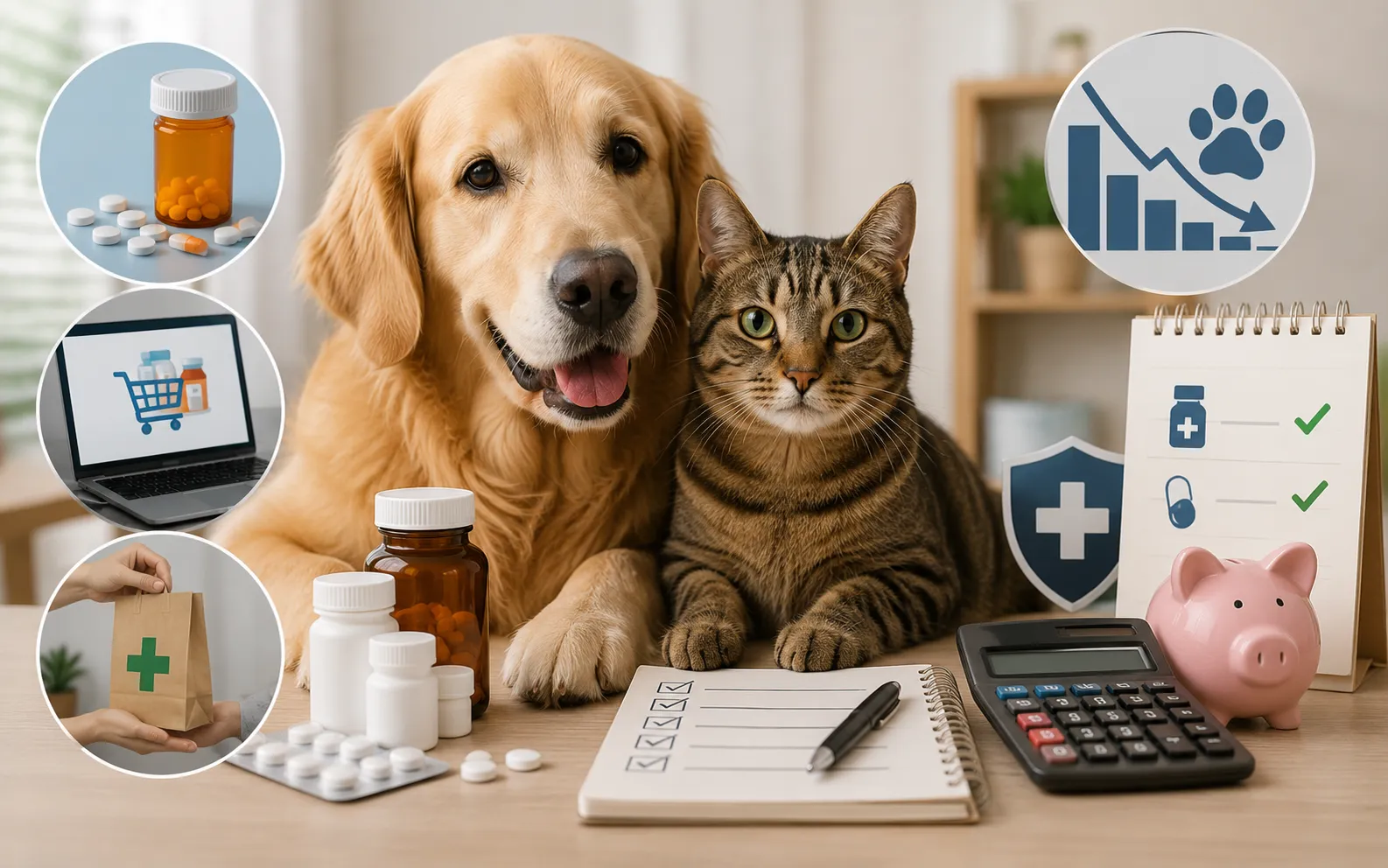
Cat prescriptions are often expensive because far fewer medications are FDA-approved specifically for cats, which means many prescriptions involve limited generic competition, custom compounding, or small-batch formulations built for a cat’s size and taste preferences. Add in pharmacy markup, low sales volume for feline-specific products, and the cost of flavoring or converting a tablet into a liquid, and a small prescription can carry a price that feels out of proportion to the dose. This guide breaks down exactly why that happens and what cat owners can safely do about it.
If you have researched dog prescription costs before, some of this will look familiar, but cats have their own pricing quirks worth understanding on their own, alongside real safety considerations that are unique to cats.
Why Veterinary Prescriptions Can Be Expensive
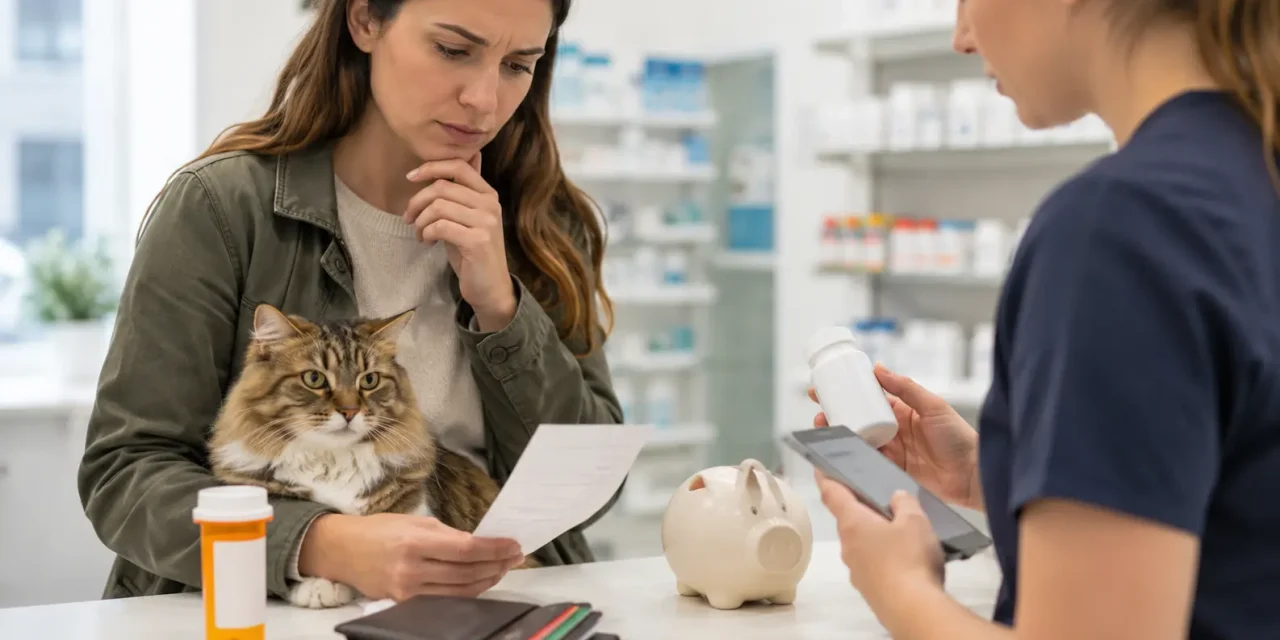
Human pharmacies fill millions of prescriptions for a relatively small number of widely used drugs, which drives intense generic competition and low prices. Veterinary medicine works differently. The population of cats taking any single medication at any single strength is much smaller, manufacturers have less incentive to develop and register multiple generic versions, and many feline prescriptions require some form of customization before a cat will reliably take them. Fewer manufacturers competing for a smaller market is a direct driver of higher prices, independent of how effective or how strong the medication is.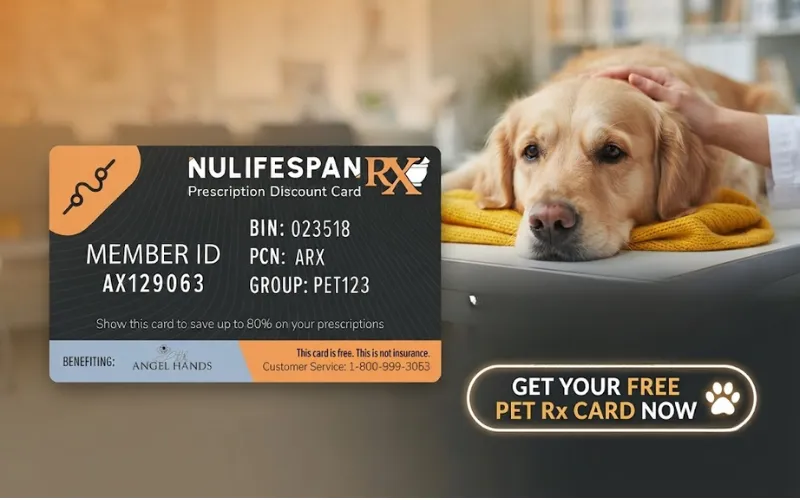
Veterinary drug approval itself is also a more limited pathway than human drug approval. The FDA’s Center for Veterinary Medicine oversees a much smaller portfolio of approved animal drugs than the FDA’s human drug divisions, and developing a new feline-specific drug is expensive relative to the size of the market that will use it. That economic reality shows up in the price you see at pickup.
What Actually Drives the Price of a Cat’s Prescription
Medication type
Some drug classes, particularly newer injectable therapies, specialty anti-nausea or appetite medications, and certain long-term chronic disease treatments (such as those used for feline kidney disease or hyperthyroidism), are inherently more expensive to manufacture and carry higher list prices regardless of species.
Dosage and formulation
A cat’s small size often means a fraction of a human or dog dose is needed, and manufacturers do not always produce a tablet or capsule at that exact low strength. That mismatch frequently pushes a prescription toward compounding, which adds cost, discussed in detail below.
Compounding
When no commercially manufactured product matches the strength, flavor, or form a cat needs, a compounding pharmacy prepares a custom version. Compounded preparations are not mass produced, are made in smaller batches, and require additional pharmacist and technician time, all of which add cost compared with a standard manufactured tablet.
Supply
If a specific veterinary drug or the human drug a veterinarian is prescribing off-label is in short supply, wholesale costs rise, and that gets reflected in what you pay.
Pharmacy markup
Veterinary clinics, retail pharmacies, online pet pharmacies, and compounding pharmacies each set their own markup over acquisition cost, and that markup can vary meaningfully between them for the exact same product.
Limited generic competition
As covered above, many feline medications and feline-specific strengths simply do not have multiple generic manufacturers competing to lower the price the way common human generics do.
Why the Price Can Differ by Where You Fill It
The same prescription can carry a different price depending on where it is filled, because each type of pharmacy has its own acquisition costs, overhead, and business model.
Veterinary clinics often carry a markup that reflects in-house convenience, staff time for client counseling, and the clinic’s own purchasing costs, which are frequently higher per unit than a large retail pharmacy’s bulk purchasing power.
Retail pharmacies, including large chains, can sometimes fill an eligible written prescription for less than an in-clinic price, particularly for human medications a veterinarian has prescribed off-label for a cat, since those pharmacies buy in high volume across a broad human customer base.
Online pet pharmacies vary widely. Some offer competitive pricing through volume purchasing, while others carry their own markup or shipping costs that offset any savings. Verify that any online pharmacy is properly licensed before ordering.
Compounding pharmacies typically charge more per dose than a standard manufactured product, because of the custom preparation work described above, even though they can be the only source for a formulation a cat will actually accept.
Comparing prices across these four channels for the exact same medication, strength, and quantity is one of the most effective ways to find a lower price, which is covered further down in the cost-saving section.
Veterinary-Only Drugs vs. Human Medications Prescribed for Cats
Some medications given to cats are approved by the FDA specifically for animal use. Others are human drugs that a veterinarian has chosen to prescribe for a cat under a legal framework called extralabel drug use, established by the Animal Medicinal Drug Use Clarification Act (AMDUCA). This law allows a licensed veterinarian, within a valid veterinarian-client-patient relationship, to prescribe an approved human or animal drug in a way that differs from its original labeling, including for a different species, when no suitable veterinary-approved option exists.
This distinction matters for pricing because a human drug prescribed off-label for a cat is priced and regulated as a human pharmaceutical product, which means it may be eligible for comparison at a human retail pharmacy, while a veterinary-only drug generally is not sold through human retail pharmacy channels at all. Whether a specific drug falls into one category or the other is something only your veterinarian can confirm, since it depends on the exact product prescribed.
Why Compounded Liquids, Flavored Medications, and Custom Doses Cost More
Compounding exists because cats are notoriously difficult to medicate, and a formulation a cat will not eat or tolerate is not an effective treatment no matter how affordable it is. Turning a standard tablet into a flavored liquid, a transdermal gel, or a low-dose custom capsule requires a licensed compounding pharmacist to individually prepare each batch, test consistency, and package it appropriately. None of that work is automated the way mass manufacturing is, and the cost of that specialized labor and equipment is passed on in the price.
This is also why a compounded preparation is not simply “the same drug, made smaller.” A compounded product does not go through the FDA’s new drug approval process the way a manufactured product does, so its stability, exact potency, and absorption can vary by batch and by pharmacy. Compounding is a legitimate and often necessary tool in feline medicine, but it is a different product category from an FDA-approved tablet, both clinically and in terms of price.
Is a Generic or Alternative Formulation Available?
It is always worth asking your veterinarian directly whether an FDA-approved generic version of a prescribed medication exists for your cat’s specific strength and formulation. As covered in our guide on generic versus brand-name drugs, a generic can sometimes offer meaningful savings over a brand product when one is available and appropriate. Whether that applies to your cat’s specific prescription, and whether an alternative formulation would work just as well, is a clinical decision your veterinarian is best positioned to make.
How Quantity and Refill Frequency Affect Total Cost
Just as with human prescriptions, the quantity dispensed and how often you refill can change your total cost. A larger supply, when clinically appropriate and shelf-stable for the medication in question, sometimes lowers the per-dose price compared with frequent small refills, since compounding and dispensing both carry a per-fill cost regardless of quantity. Whether a longer supply is appropriate depends on the medication’s stability, your cat’s treatment plan, and your veterinarian’s monitoring schedule, so this is a question to raise directly with your veterinary team rather than a decision to make independently.
Safe Ways Owners May Reduce Costs
- Ask the veterinarian whether an FDA-approved generic is appropriate. Not every prescription has one, but it costs nothing to ask, and your veterinarian can confirm whether a generic would be clinically suitable for your cat.
- Request a written prescription when legally permitted. In many states, veterinarians are required to provide a written prescription on request so you can compare prices at outside pharmacies, rather than filling only in-clinic.
- Compare prices at licensed pharmacies. Check pricing across your veterinary clinic, a retail pharmacy, and a licensed online pet pharmacy for the exact same medication, strength, and quantity before assuming any one source is cheapest.
- Ask whether a different quantity or formulation is suitable. A different package size or a non-compounded formulation, if your cat will reliably take it, may be less expensive.
- Check official manufacturer assistance programs when available. Some animal health manufacturers offer savings programs or rebates for specific products, which your veterinary clinic or the manufacturer’s website can confirm.
- Review pet-insurance and pharmacy-benefit limitations. If your cat has pet insurance, check your policy’s medication coverage, exclusions, and reimbursement process before assuming a prescription is or is not covered.
- Use a prescription discount card only when the exact medication is eligible. Discount cards apply to specific eligible medications and pharmacies, so confirm eligibility for your cat’s exact prescription before counting on a discount.
Important Safety Information Owners Should Know
A few points are worth stating clearly, because they matter for your cat’s safety as much as for your budget.
Owners must never change the dose, formulation, or medication their cat is prescribed without direct veterinary approval, even if a cost-saving idea seems reasonable. A veterinarian’s chosen dose and formulation reflect your cat’s weight, condition, and how that specific formulation will actually be absorbed and tolerated.
Human and veterinary products are not automatically interchangeable, even when they share an active ingredient. Concentration, inactive ingredients, and formulation can differ in ways that matter for a cat’s safety.
Some human medications are toxic to cats, even in small amounts. Acetaminophen (found in Tylenol and many combination products) is highly toxic to cats because they lack the liver enzymes needed to safely process it, and ibuprofen and other NSAIDs are also dangerous for cats. Never give a cat any human medication, including over-the-counter products, without explicit veterinary guidance, and never assume a human product is a safe or cheaper substitute.
How to Compare Prices Using NuLifeSpanRX
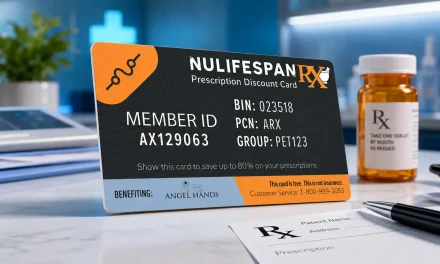
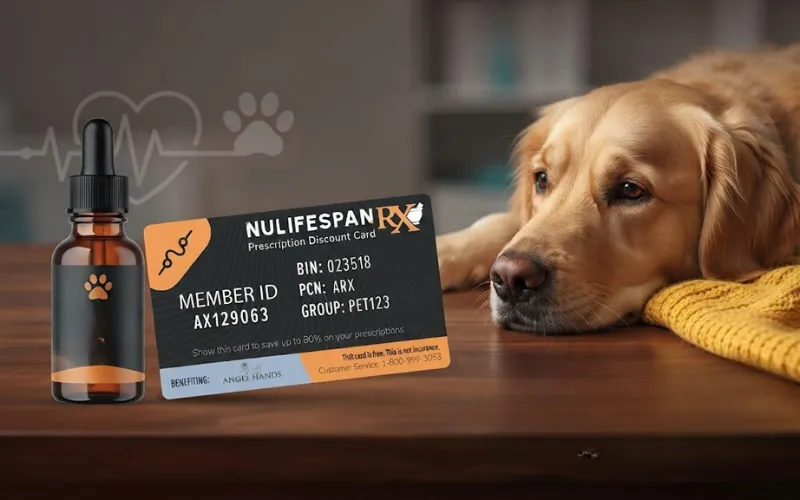
If your veterinarian has prescribed an eligible human medication for your cat under extralabel use, and confirmed that a human-pharmacy fill is appropriate, a NuLifeSpanRX discount card can help you compare cash prices for that exact medication, strength, and quantity across pharmacies in the NuLifeSpanRX network. This only applies to eligible human medications filled through a participating pharmacy. It does not apply to veterinary-only drugs, which are not distributed through human retail pharmacies, and it does not apply to compounded preparations, which are prepared individually by a compounding pharmacy outside the standard retail pharmacy pricing system. For more on how this works with pets generally, see our guide on whether pet medications are cheaper at human pharmacies.
A few things to keep in mind. A prescription discount card is not pet insurance, and it does not replace the coverage or claims process of an actual pet insurance policy. Discount cards generally cannot be combined with insurance, since they apply a separately negotiated cash price rather than working alongside a claims-based benefit. Savings and pharmacy acceptance are never guaranteed, and they depend on the specific medication, the pharmacy, and your location. Always confirm eligibility and current pricing directly before you rely on any estimate.
For a broader look at reducing pet prescription costs across both dogs and cats, our guide to saving money on pet prescriptions covers additional strategies.
Frequently Asked Questions
Why is my cat’s prescription so expensive?
Cat prescriptions are often expensive because fewer medications are FDA-approved specifically for cats, many prescriptions require custom compounding to reach the right size or flavor, generic competition is limited compared with human drugs, and pharmacy markup varies by where the prescription is filled.
Are compounded medications for cats more expensive than regular tablets?
Generally, yes. Compounded medications are prepared individually by a pharmacist rather than mass manufactured, which adds labor, equipment, and quality-testing costs that a standard manufactured tablet does not carry.
Can I give my cat a human medication to save money?
Only if your veterinarian has specifically prescribed a human medication for your cat under extralabel drug use. Many human medications, including acetaminophen and ibuprofen, are toxic to cats even in small amounts, so no human medication should ever be given to a cat without direct veterinary guidance.
Is a prescription discount card the same as pet insurance?
No. A discount card is not insurance and does not replace a pet insurance policy’s coverage or claims process. Discount cards generally cannot be combined with insurance, and any savings or pharmacy participation depend on the specific medication and pharmacy.
Can I use a NuLifeSpanRX discount card for my cat’s medication?
It may apply if your veterinarian has prescribed an eligible human medication under extralabel use and the medication is filled at a participating pharmacy. It does not apply to veterinary-only drugs or to compounded preparations, and eligibility should always be confirmed directly.