

The seasonal allergy medication cost without insurance is often lower than people expect, as long as you know which products to compare. As of October 21, 2026, store-brand antihistamines like loratadine, cetirizine, and fexofenadine are listed for roughly 5 to 25 cents per daily tablet, and generic steroid nasal sprays are listed around $15 per bottle. Prescription options vary more, which is where a free prescription discount card and a quick price comparison can make a real difference.
What you pay depends on the type of medication, whether it is over the counter (OTC) or prescription, generic or brand-name, the package size, and where you buy it. This guide compares the most common seasonal allergy treatments side by side using verified, date-stamped prices, explains where prescription savings apply and where they do not, and shares safe ways to lower your cost through spring, summer, and fall pollen seasons.
Paying Too Much for Allergy Prescriptions?
Check which allergy medications qualify for NuLifeSpan Rx savings before your next pharmacy visit.
How Much Do Seasonal Allergy Medications Cost Without Insurance?
Most seasonal allergy plans come down to a daily pill, a daily nasal spray, or both. Here is roughly what each approach costs without insurance, based on listings checked October 21, 2026:
- Daily store-brand pill only: about $1.50 to $7.50 a month, depending on bottle size
- Generic steroid nasal spray only: about $15 to $17 per bottle
- Pill plus spray: about $16 to $25 for a month of tablets and one bottle of spray
- Prescription generic pill: about $6 to $12 for 30 tablets with a discount applied
- Brand-name prescription: from about $70 to nearly $300, depending on the product
The spread is wide because the same active ingredient can be sold under a national brand, a store brand, or as a prescription generic, each at a different price. The sections below break down each medication so you can see where your own plan falls in that range.
What Affects the Cost of Seasonal Allergy Medications?
Allergy medication prices can look confusing because so many versions sit on the same shelf. A box of 24 brand-name tablets might cost more than a bottle of 300 store-brand tablets with the identical ingredient and strength. Once you know the main price drivers, comparing products becomes much easier.
- Brand vs. generic or store brand: national brands spend heavily on marketing, while generics compete mainly on price.
- Package size: larger bottles usually bring the cost per dose down sharply, which matters for a full season of daily use.
- OTC vs. prescription status: OTC prices are shelf prices, while prescription prices depend on the pharmacy and any discount applied.
- Formulation: liquids, chewables, dissolving tablets, and combination products with decongestants generally cost more per dose than plain tablets.
- Pharmacy and location: prescription cash prices can vary a lot between stores, even within the same city.
- Length of the season: someone with symptoms for six weeks will spend far less than someone who treats spring, summer, and fall allergies.
Every price in this guide includes its package size, so you can work out the cost per dose for yourself instead of judging by the box.
Over-the-Counter vs. Prescription Allergy Medication Costs
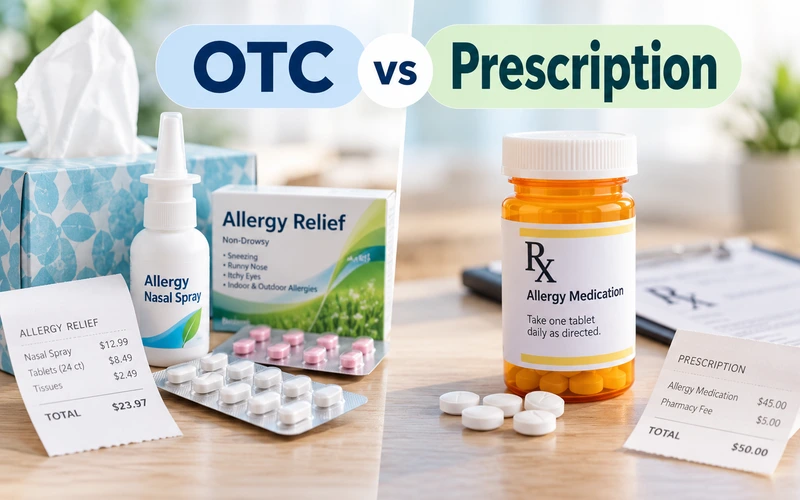
Many of the most effective seasonal allergy treatments moved from prescription-only to OTC over the past two decades, including several antihistamines and steroid nasal sprays. That shift made them easy to buy, but it also changed how they are priced. OTC products are sold at shelf prices, and prescription discount programs generally do not apply to them.
Prescription allergy medications are priced differently. The cash price depends on the pharmacy, and a discount card can lower it significantly. The NuLifeSpan Rx program, for example, applies to prescription medications; certain OTC drugs that come in prescription forms may be eligible for discounts when a healthcare professional prescribes them. That means a prescribed generic can sometimes cost less at the pharmacy counter than its OTC shelf version, while in other cases the store-brand shelf price is already the lowest option.
The takeaway is simple: compare both. Our guide comparing OTC vs prescription costs uses pain relievers as the example, but the same logic applies to allergy medications.
Common Antihistamine Costs Without Insurance
Oral antihistamines block histamine, the chemical your body releases when it reacts to pollen. They help with sneezing, itching, runny nose, and watery eyes, though they tend to do less for nasal congestion. Newer, once-daily antihistamines are less likely to cause drowsiness than older ones, which affects both comfort and safety.
Cetirizine (Zyrtec)
Generic cetirizine 10 mg is listed from about $5.80 to $7.42 for 30 tablets and from about $16.71 for 365 tablets, which is under 5 cents per daily dose in the larger bottle. One tablet covers a full day for most adults. Some users do feel sleepy on cetirizine, so it is smart to try your first dose at a time when drowsiness would not be a problem.
Loratadine (Claritin)
Generic loratadine 10 mg is one of the least expensive allergy medications available. It is listed from about $5.97 for 30 tablets and from about $14.15 for 300 tablets, or roughly 5 cents per dose. Loratadine is taken once daily and is generally considered non-drowsy, which makes it a common starting point for mild seasonal symptoms.
Fexofenadine (Allegra)
Generic fexofenadine 180 mg is listed from about $5.56 for 30 tablets and from about $10.87 for 180 tablets, or about 6 cents per dose. Like loratadine, it is a once-daily option that rarely causes drowsiness. Fruit juices such as grapefruit, orange, and apple can reduce how well it is absorbed, so follow the label’s directions to take it with water.
Diphenhydramine (Benadryl)
Diphenhydramine is an older, first-generation antihistamine. Generic 25 mg capsules are listed from about $4.78 to $5.36 for 30 capsules, so the box price looks low. However, it is usually taken every 4 to 6 hours, which means a day’s use takes several doses, and it commonly causes drowsiness and slowed reaction time. For daily seasonal allergy control, many healthcare professionals prefer newer antihistamines, and diphenhydramine is a poor choice before driving.
Allergy Nasal Spray Costs
Nasal sprays fall into two main groups: steroid (corticosteroid) sprays that calm inflammation inside the nose, and antihistamine sprays that block histamine right where symptoms start. Spray counts differ by bottle, so check the label for the number of sprays and your daily dose when comparing prices.
Fluticasone (Flonase)
Generic fluticasone propionate 50 mcg nasal spray is listed from about $14.98 for a 16 g bottle and from about $12.45 for a smaller 9.9 mL bottle. It is available both OTC and by prescription. Like other steroid sprays, it works best when used every day, and it may take several days of regular use before you feel the full effect, so it is not a quick fix after symptoms flare.
Triamcinolone (Nasacort)
A 16.9 mL bottle of generic triamcinolone 55 mcg is listed from about $14.94. Many people find it has less scent than some other sprays, which can make daily use easier. It is also sold OTC and by prescription, so compare the shelf price against a prescription discount price before buying.
Budesonide (Rhinocort)
Generic budesonide 32 mcg comes in a smaller 8.43 mL bottle, listed from about $17.01. It is another once-daily steroid spray sold OTC. Check the spray count on the label before comparing it with fluticasone or triamcinolone, since a smaller bottle may not last as long.
Azelastine Nasal Spray
Azelastine is an antihistamine nasal spray rather than a steroid. Generic azelastine 0.1% is generally a prescription product, while a 0.15% version is sold OTC under the brand name Astepro. For a 30 mL bottle of generic azelastine 0.1%, SingleCare lists a discounted price of about $13.99. Azelastine can cause a bitter taste and some drowsiness.
Proper technique helps any nasal spray work better and reduces irritation. MedlinePlus has a clear guide on using nasal corticosteroid sprays, including aiming the spray away from the center of the nose.
Prescription Seasonal Allergy Medication Costs
Prescription allergy medications are usually considered when OTC options do not control symptoms well, when symptoms overlap with asthma, or when a specific product fits a patient’s needs better. These are also the medications where a prescription discount card has the most impact, because pharmacy cash prices vary so widely. Below are the most common options and their listed discounted prices.
Montelukast (Singulair)
Generic montelukast is one of the cheapest prescription allergy pills, with 30 tablets of the 10 mg strength listed from about $5.81, while brand-name Singulair is listed near $290.57. The low price comes with an important caveat: montelukast carries an FDA boxed warning for serious mental health and behavior changes, and the FDA advises saving it for people whose hay fever has not improved on other treatments, or who cannot take them. The FDA Drug Safety Communication explains this warning in detail.
Levocetirizine (Xyzal)
Levocetirizine 5 mg is available as a prescription generic and as an OTC brand product. On the Drugs.com price guide, generic levocetirizine 5 mg is listed from about $6.42 for 30 tablets through Cost Plus Drugs (plus a $5 delivery fee) and about $7.21 for 30 tablets at a retail pharmacy using SingleCare pricing. It is usually taken once a day in the evening and can cause drowsiness in some people.
Desloratadine (Clarinex)
Desloratadine is a prescription-only antihistamine. Generic desloratadine 5 mg tablets are listed from about $54.72 for 100 tablets, or about 55 cents per tablet, which is more per dose than OTC loratadine. Orally disintegrating versions are listed much higher, from about $130.13 for 30 tablets, so ask the pharmacist whether regular tablets are an option for you.
Other Prescription Options
For severe or persistent allergies, prescribers may consider combination nasal sprays, short courses of other medications, or allergy shots (immunotherapy), which MedlinePlus notes can reduce sensitivity to pollen over time. These options vary widely in cost and are highly individual, so pricing them requires your exact prescription. Our NuLifeSpan Rx pricing tool is the easiest way to check those costs once you have a prescription in hand.
Seasonal Allergy Medication Price Comparison Table
The table below brings the main options together. All prices come from the Drugs.com price guide and its partner listings, checked October 21, 2026, unless noted. OTC listings may differ from your local shelf price, and package sizes are not equal, so compare cost per dose.
| Medication | Generic/Brand | OTC or Prescription Status | Package Size/Quantity | Verified U.S. Price | Source |
| Loratadine 10 mg tablets | Generic (Claritin) | OTC | 30 tablets / 300 tablets | From $5.97 / from $14.15 | Drugs.com, listed pharmacy price |
| Cetirizine 10 mg tablets | Generic (Zyrtec) | OTC | 30 tablets / 365 tablets | From $5.80 / from $16.71 | Drugs.com, listed pharmacy price |
| Fexofenadine 180 mg tablets | Generic (Allegra) | OTC | 30 tablets / 180 tablets | From $5.56 / from $10.87 | Drugs.com, listed pharmacy price |
| Diphenhydramine 25 mg capsules | Generic (Benadryl) | OTC | 30 capsules | From $4.78 | Drugs.com, Blink Health listing |
| Fluticasone propionate 50 mcg nasal spray | Generic (Flonase) | OTC and Rx | 16 g bottle | From $14.98 | Drugs.com, cash price |
| Triamcinolone 55 mcg nasal spray | Generic (Nasacort) | OTC and Rx | 16.9 mL bottle | From $14.94 | Drugs.com, cash price |
| Budesonide 32 mcg nasal spray | Generic (Rhinocort) | OTC and Rx | 8.43 mL bottle | From $17.01 | Drugs.com, cash price |
| Azelastine 0.1% nasal spray | Generic (Astelin) | Prescription | 30 mL bottle | About $13.99 | SingleCare, discounted cash price |
| Astelin 0.1% nasal spray | Brand | Prescription | 30 mL bottle | From $70.38 | Drugs.com, discounted cash price |
| Montelukast 10 mg tablets | Generic (Singulair) | Prescription | 30 tablets | From $5.81 | Drugs.com, discounted cash price |
| Singulair 10 mg tablets | Brand | Prescription | 30 tablets | From $290.57 | Drugs.com, discounted cash price |
| Levocetirizine 5 mg tablets | Generic (Xyzal) | Prescription (also sold OTC as brand) | 30 tablets | From $6.42 plus $5 delivery | Drugs.com, Cost Plus Drugs listing |
| Desloratadine 5 mg tablets | Generic (Clarinex) | Prescription | 100 tablets | From $54.72 | Drugs.com, discounted cash price |
Remember that the cheapest product is not automatically the right one. Choosing an allergy medication should depend on your symptoms, your other health conditions, and safety, with price as an important but secondary factor.
Generic vs. Brand-Name Allergy Medication Costs
Store-brand and generic allergy medications contain the same active ingredient, in the same strength, as their brand-name versions. Under FDA rules, generics must meet the same standards for quality and performance. The difference you pay for is mostly the brand name, the marketing, and sometimes the packaging.
The savings are often largest with prescription products. Generic azelastine runs about $14 per bottle with a SingleCare discount, while the same size of brand-name Astelin starts near $70. With OTC products the dollar gap is smaller but adds up over a long season, since a large store-brand bottle can cost less than a small branded box. Whether a generic truly matches its brand is covered in our article on generic vs brand-name drugs .
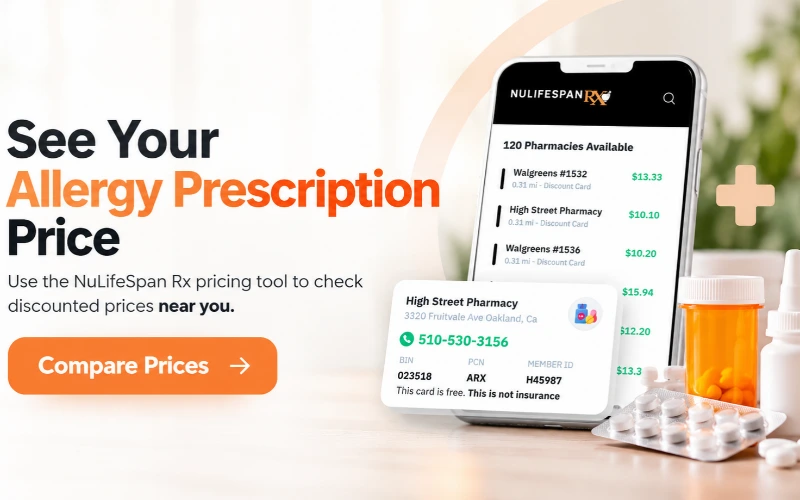
See Your Allergy Prescription Price
Use the NuLifeSpan Rx pricing tool to check discounted prices for your prescription at pharmacies near you.
Which Allergy Medications Are Most Affordable?
On price alone, store-brand once-daily antihistamine tablets bought in bulk are the cheapest way to treat seasonal allergies, followed by generic steroid nasal sprays. The most affordable choice for you, though, is the one that controls your main symptom, because a product that does not work usually leads to buying a second one.
- Mostly sneezing, itching, and runny nose: a store-brand antihistamine tablet is often the lowest-cost place to start.
- Mostly a stuffy, blocked nose: a generic steroid spray may be better value than a pill, even though the bottle costs more.
- Itchy, watery eyes: an oral antihistamine may help, and a pharmacist can say whether allergy eye drops are worth adding.
- Symptoms OTC products have not controlled: a prescription generic, priced with a discount card, may cost less than stacking several OTC products.
A pharmacist can usually help you match a lower-cost option to your symptoms in a few minutes.
How to Save Money on Allergy Medication Without Insurance
Small decisions add up over a full allergy season, especially if more than one person in your household has symptoms. Most of these strategies take only a few minutes. Use them together for the biggest effect.
- Choose store brands and generics. Check the active ingredient and strength on the label, then pick the lowest price per dose.
- Buy larger bottles for long seasons. If you treat allergies for months, bigger packages can cut the per-tablet cost dramatically. Check the expiration date first.
- Plan ahead of your usual season. Having your regular product on hand early helps you avoid last-minute purchases of pricier combination products during a bad flare.
- Avoid paying for features you do not need. Combination products with added decongestants cost more and are not right for everyone, including people with high blood pressure.
- Skip duplicate ingredients. Check labels so you are not taking two products with the same antihistamine, which wastes money and raises the risk of side effects.
- Consider a 90-day prescription supply. For prescription medications you take daily through a long season, our guide to the 90-day supply explains when the larger fill saves money.
- Reduce exposure at home. Keeping windows closed on high-pollen days, showering after time outdoors, and using saline rinses with distilled or sterile water can reduce symptoms, which may mean you need less medication.
If your household juggles several medications at once, our guide to multiple prescriptions shows how to organize and lower the total cost.
Can Prescription Discount Cards Help With Allergy Medication Costs?
Yes, for prescription allergy medications. A discount card unlocks prices that were negotiated ahead of time with participating pharmacies. As one example, SingleCare’s price table shows generic azelastine nasal spray at CVS for $58.50 at the regular retail price and $30.14 with its discount, close to half off at the same counter.
The NuLifeSpan Rx card works the same way and is built for households. One free card can be shared with family members, it never expires, and it can be saved to a phone wallet or printed. There are two versions: a generic card that gives the discount with no sign-up, and a personalized card that also earns cashback on eligible prescription purchases. Savings differ by medication and pharmacy, so the price shown in the pricing tool is your best guide.
One limit to remember: a discounted purchase does not count toward an insurance deductible, so people with coverage should compare both prices before choosing. If you want to understand the system behind the savings, our explainer on discount networks walks through how these prices are set, and our article asking whether discount cards are legit answers common concerns.
How to Compare Pharmacy Prices
Prescription prices for the same allergy medication can differ a lot between pharmacies. On the Drugs.com price guide, 30 tablets of generic levocetirizine 5 mg range from about $6.42 at one online pharmacy to about $15.17 at a retail chain, more than double for identical tablets. A quick check before you fill keeps you on the lower end.
- Have your prescription details ready: the medication name, strength, form, and quantity.
- Search your zip code: use a pricing tool to see discounted prices at nearby pharmacies.
- Compare the same quantity: make sure each price is for the same number of tablets or the same bottle size.
- Check delivery fees: online pharmacies may add shipping charges that change which option is truly cheapest.
- Ask at the counter: request both the discount price and the regular cash price, and pay the lower one.
Chain pharmacies can price the same drug very differently. Our guides explain why Walmart pharmacy prices change from store to store, how to save at CVS without insurance, and how discount cards work at Walgreens.
How to Choose an Appropriate Allergy Medication With a Healthcare Professional
Allergy medications are widely available, but the right choice still depends on your health. The FDA’s consumer guide on choosing seasonal allergy medication encourages people to read labels carefully and ask a pharmacist or healthcare provider when unsure. That advice matters most when you have other conditions or take other medications.
Talk with a pharmacist or healthcare provider before choosing a product if:
- You are pregnant or breastfeeding
- You are treating a child, especially a young child
- You have high blood pressure, heart disease, glaucoma, or trouble urinating
- You have asthma, or your allergy symptoms come with wheezing or shortness of breath
- You take other medications that cause drowsiness
- You are an older adult, since older antihistamines like diphenhydramine can increase the risk of confusion and falls
If your symptoms last most of the year or keep returning despite treatment, an allergist can test for specific triggers and discuss allergy shots. The MedlinePlus hay fever guide is a reliable starting point for understanding symptoms and treatment options. If you want background on why your body reacts to pollen in the first place, our article on the immune system explains the basics.
Pets can suffer from seasonal allergies too. If your dog or cat needs a prescription allergy medication, the NuLifeSpan Rx card can also be used for pet prescriptions filled at participating pharmacies.
Frequently Asked Questions
What is the cheapest allergy medication without insurance?
Large bottles of store-brand loratadine, cetirizine, or fexofenadine usually win on price, often costing just a few cents per dose. A cheaper option only saves money if it controls your symptoms, so ask a pharmacist which one suits you.
Is Flonase cheaper than Zyrtec?
Usually not. Per day, generic cetirizine (Zyrtec) in a large bottle tends to cost less than a bottle of generic fluticasone (Flonase). The two are not substitutes, though: Flonase is a steroid spray that calms nasal swelling, Zyrtec is an antihistamine pill, and some people need one, the other, or both.
Do prescription discount cards work on OTC allergy medicine?
Not when you buy them off the shelf. If a healthcare professional writes a prescription for an allergy drug that also comes in a prescription form, the pharmacy may be able to price it with the card, so ask the pharmacist to compare both ways.
How much does montelukast cost for allergies without insurance?
A month of the generic, priced with a discount card, runs about the same as a month of OTC antihistamine tablets. Price is rarely the deciding factor, though, because its safety warning makes it a later option for hay fever. Your prescriber can explain whether it fits your situation.
Are store-brand allergy pills as good as name brands?
For the active ingredient, yes. If the label lists the same ingredient and strength, you are getting the same medicine. Inactive ingredients such as dyes or fillers can differ, which matters only if you are sensitive to one of them.
When should I start taking allergy medication for the season?
Many people benefit from starting before their usual symptoms begin, especially with steroid nasal sprays, which work best with steady daily use. Ask your healthcare provider or pharmacist about timing based on your typical pollen season and symptoms.
Is diphenhydramine a good choice for daily seasonal allergies?
For most people, no. It can relieve symptoms in the short term, but for weeks of seasonal allergies a once-daily, less sedating option is usually more practical and safer for work, driving, and older adults.
Conclusion
Keeping the seasonal allergy medication cost without insurance low is mostly about habits: reading the active ingredient instead of the brand, buying the package size that fits your season, and checking prescription prices before you pay. Those habits work for a single bad spring or for symptoms that return every year.
The right product still depends on your symptoms and health history, so bring questions to your pharmacist or provider before switching. When a prescription is part of the plan,NuLifeSpan Rx makes it simple to see what it should cost near you.
Medical disclaimer: This guide shares general information and does not replace advice from a pharmacist or healthcare provider. Prices were gathered on October 21, 2026, change often, and may not match your local store or pharmacy.











Trackbacks/Pingbacks