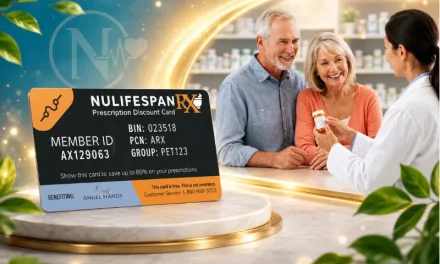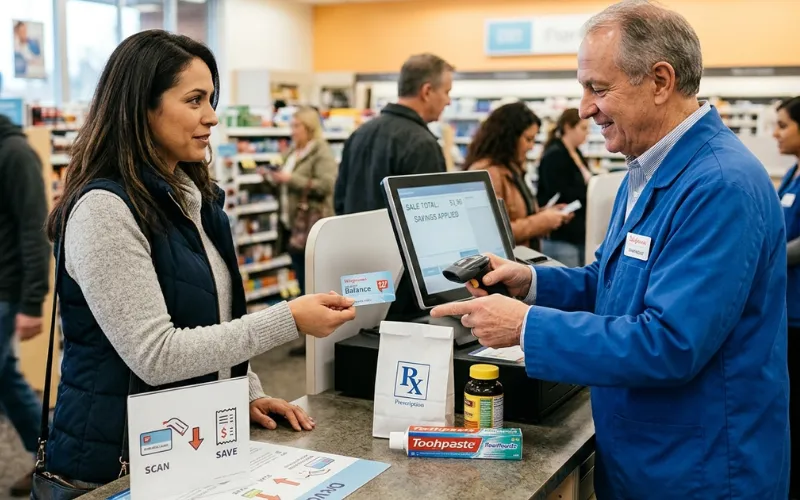
Walgreens prescription discount cards act like third-party coupons that lower the cash price of medications, often by about 65% and sometimes up to 80%. Patients don’t use insurance with these cards; the pharmacist runs the prescription as a cash claim using the card’s BIN, PCN, Group and ID numbers.
Payments won’t count toward deductibles or out-of-pocket maximums, but they can significantly reduce costs, especially for uninsured patients, underinsured families, and anyone whose copay exceeds the discounted cash price. Free programs like the NuLifeSpan Rx discount card work on exactly this model, giving patients instant savings at over 35,000 pharmacies including Walgreens, with no fees or eligibility requirements, and no account creation needed to use the generic version.
Key Takeaways
- Walgreens prescription discount cards act like third-party coupons, lowering cash prices on eligible prescriptions, often by 65% or more, on both brand-name and generic drugs.
- They’re used instead of insurance (not combined with it), and discounted payments don’t count toward insurance deductibles or out-of-pocket maximums.
- Customers search drug prices and available discounts via the Rx Savings Finder (walgreens.rxsense.com) and show the card image or printout at checkout.
- The pharmacy enters the card’s BIN, PCN, Group, and ID to process the prescription as a cash claim and apply the discount.
- Patients on Medicare should compare their Part D copay against the discount card cash price, since a card sometimes beats the plan price on generics.
- The free NuLifeSpan Rx card is offered by a nonprofit dedicated to improving healthcare access for children and families. It is accepted at Walgreens and more than 35,000 other pharmacies, offering savings of up to 80% and $1.50 cash back on eligible transactions.
How Walgreens Prescription Discount Cards Work
Although they may look like insurance cards, Walgreens prescription discount cards actually work as third-party coupons that lower a patient’s cash price at the register. They apply negotiated rates to eligible prescriptions, vaccines, and select supplies, delivering discount card benefits that often reduce out-of-pocket costs by an average of about 65%, with some discounts reaching 80%.
Pricing applies whether the medication is brand-name or generic, though generic fills typically see the deepest discounts since the negotiated rate has more room below the cash retail price. These cards function independently of insurance and can’t be combined with insurance or manufacturer copay cards on the same transaction. Eligibility requirements are minimal: patients need a valid prescription from a licensed provider and must choose whether to use insurance or the discount card for each fill.
Insurance coverage doesn’t disqualify patients from using a card on separate cash transactions, but payments made with discount cards won’t count toward deductibles or out-of-pocket maximums. Many cards are free, have no expiration, and can be accessed digitally or in printed form for immediate use at Walgreens. Some competing cards require creating an account with a name and date of birth before the first use. The NuLifeSpan Rx card follows the free-forever model without that step.
It is completely free, never expires, can be added to Apple Wallet or Google Wallet, and can also be printed at home. No sign-up is required to use the generic version. Because NuLifeSpan Rx is backed by a nonprofit organization, its focus is on delivering genuine savings rather than upselling additional services.
How to Use Walgreens’ Rx Savings Finder
To use Walgreens’ Rx Savings Finder effectively, a patient first accesses the tool on a desktop or mobile device, then searches for their specific medication. The tool presents available discount card options and corresponding cash prices, allowing the patient to compare and select the most cost-effective choice. Once selected, the patient obtains the card digitally or in print and presents it at checkout so the pharmacy team can apply the discounted price.
Patients can also manage payment preferences and view prescription history through their Walgreens account to help track how much they save when using the Rx Savings Finder. For patients who want to compare prices across multiple pharmacy chains, not just Walgreens, before filling a prescription, the NuLifeSpan Rx pricing tool provides real-time prices from more than 35,000 pharmacies in one step.
Accessing Rx Savings Finder
When a patient wants to check their out-of-pocket cost before heading to the pharmacy, they can use Walgreens’ Rx Savings Finder online at walgreens.rxsense.com from any desktop or mobile device. This entry point optimizes Rx Finder benefits and overall user experience by giving patients rapid, self-service pricing insight. Walgreens’ collaboration with RxSense helps patients access deeper medication discounts through this tool.
To access and navigate the tool, a patient:
- Opens walgreens.rxsense.com, then types the exact medication name into the search bar.
- Selects their state, if prompted, so pricing reflects local market conditions.
- Reviews a list of free third-party prescription discount cards with transparent cash prices across multiple services.
- Chooses the lowest available price, then proceeds to view, save, or retrieve the selected coupon through their preferred method.
Comparing Available Discount Cards
Once a patient reaches the Rx Savings Finder results page, they can quickly compare available discount cards by reviewing a side-by-side list of cash prices for their selected medication across participating Walgreens locations. The tool presents multiple discount card types, each with its own pricing, so patients can evaluate savings potential before committing to a specific option. Because the service is available to all customers for free, patients do not need to sign up for a membership or pay a subscription fee to access these discount options.
Patients can scan key elements such as:
| Comparison Factor | What Patients Review |
|---|---|
| Cash price by card | Lowest available per-fill cost across discount card types |
| Drug strength/quantity | Confirmation that pricing matches the prescribed regimen |
| Pharmacy location | Prices at nearby Walgreens stores |
| Estimated savings | Percent off typical retail price, sometimes up to 80% |
| Insurance vs. cash choice | Whether a discount card beats the usual insurance or Medicare copay |
| Cross-pharmacy comparison | Whether a nearby CVS, Walmart, or independent pharmacy offers a lower price with a card like NuLifeSpan Rx |
This process supports informed, cost-conscious decisions.
Applying Discounts at Checkout
After comparing discount card options in Walgreens’ Rx Savings Finder, a patient can move straight into using the selected card at checkout to lower the cash price of a prescription. Sales tax applied to eligible items will be based on the store’s location and the applicable ship-to or pickup address rules.
At fill time, the patient presents the card image or printout to the Walgreens team member, who enters the BIN, PCN, Group, and ID to confirm discount eligibility and display real-time cash pricing. This process applies to any third-party discount card accepted at Walgreens, including the NuLifeSpan Rx card. Patients can present the card directly from their phone wallet, making checkout as simple and convenient as possible.
Patients can streamline this step by:
- Saving the generated card to their phone or printing it before arriving.
- Confirming the prescription will be run as a cash claim, not through insurance.
- Asking the pharmacist to verify the final price before authorizing the transaction.
- For recurring prescriptions, noting which card produced the lowest price at that location so the same card can be presented at the next refill.
Brand-Name vs. Generic Drug Pricing With a Discount Card
Discount cards apply to both brand-name and generic prescriptions, but the size of the savings usually depends on which type is being filled. Generic drugs already sit close to their manufacturing cost, so a discount card typically brings the price down to one of the lowest points available anywhere, sometimes near the $4 generics tier Walgreens offers on select common medications. Brand-name drugs carry more room for negotiation between the discount network and the manufacturer, which is why brand savings percentages can look larger on paper even though the final cash price is still higher than most generics.
A patient comparing options should ask the pharmacist for both the generic and brand cash price with the card applied, since a prescriber’s note allowing generic substitution can lead to a materially lower price on the same active ingredient. This is also where cross-pharmacy pricing tools such as the NuLifeSpan Rx pricing page are useful, since generic pricing in particular can vary more between pharmacies than brand pricing does.
Walgreens Prescription Savings Club vs. Discount Cards

Walgreens offers its own Prescription Savings Club as a paid membership that provides fixed low prices on thousands of generics. This is a different model from free third-party discount cards, and understanding the distinction helps patients choose the right tool for their situation. Widely known cards such as GoodRx work on the same free, no-membership model as NuLifeSpan Rx, so the real decision for most patients is a paid club membership against any of the free options rather than a choice between the free cards themselves.
The Prescription Savings Club charges an annual fee and delivers predictable pricing across a defined formulary. Free discount cards, including the NuLifeSpan Rx card, have no membership fees and work on a per-transaction basis. Each time a patient fills a prescription, the negotiated rate is automatically applied at the counter.
For patients who fill only a handful of prescriptions per year, a free card typically delivers comparable or better value than a paid membership program, without any upfront commitment. The Prescription Savings Club is also unavailable in Connecticut, Massachusetts, Mississippi, and Washington, meaning patients in those states relying on Walgreens’ in-house program have a gap that free third-party cards can fill directly.
Discount Cards vs. Medicare and Medicare Advantage
Patients enrolled in Medicare, including Medicare Advantage plans, are not required to give up a discount card. A prescription can be run through Part D or a Medicare Advantage drug benefit on one fill and through a cash discount card on the next, since the two cannot be combined on the same transaction but can be compared fill by fill. This matters most during the Medicare Part D coverage gap, when a plan’s copay can temporarily exceed the discount card’s cash price for the same generic drug.
A patient should ask the pharmacist to run both prices before paying, since a plan’s negotiated Part D price and a discount card’s cash price are calculated independently and either one can be cheaper depending on the drug and the time of year. Discount cards also work for patients who are between coverage, waiting on a new Medicare plan to activate, or who have a short-term gap in Part D enrollment.
myWalgreens Rewards vs. Third-Party Discount Cards
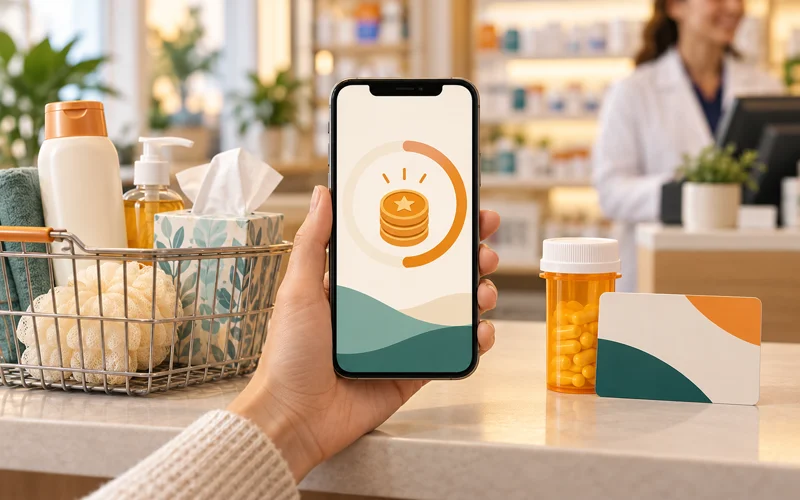
Walgreens’ myWalgreens loyalty program rewards members with Walgreens Cash on nearly every eligible transaction, but it operates on a different layer from prescription discount cards and serves a distinct purpose in a patient’s savings strategy.
myWalgreens earns cash rewards on front-of-store purchases and select pharmacy transactions, supports digital tracking in the app, and includes health-focused tools such as vaccination scheduling. It is most valuable for patients who make frequent non-prescription purchases at Walgreens and want to consolidate their shopping rewards in one place.
Traditional third-party discount cards, including free options such as NuLifeSpan Rx, focus on reducing the upfront prescription price rather than accumulating rewards. For patients whose primary concern is the immediate cost of their medications, a free discount card often delivers more direct value at the point of sale. NuLifeSpan Rx also includes its own cashback feature: cardholders earn $1.50 on every eligible transaction, paid out automatically once a month when the balance exceeds $25.
Traditional cards have notable limitations compared to a full loyalty program. They generally:
- Apply only to prescription medications, with no storewide rewards.
- Operate as third-party tools, not fully integrated with Walgreens systems.
- Provide one-time price reductions rather than ongoing Walgreens Cash accumulation.
- Offer no personalized wellness bonuses, unlike myWalgreens health-goal rewards.
Patients should evaluate long-term value, convenience, and clinical continuity when choosing.
How to Stack Discount Cards With myWalgreens Cash
To maximize savings at Walgreens, a patient can systematically layer discount tools so prescription discount cards reduce the upfront medication cost, while myWalgreens Cash and stackable boosters increase the value returned on the rest of the transaction.
After the pharmacist applies the prescription discount card to lower the drug price, the patient focuses on stacking strategies for eligible front-of-store items in the same basket. They first clip digital spend boosters, such as “spend $50, earn $10 Walgreens Cash” and “spend $25, earn $7,” which frequently stack and track the same transaction total. Category boosters, like personal care “spend $25, earn $7,” can layer in as a third digital booster. Next, they hand over a paper spend booster at checkout to add another Walgreens Cash reward tier.
Throughout, they respect single-use rules for digital and paper coupons and avoid overlapping promo codes, thereby maximizing savings without disrupting prescription discount card pricing.
Pet Meds, Vaccines, and Supplies at Walgreens
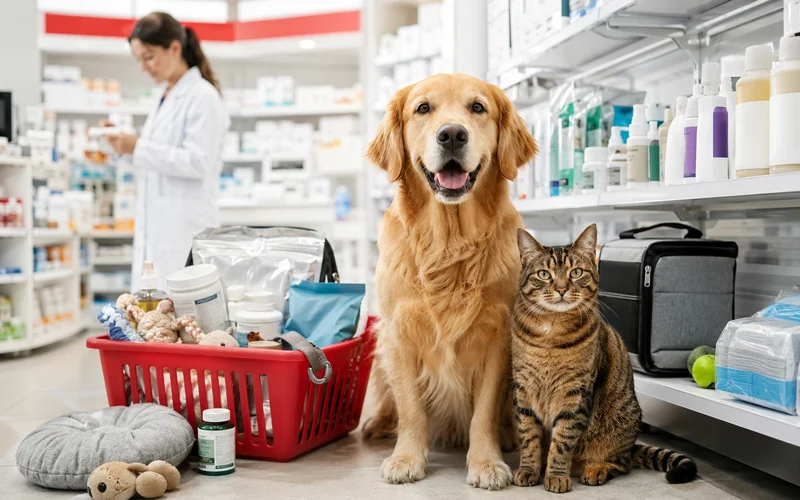
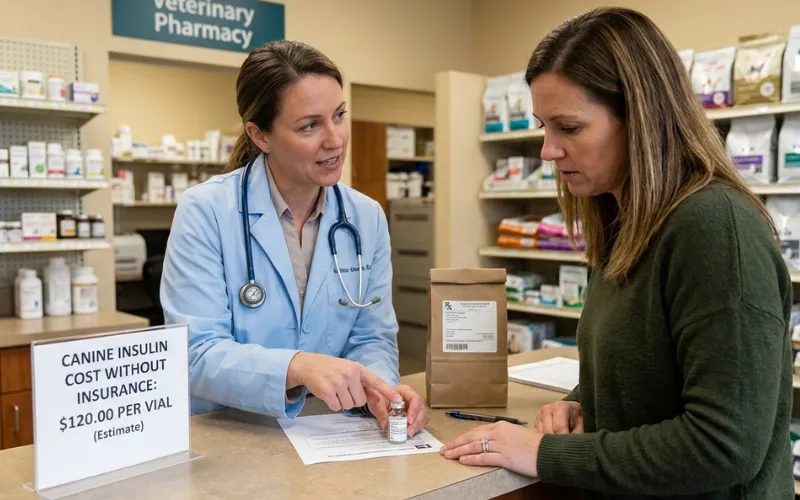
Walgreens extends many of its pharmacy services to family pets, allowing owners to fill veterinarian-written prescriptions for dogs and cats alongside their own medications. Pet medication availability includes common therapies for flea, tick, and heartworm prevention, pain control, thyroid disease, skin disorders, and infections.
Pharmacists can often order non-stocked items within two business days and use human-equivalent drugs when a veterinarian specifies the dose. Owners follow a clear process: provide a valid veterinarian-written prescription in person or have the clinic transmit it; confirm insurance or discount card use; and review dosing and monitoring instructions with pharmacy staff.
The NuLifeSpan Rx card also covers pet prescriptions. A veterinarian writes the prescription, and the card is presented at the pharmacy counter just as it would be for human medication. This makes it a practical single-card solution for households that fill prescriptions for both people and pets.
Key steps and options include:
- Verify stock and pricing, including $4 generics when applicable.
- Apply Prescription Savings Club, pet drug cards, or a free third-party card like NuLifeSpan Rx where allowed.
- Ask about vaccine options supplied as prescription preventives (e.g., heartworm protocols).
- Add OTC supplies, such as shampoos, probiotics, and training pads, with same-day pickup when available.
Limits, Exclusions, and Common Walgreens Discount Mistakes
Although Walgreens discount programs can lower out-of-pocket costs, each option carries specific limits, exclusions, and rules that patients must follow to avoid losing savings or rewards.
Patients should verify eligibility requirements: myWalgreens is limited to U.S. residents 16 and older, with parental consent for ages 16-18, and the Walgreens Prescription Savings Club isn’t available in Connecticut, Massachusetts, Mississippi, or Washington. myWalgreens Cash on prescriptions is capped at $65 per calendar year, and RGA Advantages discounts apply only to current members.
Discount limitations and transaction exclusions are frequent sources of common errors. RGA discounts don’t apply to non-Walgreens brands or online purchases, and certain restricted or disputed transactions never earn Walgreens Cash. Some states prohibit earning rewards on prescription transfers.
Free third-party cards, such as NuLifeSpan Rx, avoid most of these restrictions. They have no membership tiers, annual caps, or state-specific exclusions and work the same way for every user at every eligible pharmacy. The key rule that does apply universally: discount cards cannot be combined with insurance or Medicare billing on the same transaction, so patients should always compare both options before the pharmacist processes the claim.
Patients should always present cards or phone/ZIP, respect in-store versus online restrictions, and avoid attempted reward transfers or fraudulent use.
Walgreens Financial Assistance Programs
Beyond discount cards, Walgreens pharmacists can point eligible patients toward manufacturer patient assistance programs and foundation-funded copay support for certain high-cost brand-name drugs, particularly for chronic conditions where the retail price is far above what any discount card can reach.
These programs are separate from the Rx Savings Finder and typically require an application through the drug manufacturer or a nonprofit foundation rather than a card shown at checkout. For patients who don’t qualify for manufacturer assistance, either because of income limits or because their medication isn’t covered by a foundation program, a free discount card remains the fastest way to lower the price on the same visit with no application or waiting period.
Conclusion
Walgreens prescription discount tools can greatly cut medication costs when patients understand how each option works and when to use it. By comparing insurance, Medicare, and discount pricing, using the Rx Savings Finder, and considering the Prescription Savings Club or third-party cards, patients can systematically identify the lowest price on both brand-name and generic fills. Layering eligible discounts with myWalgreens rewards and including pet medications when appropriate helps maximize savings, while reviewing limits, exclusions, and financial assistance options prevents errors at the register.
For patients seeking a versatile savings option, the NuLifeSpan Rx discount card is worth downloading today. This free card is accepted at Walgreens and more than 35,000 other pharmacies, has no membership fees or eligibility requirements, and can provide savings of up to 80%. Offered by a nonprofit committed to improving healthcare access for children and families, it delivers instant pharmacy savings and $1.50 cashback on every eligible transaction, automatically deposited once a month with no action required.
Frequently Asked Questions
Can I Use Walgreens Discount Cards When Traveling or at Different Walgreens Locations?
They can generally use Walgreens discount options at different locations, but travel restrictions apply. myWalgreens coupons link to the account and follow them; Prescription Savings Club’s location benefits apply only at participating pharmacies; third-party cards vary by pharmacy participation. A card such as NuLifeSpan Rx is particularly useful when traveling because it is accepted at more than 35,000 pharmacies nationwide. If a Walgreens is not nearby, a participating CVS, Rite Aid, or independent pharmacy may be available.
Do Walgreens Prescription Discount Card Savings Apply to Mail-Order or Online Pharmacy Orders?
Walgreens hasn’t clearly confirmed that prescription discount card savings apply to mail-order or online pharmacy orders. Patients should verify potential mail-order discounts and online pharmacy savings directly with Walgreens or the customer care number on their discount card.
How Do Walgreens Discount Cards Affect Taxes or Flexible Spending Account (FSA) Reimbursements?
Walgreens discount cards don’t change sales tax rules but may lower out-of-pocket costs, affecting tax implications and receipts. For FSA eligibility, patients must confirm item type and insurer/FSA rules, then submit the final Walgreens receipt reflecting discounted amounts.
Can College Students, Caregivers, or Legal Guardians Use Discount Cards for Someone Else’s Prescriptions?
Many free discount cards are designed to be shared. The NuLifeSpan Rx card, for example, covers the cardholder’s entire family, including children, seniors, and even pets. NuLifeSpan Rx also encourages cardholders to share printed or digital copies with anyone who may benefit. At Walgreens, the pharmacist processes the card as a cash claim tied to the prescription, not to a specific patient identity, so family members can use the same card on their own prescriptions without issue.
What Privacy or Data Is Shared When I Use Walgreens’ Rx Savings Finder or Discount Cards?
Walgreens’ Rx Savings Finder use shares identifiers, purchase details, health-related data, and inferences with affiliates and third parties under defined data security safeguards; RxSense separately processes discount card searches and pricing, governed by its own user consent-driven privacy policy. Patients who prefer a simpler data footprint can use a generic (non-personalized) version of a free card like NuLifeSpan Rx, which requires no sign-up and still delivers the same pharmacy discounts.
Is NuLifeSpan Rx Accepted at Walgreens?
Yes. The NuLifeSpan Rx discount card is accepted at Walgreens locations as part of its network of over 35,000 participating pharmacies. To use it, simply show the card digitally from your phone wallet or present a printed copy when the pharmacist processes your prescription. The discount is applied instantly as a cash claim. The card is free, requires no insurance, has no expiration date, and can be used for the entire family including pets.