
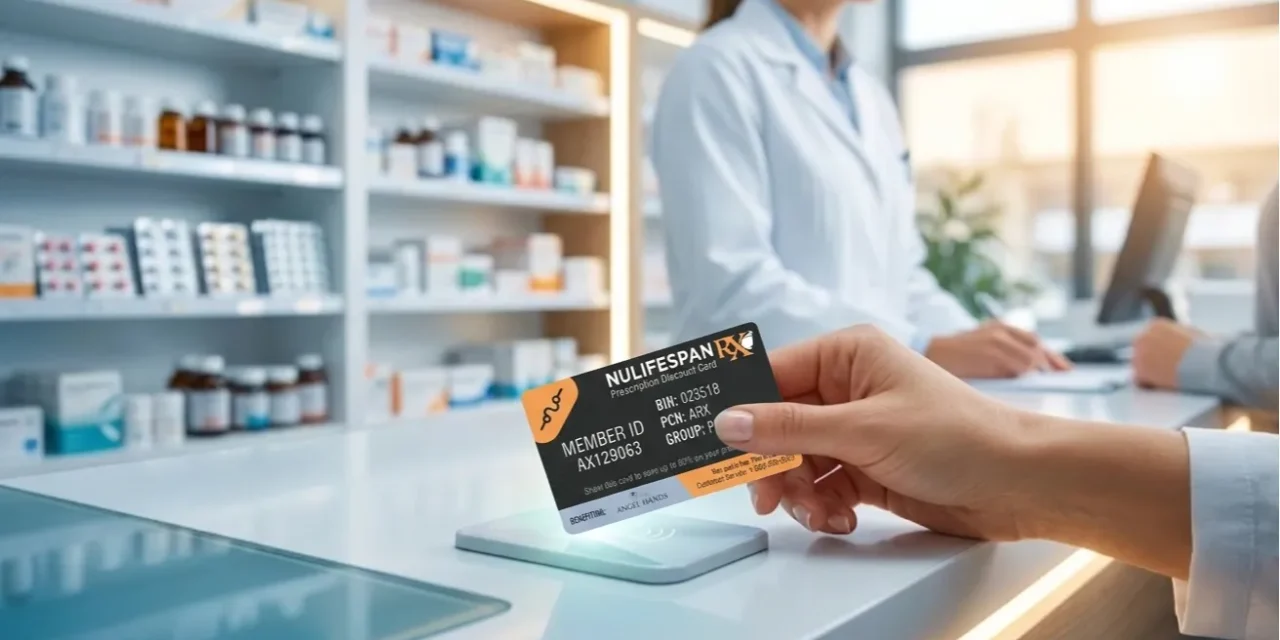
No, a prescription discount card is not the same as health insurance. A discount card lowers the price you pay at the pharmacy counter, while health insurance is a legal contract that covers a wide range of medical services, from doctor visits to hospital stays. Both serve different financial roles, and understanding that difference can change how much you spend on healthcare every month.
What Is a Prescription Discount Card
A prescription discount card is a tool, not a plan. It has no monthly premium, no enrollment paperwork, and no claims to file. You simply present the card at a participating pharmacy and pay a discounted price on your medication.
Here is what makes these cards stand out:
- They are available for free or at very low cost
- Savings can reach up to 80% on both brand-name and generic drugs
- No waiting period or approval process is required
- They work immediately, even on the same day you receive one
Many people who are uninsured or underinsured rely on these cards to avoid paying full retail prices. Most people are surprised to learn that negotiated pharmacy discount rates require no activation, no claims, and no monthly commitment to access.
What Health Insurance Actually Covers
Health insurance is a formal legal agreement between you and an insurer. You pay a monthly premium, and in exchange, the insurer covers a share of your medical costs, including doctor visits, preventive care, lab tests, emergency services, and prescription medications.
Coverage is broad, but so are the costs involved. A typical health insurance plan includes:
- Monthly premiums that vary by plan type and employer contribution
- A deductible you must meet before most benefits kick in
- Copays or coinsurance for each service or prescription
- An out-of-pocket maximum that caps your annual spending
Plan types include employer-sponsored coverage, Medicare, Medicaid, and individual plans purchased through the marketplace. Metal tiers like Bronze, Silver, and Gold indicate how costs are shared between you and the insurer.
The Core Difference in Coverage
This is where most people get confused. A discount card only applies to prescriptions. It does not cover doctor visits, lab work, specialist care, or anything beyond the pharmacy counter.
Health insurance, by contrast, covers the full spectrum of care. The trade-off is that you pay regularly regardless of whether you use the insurance, and savings on prescriptions only materialize after your deductible is met.
Patients on plans with high annual deductibles often find that their insurance provides very little relief on medication costs early in the year. In those cases, a discount card can be the more practical option for managing prescriptions until the deductible threshold is crossed.
How the Cost Structures Compare
The financial logic behind each option is very different, and that difference matters when you are trying to make the most affordable choice.
With a discount card:
- No premiums, deductibles, or copays
- You see the price before you pay, which means full pricing transparency
- Savings are applied directly at the pharmacy
- Payments do not count toward your insurance deductible
With health insurance:
- Premiums are paid monthly whether or not you use coverage
- You must meet your deductible before insurance discounts apply
- Copays can sometimes be higher than a discount card price
- Payments do count toward your annual out-of-pocket maximum
This distinction matters most when your deductible is high. Many patients pay more than necessary because hidden factors that drive up drug costs are rarely explained at the point of sale, leaving people unaware that a cash price through a discount card could be lower.
When a Discount Card Is the Smarter Choice
There are specific situations where a discount card outperforms insurance coverage on cost.
- You are uninsured and need immediate access to medications at reduced prices
- Your insurance does not include a specific drug in its formulary
- Your deductible has not been met and your copay exceeds the card price
- You only fill one or two prescriptions per year and a premium plan is not cost-effective
- You need a medication quickly and do not want to deal with prior authorization
Patients who struggle with covering prescription costs without coverage often find that a discount card removes the barriers that would otherwise delay or prevent access to necessary medications.
Pharmacy Choice and Flexibility
One of the most underappreciated advantages of a discount card is flexibility. Insurance plans tie you to a network of preferred pharmacies and often penalize you for going out of network. A discount card typically works across a broad range of participating pharmacies, giving you the freedom to shop for the best price.
If you have ever been surprised by how much prices vary between locations, that is not a coincidence. Prescription pricing varies across pharmacy chains because of differences in contracts, purchasing volume, and regional market conditions. A discount card lets you take advantage of those differences instead of being locked into one location by your insurance plan.
Some people also combine strategies. They use their insurance for specialist visits and hospital care while using a discount card for prescriptions that are cheaper outside the formulary. There are also programs that let patients earn money back on filled prescriptions or access reward-based savings on regular medication purchases to stretch their healthcare dollars further.
Limitations You Should Know Before Relying on a Discount Card
No tool is without its drawbacks, and discount cards have real limitations that are worth understanding before you depend on them entirely.
- They cover only prescription medications, nothing else
- Payments do not count toward insurance deductibles or out-of-pocket maximums
- Medicare and Medicaid beneficiaries are generally prohibited from using them
- High-cost specialty medications may still be unaffordable even with the discount
- Coverage for specific drugs varies by card and pharmacy
People with serious or chronic conditions who need multiple prescriptions annually will almost always benefit more from comprehensive health insurance. The discount card fills gaps; it does not replace a full coverage plan.
There are also persistent myths about these cards that stop people from using them. The concern about whether discount cards are trustworthy is understandable, but legitimate cards from established providers are real and verifiable. The key is understanding how the savings are structured and which providers have genuine pharmacy partnerships.
How Pharmacists Factor Into This Decision
Here is something most people do not realize: pharmacists are not always required to tell you about lower-cost options. The reasons for this have to do with pharmacy benefit contracts and reimbursement structures. There is pricing information pharmacists are not required to volunteer unless you ask directly, which means the initiative to compare costs falls on you.
If you want to find the lowest possible price for your medication, the responsibility often falls on you to compare. Checking the most affordable price across nearby pharmacies before you fill a prescription is one of the most effective habits for cutting drug costs. Similarly, if you regularly fill prescriptions at a specific chain, knowing CVS pricing strategies without an insurance plan or understanding how discount pricing applies at Walgreens gives you a clearer picture of what to expect at the counter.
A Note on Pet Prescriptions
Prescription savings are not limited to people. Pet owners dealing with the rising cost of veterinary medications face similar challenges, and many of the same strategies apply. Many common pet medications can be filled at retail pharmacies, and using a discount card for dog prescriptions is a practical option that most owners do not know is available.
If you are managing a pet’s ongoing prescriptions, proven approaches to reducing veterinary drug costs or understanding when human pharmacies offer better pricing for pet medications can make a meaningful difference month over month.
Frequently Asked Questions
Can you use a prescription discount card and health insurance at the same time
No, you cannot use both simultaneously for the same prescription. At the point of sale, you choose one or the other. However, you can compare both prices and select whichever is lower for each individual prescription. This is completely legal and a smart way to manage costs.
Do prescription discount cards work if you have insurance
Yes, they can. If the discount card price is lower than your insurance copay, particularly before your deductible is met, you can choose to pay the card price instead. The savings are immediate and require no claims process.
Does using a discount card affect your insurance coverage
No. Using a discount card for a prescription does not affect your health insurance in any way. The only thing to understand is that those payments will not count toward your deductible or out-of-pocket maximum under your insurance plan.
Are prescription discount cards legitimate
Yes, legitimate prescription discount cards from established providers are real and effective. They work through negotiated rates between card networks and pharmacies. Before using any card, it is worth verifying the provider is reputable and checking the price it offers against other options.
What is the best way to find the cheapest pharmacy for any medication
Comparing prices across multiple pharmacies using a discount card tool is the most reliable method. Prices vary significantly by location, and which pharmacy offers the lowest price depends on the specific drug, dosage, and quantity. Checking before you fill every prescription is a habit that can lead to consistent savings.
The Bottom Line
Prescription discount cards and health insurance solve different problems. Insurance is a safety net for the full spectrum of healthcare needs. A discount card is a precision tool for reducing what you pay at the pharmacy counter, often with no strings attached.
The smartest approach is knowing when to use each one. For people without insurance, those with high deductibles, or anyone whose medication is not covered by their formulary, a discount card can deliver real and immediate financial relief. Understanding both options clearly is the foundation of making informed decisions about your healthcare spending.










Trackbacks/Pingbacks