
Medical disclaimer: This article is educational and does not replace veterinary care. Insulin type, concentration, dosage, and syringe type must be determined by your veterinarian. Never change your dog’s insulin dose, switch between U-40 and U-100 products or syringes, or substitute human insulin for a prescribed veterinary insulin without direct veterinary approval. If your dog shows signs of weakness, collapse, vomiting, disorientation, or suspected low blood sugar, contact your veterinarian or an emergency animal hospital immediately.
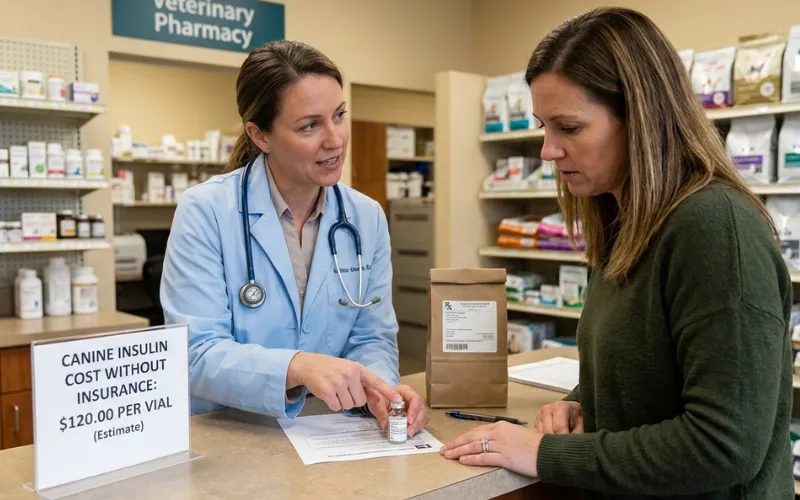
Without insurance, canine insulin commonly costs somewhere in the range of $30 to $150 or more per month, depending on which insulin your vet prescribes, your dog’s size and dose, and where you fill the prescription. This is the insulin cost alone. The broader cost of treating canine diabetes also includes separate, recurring costs for monitoring supplies and veterinary visits, which this guide breaks out on their own rather than folding into one number.
A diabetes diagnosis changes the household routine substantially: twice-daily injections in most cases, blood glucose monitoring, dietary changes, and more frequent vet visits. Without pet insurance, these costs fall directly on the owner. This guide separates what you’ll actually pay for insulin from the other expenses of managing the condition, and identifies which cost-saving steps are safe to try on your own versus which ones require your vet’s involvement first.
If your household is also managing a human prescription, the cost of insulin without insurance for people follows a different set of approved products and pricing patterns than the veterinary side covered in this guide.

Recognizing the Signs Your Dog May Need Insulin
Insulin is typically prescribed after a veterinarian diagnoses diabetes mellitus, and that diagnosis usually follows a fairly consistent pattern of signs. Increased thirst and increased urination are the most commonly reported early signs, often alongside weight loss despite a normal or larger appetite, and general lethargy.
A veterinarian confirms the diagnosis with bloodwork and a urinalysis rather than symptoms alone, since a few other conditions can look similar on the surface. If your dog is showing these signs, the immediate cost to plan for is the diagnostic workup itself; insulin and its diagnosis and treatment costs typically begin once a diagnosis is confirmed.
Why Diabetic Dogs Need Insulin
Canine diabetes mellitus happens when a dog’s pancreas stops producing enough insulin, or when the body can no longer use the insulin it does produce. Without enough working insulin, glucose builds up in the bloodstream instead of moving into the body’s cells for energy, which is what drives the increased thirst, urination, and weight loss described above.
Daily insulin injections replace what the pancreas can no longer supply reliably, which is why insulin, rather than diet alone, is the core of treatment for the great majority of diabetic dogs. It is also why planning for insulin affordability specifically, separate from general pet-care spending, matters so much once a diagnosis is confirmed.
Canine Insulin Price Overview
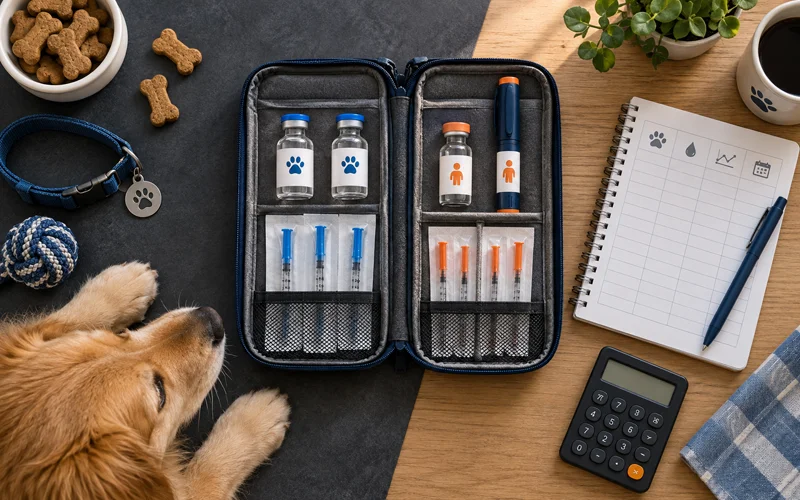
Knowing the types of canine insulin available is the starting point for estimating cost. Only two products carry FDA approval for dogs specifically: Vetsulin, a porcine-derived zinc suspension, and ProZinc, a recombinant protamine zinc formula. Your DVM will typically start a newly diagnosed dog on one of these two approved options first, since the FDA cautions against compounded or unapproved insulins that haven’t gone through the same safety and potency testing.
Veterinarians sometimes prescribe human insulins, such as NPH insulin (Humulin N or Novolin N) or insulin glargine (Lantus), off-label for dogs that don’t regulate well on an approved product. These are legitimate, established options used under veterinary guidance, but they are not interchangeable with Vetsulin or ProZinc without your vet’s direct involvement, since concentrations and syringe requirements differ.
Estimated Insulin Cost by Product and Format
The ranges below are commonly reported approximate figures, not live pharmacy quotes. Insulin prices vary by pharmacy, location, quantity, and over time, so treat this table as a starting point for comparison, not a guarantee.
| Insulin Product | Category | Concentration | Typical Format | Indicative Cash-Price Range | Notes |
|---|---|---|---|---|---|
| Vetsulin | Veterinary, FDA-approved | U-40 | 10 mL vial | Roughly $55 to $75 per vial; VetPen cartridge kits run higher | Intermediate-acting; most commonly prescribed starting insulin for dogs; requires U-40 syringes |
| ProZinc | Veterinary, FDA-approved | U-40 | 10 mL vial | Roughly $100 to $160 per vial | Long-acting; approved for both dogs and cats; often dosed once daily; requires U-40 syringes |
| Humulin N / Novolin N (NPH) | Human insulin, used off-label in dogs | U-100 | 10 mL vial | Roughly $25 to $170 per vial depending on brand and pharmacy | Sold over-the-counter at human pharmacies, but still requires a veterinary prescription for use in a dog under extra-label drug rules. Requires U-100 syringes |
| Insulin glargine (Lantus and similar) | Human long-acting, used off-label in dogs | U-100 | 10 mL vial | Roughly $75 to $200 per vial | Used in select difficult-to-regulate cases under veterinary direction; requires U-100 syringes |
Price-check basis: figures compiled from general market reporting as of mid-2026 and not independently confirmed against live pharmacy pricing at the time of this update. Confirm current pricing directly with your pharmacy or veterinarian before budgeting.
Levemir has been used off-label in some dogs in the past, but Novo Nordisk is discontinuing the product nationally, and most major pharmacy chains report little to no stock as of 2026. It is not a reliable cost-saving option to plan around right now. If your dog currently uses Levemir, talk to your vet about transitioning to an alternative before supply runs out.
Brand-Name Veterinary Insulin vs. Generic and Human Insulin: Cost Comparison
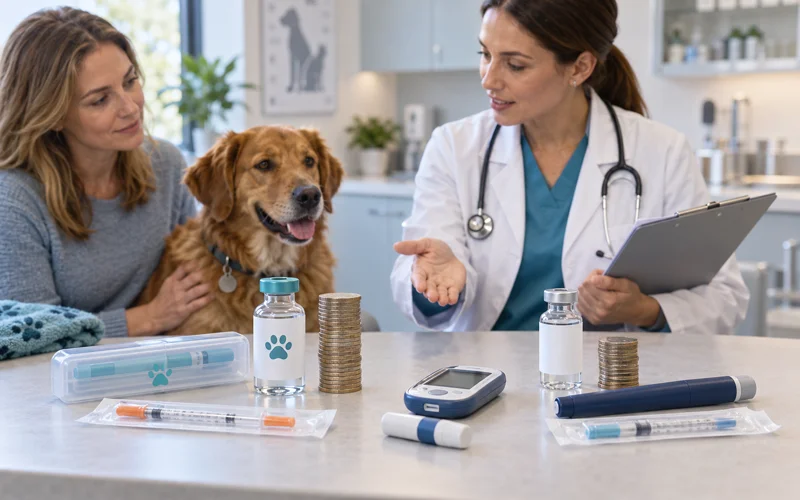
There is no true generic equivalent to Vetsulin or ProZinc on the market today, so the real cost comparison for most dog owners is not brand versus generic in the usual human-pharmacy sense. It is FDA-approved veterinary insulin versus off-label human insulin.
Human insulins such as NPH (Humulin N, Novolin N) are typically the least expensive per vial, and insulin glargine sits in a wider, sometimes higher range depending on brand and pharmacy. Vetsulin and ProZinc, the two FDA-approved veterinary options, usually fall in the middle to upper part of the overall range.
A lower per-vial price is not automatically the lower overall cost. A dog who does not regulate well on a less expensive insulin may need more frequent glucose curves, rechecks, or dose adjustments, and those visits add cost elsewhere. Any switch between an FDA-approved veterinary insulin and an off-label human insulin, or between insulin brands generally, should be a decision made with your veterinarian rather than a self-directed swap for price alone.
What Determines a Dog’s Monthly Insulin Expense?
Size and dose
Larger dogs generally need a higher dose per injection, so they go through a vial faster than a small dog on the same product. This is the single biggest driver of where a given dog lands in the price range above. Your veterinarian sets the specific dose and injection frequency for your dog based on their weight, bloodwork, and response to treatment. This is not something to calculate or adjust on your own.
Dosing frequency
Most dogs start on twice-daily injections, though some longer-acting insulins, including ProZinc, are sometimes dosed once daily once a dog is stable. Frequency affects how quickly a vial gets used up, so a dog on two daily injections generally goes through insulin faster than one on a single daily dose of a comparable amount, independent of size or dose differences. Your vet may revisit frequency, not just dose, as part of managing long-term cost.
Insulin type and brand
As the table above shows, the gap between the least and most expensive options can run $100 or more per vial. The right insulin for your dog depends on how well they regulate on it, not on price alone. If cost is a significant concern, ask your vet directly whether a different FDA-approved or off-label option might be clinically appropriate, rather than switching on your own.
Where you buy it
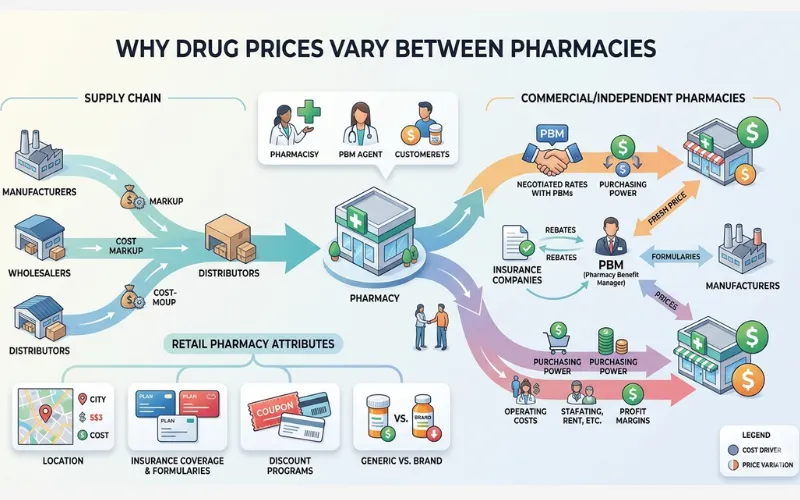
Pricing for the same insulin can vary meaningfully between a veterinary clinic, a retail pharmacy, and a licensed online veterinary pharmacy. Clinic pricing tends to run highest. The next section walks through how these purchase channels typically compare. Comparing pharmacy prices before filling a pet prescription applies just as directly to insulin as it does to other chronic pet medications.
Veterinary Clinic Pricing vs. Retail and Online Pharmacies

Where you fill an insulin prescription can change the price as much as the product itself does. A few general patterns:
- Veterinary clinic pharmacy. Convenient since it happens at the point of care, but clinic markups on medications, including insulin, are often the highest of the three channels. Clinics also carry the vial in stock, which matters if your dog needs to start treatment the same day.
- Retail human pharmacy. With a written veterinary prescription, many insulins, including off-label human insulins and sometimes Vetsulin or ProZinc, can be filled at a retail pharmacy. Cash prices vary by chain and even by location within the same chain, so it is worth calling ahead. Large chains such as Costco Pharmacy are commonly cited for competitive cash pricing, and some retail pharmacies apply their own discounts on top of the cash price, so it is still worth comparing before you commit to one.
- Licensed online veterinary pharmacy. These pharmacies specialize in pet prescriptions and can sometimes offer lower cash pricing than a clinic, though shipping time and cold-chain handling for insulin are worth confirming before you rely on one for an urgent refill. Chewy Pharmacy is one example of an online pet pharmacy that fills veterinary insulin prescriptions; confirm its current cold-chain shipping policy directly before an urgent refill.
Before committing to one channel, it is worth pricing the same product at all three, since the spread between the cheapest and most expensive option for an identical insulin and quantity can be significant. Your veterinarian can tell you whether a given pharmacy is reputable and appropriately licensed to fill the prescription.
Insulin-Only Cost Versus Total Cost of Treating Canine Diabetes
The insulin itself is only one line item. A fuller monthly and periodic picture of the total cost of treating canine diabetes looks like this:
| Expense Category | Frequency | Typical Range |
|---|---|---|
| Insulin | Monthly | $30 to $150+, per product and dose |
| Syringes or pen needles | Every 1 to 3 months | $15 to $40 per box of 100 |
| Home glucose meter | One-time | $30 to $80 |
| Glucose test strips | Monthly, if home monitoring | $20 to $60 |
| In-clinic glucose curve | Periodically, more often early on | $150 to $300 per session |
| Recheck exam | Periodic | $60 to $90 per visit |
| Prescription or diabetic-appropriate diet | Monthly | $50 to $120 |
| Initial diagnosis workup | One-time | $200 to $1,000+, higher if complications are present |
These are broad, approximate ranges. Actual costs depend heavily on your dog’s specific case, your veterinarian’s fee structure, and your region. Ask your vet for a written estimate specific to your dog rather than relying on general figures.
Veterinary Exam and Consultation Costs
Insulin itself is only part of what a DVM visit costs over the life of a diabetic dog. The initial visit usually includes the bloodwork and urinalysis that confirm the diagnosis, reflected in the “Initial diagnosis workup” range in the table above. After that, most vet offices schedule periodic recheck exams and in-clinic glucose curves to confirm the current dose is still working, both recurring costs separate from the monthly insulin bill.
Office visit pricing varies by clinic and region, so ask your veterinarian’s office for a written estimate of their specific recheck and glucose-curve costs rather than budgeting from general figures alone. Pet owners managing a new diagnosis often find these visits are more frequent in the first few months, then taper off once the dose is stable, which is typically when the vet bills tied to monitoring start to shrink.
Other Recurring Expenses
Diabetic dogs are also more prone to certain complications that carry their own costs. Cornell University’s College of Veterinary Medicine notes that roughly 75 to 80 percent of diabetic dogs develop cataracts within the first year of diagnosis, regardless of how well-controlled their diabetes is.
Cataract surgery, when pursued, is a significant additional expense and a conversation to have with your veterinarian or a veterinary ophthalmologist. This is included here so you can plan for it, not to cause alarm; many diabetic dogs are managed well for years with consistent care.
Safe Ways to Reduce Canine Insulin Costs

These steps don’t require your veterinarian to change anything about your dog’s treatment plan:
- Ask about filling the prescription outside the clinic. In many states, veterinarians are expected to provide a written prescription on request so you can fill it at a pharmacy of your choice, which is often less expensive than clinic pricing. Ask your clinic directly about their policy.
- Compare pharmacy prices before each fill. Insulin pricing can vary between pharmacies, including within the same chain. A short round of calls before a fill or refill can meaningfully change what you pay.
- Ask about a larger supply once your dog’s dose is stable. Some pharmacies offer a lower per-vial cost on a 60- or 90-day supply. Keep in mind opened insulin vials generally have a limited usable window once in use, so confirm this timeline with your pharmacist before ordering in bulk.
- Buy syringes separately and in bulk from a licensed supplier, confirming you’re ordering the correct type (U-40 or U-100) for your dog’s specific insulin.
- Ask your vet about home glucose monitoring once your dog is stable, which can reduce how often costly in-clinic glucose curves are needed.
- Look into financial assistance programs and discount cards before assuming a cost is fixed. The next two sections cover both in more depth.
Financial Assistance Programs for Diabetic Dogs
Beyond comparing pharmacy prices, a few other avenues can help with the ongoing cost of treating canine diabetes:
- Veterinary charities and breed-specific funds. Some national and regional animal welfare organizations, along with certain breed clubs, offer grants or low-interest assistance for chronic conditions, including diabetes. Availability and eligibility vary widely, so check current programs directly.
- Veterinary schools and low-cost clinics. University veterinary teaching hospitals and community low-cost clinics sometimes offer reduced-fee diagnostic workups or ongoing management, particularly for owners who qualify based on income.
- Payment plans through veterinary financing services. Services like CareCredit or Scratchpay let you split larger costs, such as an initial diagnosis workup or cataract surgery, into payments, though interest and fees apply depending on the plan.
- Prescription discount cards. Covered in detail in the next section, these can lower the cash price of insulin at participating retail pharmacies.
None of these guarantee coverage or a specific savings amount, and eligibility rules change, so confirm current details directly with each program before relying on it for budgeting.
Can a Prescription Discount Card Be Used for Dog Insulin?
A prescription discount card may offer a cash-price option for eligible veterinary prescriptions filled at a participating human retail pharmacy, including some canine insulins. This isn’t guaranteed for every situation: not every pharmacy accepts every card, not every insulin is discounted, the discount price won’t always be the lowest option available, and cards generally work at retail pharmacies rather than at the veterinary clinic itself.
Our comparison of veterinary prescription discount cards covers how these programs work in more depth. Before filling or refilling, it’s worth comparing several price points side by side: the veterinary clinic’s price, the retail cash price, the price with a discount card applied, the price through a licensed online veterinary pharmacy, and any manufacturer pricing information available for the specific product.
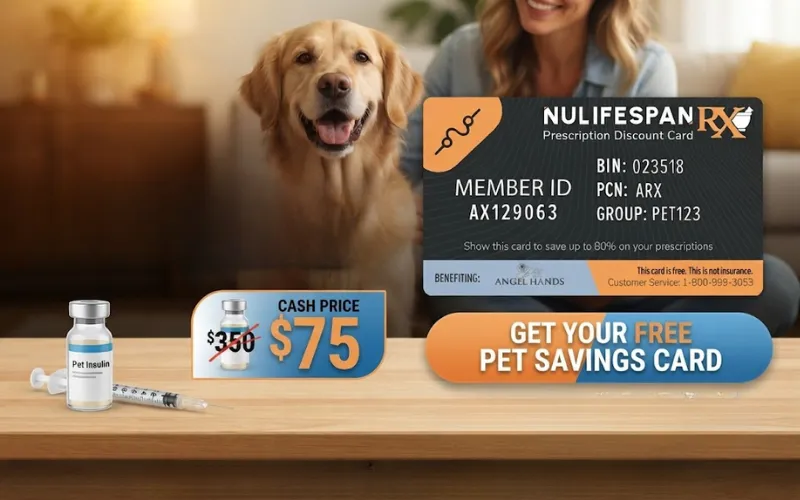
The NuLifeSpan Rx prescription discount card is free, requires no enrollment, and is accepted at a wide network of participating pharmacies for eligible human and veterinary prescriptions. It does not guarantee a specific dollar or percentage savings on every medication or every pharmacy visit, and the actual discount depends on the specific prescription and pharmacy. It is not insurance and does not replace comparing prices across options.
Are There Alternatives to Insulin for Diabetic Dogs?
Cost alone is a common reason owners ask about alternatives, so it’s worth addressing directly: unlike some cats, the great majority of diabetic dogs need insulin, and there is not a reliable non-insulin substitute for a dog who has been diagnosed with diabetes mellitus. Diet and weight management do play a real supporting role.
A consistent, appropriate diet and a healthy weight can improve how well a dog responds to a given insulin dose, and in some cases allow the dose to be adjusted downward over time, but that adjustment has to be made by your veterinarian based on monitoring, not attempted at home by skipping or reducing doses. If cost is the reason you’re considering an alternative, raise it with your vet directly rather than stopping or substituting insulin on your own.
When a Lower-Cost Insulin May Be Considered
Cost alone should never be the reason to switch your dog’s insulin. If cost is a real barrier, raise it directly with your veterinarian. They may be able to discuss whether an alternative product, format, or dosing plan is clinically appropriate for your dog. This is a decision to make together with your vet, not one to make independently based on price.
U-40 and U-100 Safety Warning
This distinction matters every time you fill or administer insulin. U-40 insulins, such as Vetsulin and ProZinc, require U-40 syringes. U-100 insulins, such as Humulin N, Novolin N, or glargine, require U-100 syringes. Using the wrong syringe with the wrong concentration causes serious dosing errors. Never switch insulin type or syringe type without explicit instruction from your veterinarian, and double-check the syringe type every time you pick up a refill, since pharmacies occasionally substitute between comparable products.
Questions to Ask Your Veterinarian and Pharmacist
- Which specific insulin and syringe type does my dog need, and can I get that in writing?
- Can I fill this prescription at an outside pharmacy, and will you provide a written prescription?
- Is a 60- or 90-day supply appropriate once my dog’s dose is stable?
- What should I do if I’m not sure whether a missed dose needs immediate attention?
- Does my pharmacy accept discount cards for this specific product?
- Are there financial assistance programs you’d recommend for our specific situation?
Final Takeaway
The cost of treating canine diabetes depends heavily on the specific insulin your vet prescribes and your dog’s size and dose, commonly landing somewhere between $30 and $150 per month for insulin alone, with monitoring, supplies, and vet visits as separate recurring costs on top of that.
The most reliable ways to manage the expense are comparing pharmacy and channel pricing, looking into financial assistance options, asking about a stable long-term supply once your dog is regulated, and talking directly with your veterinarian about any cost-related concerns rather than making changes on your own. This article is educational and does not replace veterinary care. If you have questions about your dog’s specific insulin, dose, or symptoms, contact your veterinarian.
Frequently Asked Questions
How much does insulin for a dog cost per month?
Commonly somewhere between $30 and $150 per month for the insulin alone, depending on the specific product, your dog’s size and dose, and where you buy it. This figure doesn’t include syringes, monitoring supplies, or vet visits, which are separate ongoing costs.
What is the cheapest insulin for dogs?
There isn’t one cheapest option that fits every dog. Pricing varies by product, and switching to a lower-cost insulin is a decision to make with your vet, not on your own, since each product carries its own concentration and matching syringe requirement.
Is there a generic version of dog insulin?
Not in the usual human-pharmacy sense. Vetsulin and ProZinc don’t have generic-equivalent competitors, so the closest thing to a lower-cost alternative is an off-label human insulin, such as NPH, prescribed and monitored by your veterinarian rather than a generic version of a veterinary product.
Can human insulin be used for dogs?
Some human insulins are used off-label in dogs under veterinary guidance, and this is an established, legitimate practice. It should only be done under your veterinarian’s direction, never as a self-directed switch, since dosing and syringe type change accordingly.
Can a prescription discount card be used for dog insulin?
Sometimes, at participating retail pharmacies for eligible products. Coverage isn’t guaranteed for every insulin or every pharmacy, so it’s worth confirming with the specific pharmacy and comparing that price against other options.
Are there financial assistance programs for canine insulin?
Some veterinary charities, breed clubs, teaching hospitals, and financing services like CareCredit or Scratchpay offer help with diabetes-related costs, including insulin. Availability and eligibility vary and change over time, so confirm current details directly with each program.
Can a diabetic dog be managed without insulin?
For nearly all diabetic dogs, no. A supportive diet and healthy weight can make a prescribed insulin dose work better over time, but neither substitutes for insulin once diabetes mellitus has been diagnosed. Treatment changes should always come from your veterinarian, not be self-managed.
Does pet insurance cover canine diabetes?
It depends on the policy and, most importantly, on timing. Most pet insurers exclude pre-existing conditions, so a diabetes diagnosis made before a policy starts typically won’t be covered under that policy. Reviewing coverage options before a diagnosis, if possible, is the main way to protect against this.
Why does insulin cost more for a large dog?
Larger dogs typically need a higher insulin dose per injection, which means they go through a vial faster than a smaller dog on the same product, translating into a higher monthly cost.
What other expenses come with canine diabetes besides insulin?
Syringes or pen needles, glucose monitoring supplies, periodic veterinary visits and glucose curves, and often a specific diet. These are ongoing costs separate from the insulin itself and are worth budgeting for as their own line items.
Can I buy my dog’s insulin from a human pharmacy?
Often, yes, with a valid prescription from your veterinarian, for both FDA-approved veterinary insulins and off-label human insulins your vet has prescribed for your dog.
What is the difference between U-40 and U-100 insulin?
U-40 and U-100 refer to insulin concentration, and each requires its own matching syringe type. Vetsulin and ProZinc are U-40. Human insulins like Humulin N, Novolin N, and glargine are U-100. Using the wrong syringe with the wrong concentration causes dangerous dosing errors, so the two should never be mixed or substituted without direct veterinary instruction.









Trackbacks/Pingbacks