Yes, you can earn rewards for buying medicine, mainly through pharmacy loyalty programs that award points or credits on qualifying purchases. Whether prescriptions themselves qualify depends on the specific program and, for federal health program beneficiaries, on how that program is structured. A separate tool, the prescription discount card, works differently: it lowers your price at checkout instead of paying you back afterward.
This guide focuses on pharmacy rewards and loyalty programs specifically: what they are, where to find them, whether your prescriptions actually earn anything, how they differ from a discount card, and what restrictions to check before you count on them. If you’re looking for credit card cashback or receipt-scanning apps, our guide to getting cashback on prescription drugs covers those tools in depth.
What Pharmacy Rewards Programs Are
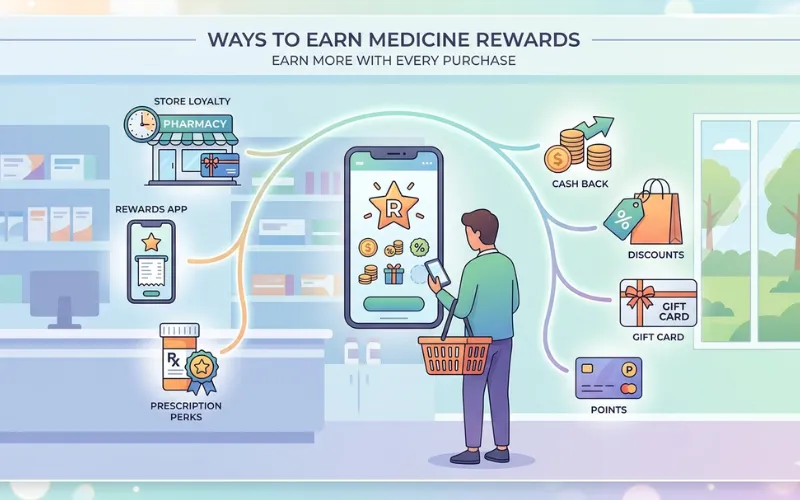
A pharmacy rewards program, sometimes called a loyalty program, is a system run directly by the pharmacy or retailer. Members earn points or credits on qualifying purchases, and those points accumulate toward a redeemable cash-equivalent, like store credit, once a threshold is reached.
CVS ExtraCare, Walgreens myWalgreens, and Rite Aid Rewards are the most recognizable examples, each with its own earning rate and redemption rules.
AARP’s comparison of CVS, Walgreens, and Rite Aid rewards programs breaks down the differences in more detail.
These programs exist because pharmacies operate on thin prescription margins and want to consolidate a customer’s fills at one location rather than see them split across chains. In exchange for that consistency, the pharmacy pays out a small percentage of value back to the member, and a loyal member typically costs less to retain than a new customer costs to acquire, which is part of why customer retention is built into the design of these programs.
Can You Earn Rewards on Prescription Medications?
Often yes, but it depends on the program and, for some patients, on federal rules. Many major pharmacy loyalty programs do award credits specifically for filling prescriptions, separate from general purchase points. CVS ExtraCare, for instance, has offered credits toward ExtraBucks Rewards for prescription fills and immunizations in addition to its standard purchase rewards.
For Medicare and Medicaid beneficiaries, there was historically a legal barrier here. Under federal anti-kickback and civil monetary penalty rules, rewarding a purchase tied to a federally reimbursed prescription could be treated as an improper inducement. That changed with the Affordable Care Act’s retailer rewards exception, which redefined what counts as “remuneration” under the Civil Monetary Penalties Law so that compliant pharmacy loyalty programs can include Medicare and Medicaid beneficiaries and offer incentives on their prescription out-of-pocket costs, where allowed under state law.
In practice, this means a Medicare or Medicaid patient generally isn’t automatically excluded from a mainstream pharmacy loyalty program, but the exact treatment still depends on how that specific program is structured and on the rules in their state.
Prescription purchases versus OTC purchases
Over-the-counter items like vitamins, pain relievers, and allergy medication are almost always eligible for standard loyalty points, often at the same or a higher rate than prescriptions. Store-brand OTC products frequently earn at an elevated rate as an incentive to choose the retailer’s own line. Prescription-specific bonuses, when a program offers them, are usually a separate, smaller credit layered on top rather than the primary way the program pays out.
Common Types of Pharmacy Rewards Programs
| Program Structure | How It Works | Best For |
|---|---|---|
| Percentage cashback | Earn a set percentage back on eligible purchases, redeemable as store credit (CVS ExtraCare uses this model, at 2% on qualifying purchases) | Shoppers who buy both prescriptions and general merchandise regularly |
| Prescription credit system | Earn one credit per fill; a set number of credits converts to a fixed reward amount | Patients filling several chronic prescriptions at one pharmacy |
| Points-per-dollar | Earn points per dollar spent, converted to a cash-equivalent at a set exchange rate | Shoppers who want granular tracking of spending |
| Paid premium tier | A monthly or annual fee unlocks a higher reward rate, a recurring credit, and perks like free delivery | High-volume pharmacy customers whose usage covers the fee |
| Health activity bonuses | Extra rewards for vaccinations, health screenings, or app-based wellness activities | Members who use pharmacy health services regularly |
The core evaluation question is the same regardless of structure: does the value of rewards you actually redeem exceed any fee or effort the program requires? If yes, enrolling is a straightforward decision.
“Rx Rewards” Programs and Accounts, Explained
Some pharmacies and health plans use “Rx Rewards” as the actual name of their program, rather than a generic term. If you’ve seen “Rx Rewards” on a card, app, or mailer, it typically refers to a specific branded loyalty or savings program tied to one pharmacy chain, insurer, or pharmacy benefit manager, not a universal system that works everywhere.
These programs generally work the same way as the loyalty programs described above: you earn points or credits for prescription fills, redeemable toward future purchases or lower copays. The difference is mainly in naming and where the program is administered, some are run directly by a pharmacy, while others are attached to an employer health plan or insurance benefit.
If you’re trying to access your own “Rx Rewards” account, you’ll typically log in through the specific program’s website or app using the phone number, member ID, or email you enrolled with, rather than through your general pharmacy account. Check the card or welcome materials you received at enrollment for the correct login portal, since “Rx Rewards” branded programs aren’t always managed through the same app as your pharmacy’s main loyalty program (like CVS ExtraCare or Walgreens myWalgreens).
Cash Back Pharmacy Cards: Where to Earn Points on Prescriptions

If you’re comparing where you can actually earn points or cash back on prescriptions and health products, the search generally splits into two categories: rewards paid directly by the pharmacy, and cash back paid by a credit card issuer based on where you shop.
National Drugstore Loyalty Programs
- CVS ExtraCare (CVS Health): earns a percentage back on eligible purchases and can add ExtraBucks Rewards credit for prescription fills and immunizations, redeemable as store credit at checkout. Our guide to saving at CVS without insurance covers how to combine this with cash-pay pricing.
- Walgreens myWalgreens: a points-based program that also surfaces exclusive member offers, digital coupons, and app-based deals on prescriptions and front-of-store items.
- Rite Aid Rewards: earns points on everyday purchases, prescription pickups, and personalized digital challenges, converting to BonusCash that can be redeemed against a future purchase.
Grocery, Club, and Big-Box Pharmacy Programs
Grocery chains and big-box retailers with an in-store pharmacy frequently fold prescription pickups into their existing shopper loyalty program rather than running a separate pharmacy-only scheme. If your regular pharmacy sits inside a grocery or club store, check whether prescription fills count toward the same points balance as the rest of your purchases, since the earning rate on prescriptions is sometimes different from the rate on general merchandise.
Cash Back Credit Cards at Pharmacies
Some cash back credit cards code drugstores as a bonus spending category based on the card network’s merchant category code, which means a purchase at a participating pharmacy earns a higher cash back rate than the card’s standard rate, independent of any pharmacy loyalty program. This is a separate incentive from pharmacy rewards.
You can stack the two on the same purchase in most cases, since the card issuer’s cash back applies to the transaction regardless of whether the pharmacy also awards its own points. Our guide to cashback on prescription drugs walks through which cards code pharmacies as a bonus category and how to confirm it before you rely on it.
Pharmacy Rewards Programs Versus Prescription Discount Cards
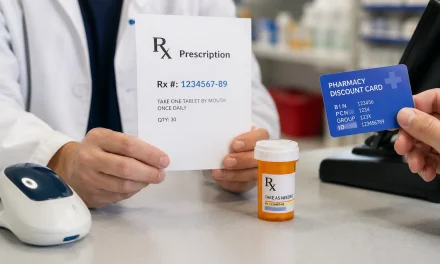
These two tools get confused constantly, and the distinction matters. A rewards program pays you back after a purchase, in points or credit redeemable later. A prescription discount card reduces what you pay at the register, before any reward is calculated. It is not a loyalty program and does not accumulate points of its own.
Understanding how prescription discount cards work makes clear why they often deliver more value per transaction than a loyalty program alone, particularly for generic medications, where a free discount card can bring the price down significantly below standard retail cash pricing. For a side-by-side look at where cash prices land across chains, our guide to the cheapest pharmacy for any medication is a useful next stop.
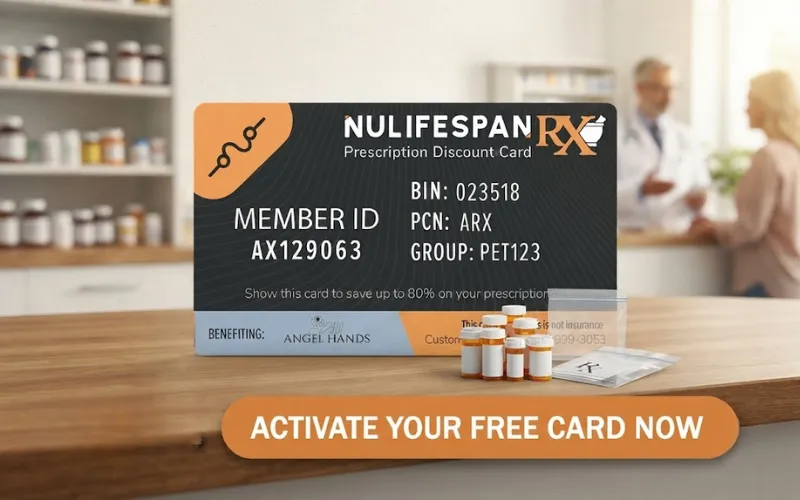
Save on Every Fill With the NuLifeSpan Rx Discount Card
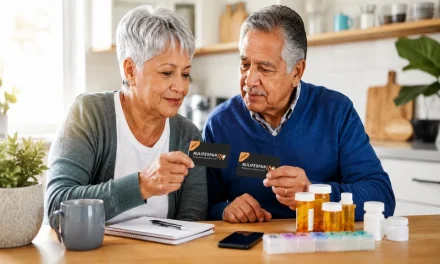
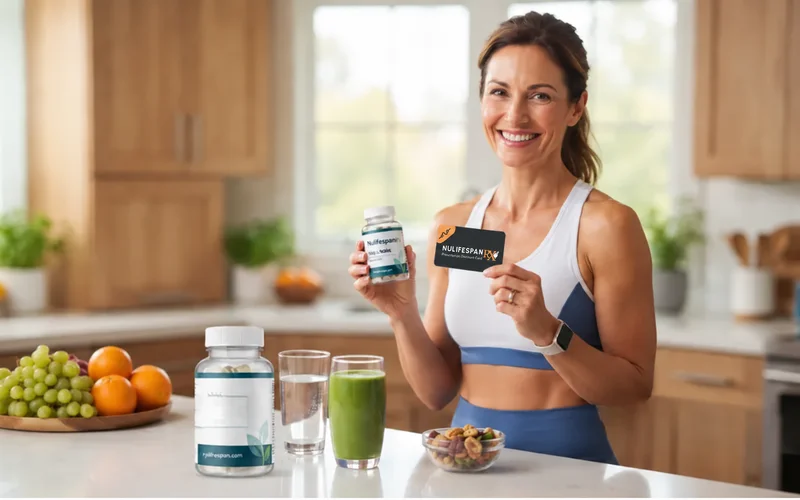
The NuLifeSpan Rx prescription discount card is accepted at over 35,000 pharmacies nationwide and can bring savings of up to 80% on thousands of covered medications. It’s free to use, requires no sign-up, no insurance, and no enrollment. It is not insurance, not a loyalty program, and it doesn’t guarantee a specific savings amount on every drug, but presenting it at checkout lowers your price before any pharmacy reward points are calculated, so you’re earning points on a smaller spend while paying less out of pocket.
How Pharmacy Rewards Fit With Other Savings Tools
A pharmacy rewards program is only one layer of savings, and it’s worth knowing where it sits relative to the others so you don’t confuse them:
- Manufacturer copay cards reduce the cost of a specific brand-name drug directly from the manufacturer, separate from any pharmacy program. See how copay cards compare to discount cards for the full breakdown, including why most manufacturer cards exclude patients on Medicare, Medicaid, or Tricare.
- Credit card cashback comes from your card issuer, not the pharmacy, and applies based on the merchant category code of where you shop. Our guide to cashback on prescription drugs covers how to use this alongside a pharmacy rewards program.
- Receipt-scanning apps work independently of any pharmacy program and add a small amount of value after the fact with minimal effort, also covered in the cashback guide above.
How to Earn Points by Scanning a Prescription or Pharmacy Receipt
Scanning is the fastest way most pharmacy apps let you log a purchase toward your rewards balance without typing anything in, and it works two different ways depending on whether you’re using the pharmacy’s own app or a separate rewards app.
Scanning Through Your Pharmacy’s Own App
Most major pharmacy apps, including CVS, Walgreens, and Rite Aid, let you scan a barcode printed on your receipt or prescription bag label at checkout, or simply scan your loyalty card or phone number, to attach the purchase to your account automatically. If a prescription fill isn’t showing up in your points balance a day or two after pickup, scanning the receipt barcode from your app’s rewards or points section is usually the fastest fix, faster than waiting for it to post automatically or calling the pharmacist.
Third-Party Receipt-Scanning Apps
Separate from any pharmacy loyalty program, receipt-scanning apps let you photograph a paper or emailed pharmacy receipt after checkout in exchange for a small number of points, typically redeemable for a gift card rather than cash. These apps run independently of the pharmacy, so a scanned receipt can earn app points on top of whatever the pharmacy’s own program already paid out on the same purchase.
They add up slowly on their own, but cost nothing beyond the few seconds it takes to photograph a receipt, which makes them worth stacking rather than choosing over a pharmacy’s own program.
Can Rewards, Insurance, and Discount Cards Be Combined?
| Method | Works With a Rewards Program? | Works With a Discount Card? | Works With Insurance? |
|---|---|---|---|
| Pharmacy rewards program | N/A | Usually, earning points on the discounted price | Usually, earning points on the copay amount |
| Prescription discount card | Usually | N/A | No, most pharmacies process one or the other per transaction, not both |
| Manufacturer copay card | Usually, on the reduced copay | No | Yes, applied after the insurance copay |
Do not assume every combination works everywhere. Most pharmacies cannot process an insurance claim and a discount card on the same transaction. At a separate cash-pay visit, a rewards program and a discount card can often be used together, with points earned on the discounted total rather than the full price.
Restrictions to Check Before You Rely on Pharmacy Rewards
- Medicare and Medicaid patients: loyalty program eligibility depends on how that specific program is structured and on state law, thanks to the ACA’s retailer rewards exception. Ask the pharmacy directly whether your federal benefit prescriptions qualify for their program.
- Expiration windows: most programs expire earned rewards within 30 to 90 days. An unredeemed balance that expires is money lost, so check your balance on a recurring basis.
- HSA and FSA payments: most pharmacy loyalty programs award points based on the purchase itself regardless of payment method, so an HSA or FSA card typically still earns points. Credit card cashback categories, by contrast, generally don’t apply to HSA/FSA cards since they carry a different merchant category code.
- Redemption caps and category exclusions: some programs exclude certain drug classes or cap how much of a purchase can be paid with redeemed points. Confirm this at enrollment rather than at checkout.
How to Compare Pharmacy Rewards Programs
- Confirm whether prescriptions earn rewards at all, and whether that differs for insured versus cash-pay fills.
- Check the expiration window on earned points or credits.
- Ask whether a premium tier exists and calculate whether your actual usage would cover the fee.
- Confirm whether the program can be combined with a discount card on a cash-pay visit.
- If you’re a Medicare or Medicaid beneficiary, ask the pharmacy directly how your federal benefit prescriptions are treated under their program.
Tips to Maximize Your Pharmacy Rewards Year-Round

Enroll in your regular pharmacy’s rewards program, since it’s almost always free. Beyond simply enrolling, a few habits make the difference between a rewards account that quietly expires and one that consistently offsets your medication costs:
- Ask at every visit: confirm whether your prescription qualifies for a program credit, since prescription-specific bonuses aren’t always applied automatically the way general purchase points are.
- Stack a discount card with cash-pay fills: if you’re paying cash rather than billing insurance, present a discount card first to lower the price, then let the rewards program calculate points on that lower total.
- Watch for time-limited promotions: many programs run seasonal bonus-point events, exclusive member offers, or double-points windows around flu shot season or back-to-school health screenings, which is when the fastest balance growth tends to happen.
- Check whether a paid tier pays for itself: premium tiers can raise your earning rate, but only run the math if your actual prescription and OTC volume would cover the annual fee.
- Set a recurring reminder to redeem: a monthly check of your balance before anything expires protects the value you’ve already earned, since most programs default to a 30 to 90 day expiration window rather than letting points accumulate indefinitely.
Checking and Managing Your Pharmacy Rewards Account
Once you’re enrolled, your points or credits live in an account tied to your phone number, email, or loyalty card, not to a specific purchase, so you’ll want to know where to find that balance rather than estimate it. Every major pharmacy program makes this available two ways:
- The pharmacy’s mobile app: the fastest way to check a current balance, see which purchases are pending versus posted, and redeem a reward directly at checkout on your device.
- The pharmacy’s website account dashboard: useful if you’d rather manage things from a computer, and typically shows the same balance, transaction history, and expiration dates as the app.
If a balance looks wrong, the most common causes are a purchase that hasn’t posted yet, a receipt that needs to be scanned manually, or an account that was created with a different phone number or email than the one used at checkout. Confirming the phone number on file is usually the quickest fix before contacting pharmacy support.
Pharmacy Rewards for Pet Prescriptions
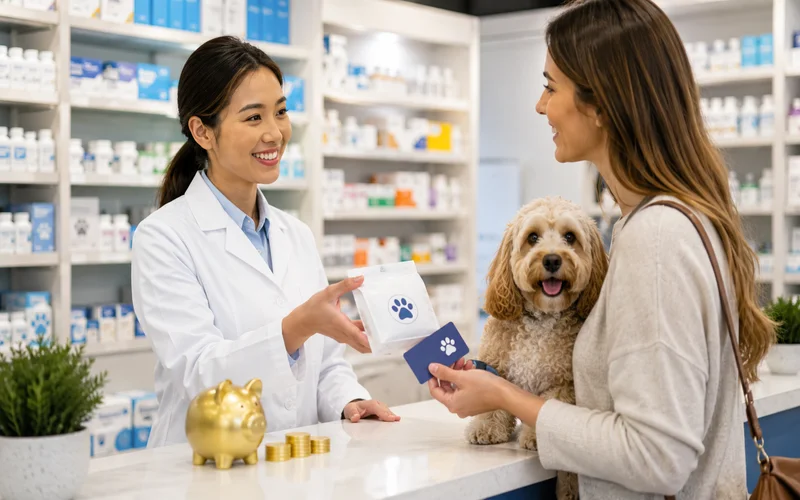
Pet prescriptions filled at a retail pharmacy, rather than purchased directly from a veterinary clinic, are generally eligible for the same rewards and discount card pricing as human prescriptions. This is a frequently overlooked source of savings, since clinic pricing on medication tends to run higher than retail.
Ask your veterinarian for a written prescription, then fill it at a participating retail pharmacy. Our guide to saving on pet prescriptions, using a human pharmacy discount card for dogs, and finding the cheapest price on Apoquel for dogs cover this in more depth.
Final Takeaway
A pharmacy rewards program pays you back after a purchase, while a discount card lowers the price upfront, and a cash back credit card adds a third layer that runs independently of both. They’re different tools, and understanding which one applies to a given visit, and whether your prescriptions actually qualify, is the real key to using them effectively. Check your specific program’s rules on prescriptions, expiration, and federal benefit eligibility before assuming a purchase will earn what you expect.
Frequently Asked Questions
What are pharmacy rewards programs?
Pharmacy rewards programs, also called loyalty programs, are systems run by a pharmacy or retailer where members earn points or credits on qualifying purchases. Those points convert to redeemable store credit once a threshold is reached. Examples include CVS ExtraCare and Walgreens myWalgreens.
Can you actually earn rewards on prescription medications?
Often yes. Many pharmacy loyalty programs award a specific credit for filling a prescription, separate from general purchase points, though the exact rules vary by program.
Are pharmacy loyalty rewards available to Medicare or Medicaid patients?
They can be. The ACA’s retailer rewards exception allows compliant pharmacy loyalty programs to include Medicare and Medicaid beneficiaries and offer incentives on their prescription out-of-pocket costs, subject to how the program is structured and to state law. It’s worth confirming directly with your pharmacy.
What is the difference between a pharmacy rewards program and a prescription discount card?
A rewards program pays you back after a purchase in points or credit. A discount card reduces the price you pay at checkout, before any rewards are calculated. A discount card is not a loyalty program and doesn’t accumulate points on its own.
Can I use a rewards program and a discount card on the same purchase?
Often, yes, on a cash-pay visit where you aren’t billing insurance. Most pharmacies cannot process an insurance claim and a discount card on the same transaction, so the discount card typically applies on cash purchases, with rewards points earned on the discounted total.
Do reward points expire?
Most programs set an expiration window, commonly 30 to 90 days, on earned rewards. Checking your balance on a recurring basis helps avoid losing value to expiration.
Where can I earn points or cash back on prescriptions and health products?
Mainly through a pharmacy’s own loyalty program, such as CVS ExtraCare, Walgreens myWalgreens, or Rite Aid Rewards, and separately through a credit card that codes drugstores as a bonus cash back category. The two can often be earned on the same purchase, since one comes from the pharmacy and the other from your card issuer.
How do I get points for scanning a prescription or pharmacy receipt?
Most pharmacy apps let you scan a barcode on your receipt or prescription bag, or scan your loyalty card, to attach a purchase to your rewards account. Separate receipt-scanning apps also award a small number of points for photographing a pharmacy receipt after checkout, independent of the pharmacy’s own program.
How can I maximize savings through a pharmacy loyalty program year-round?
Ask whether your prescription qualifies for a credit at every visit, stack a discount card with cash-pay fills, watch for seasonal bonus-point promotions, and set a recurring reminder to redeem your balance before it expires, typically within 30 to 90 days.
Can I earn pharmacy rewards on my pet’s prescriptions?
Yes, when the prescription is filled at a retail pharmacy rather than purchased through a veterinary clinic. Ask your vet for a written prescription, then fill it at a participating retail location to access the same rewards and discount card pricing available for human prescriptions.