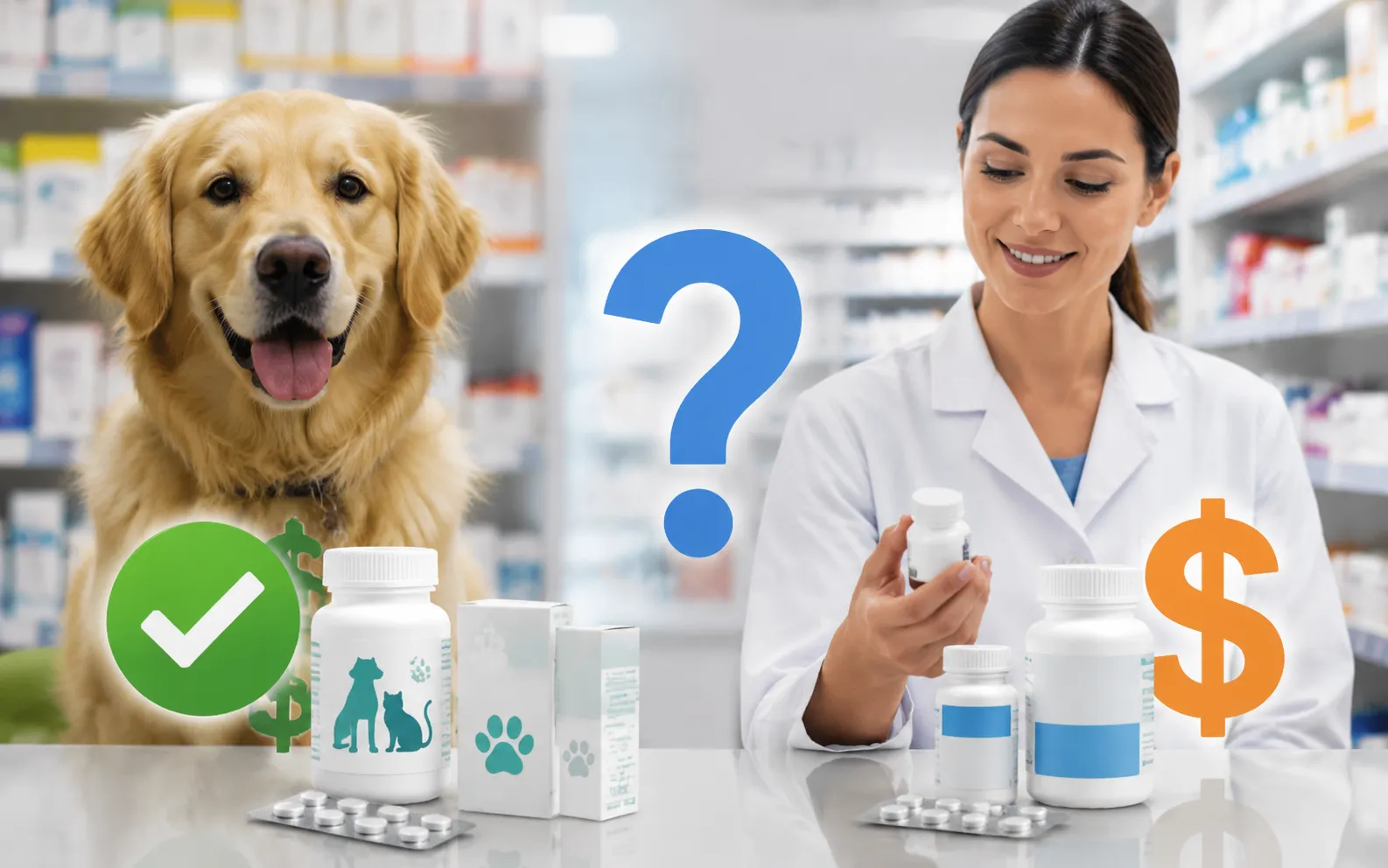
At the standard retail cash price, human pharmacies are generally more expensive than veterinary suppliers for identical medications. However, when a free prescription discount card is applied at a retail pharmacy, the discounted price often beats what a veterinary clinic charges for the same drug. The answer depends on the specific medication, the pharmacy, and whether you are using available savings tools.
Many of the medications prescribed for dogs and cats are chemically identical to drugs dispensed at retail pharmacies for human patients. This overlap creates a genuine opportunity for pet owners to reduce what they pay per refill, but only when the right combination of steps is taken.
Simply walking into a retail pharmacy without a discount card and paying the standard cash price will almost certainly cost more than a veterinary clinic price for the same molecule. The strategy is in knowing how the pricing works and which tools close the gap.
The Price Gap Between Human and Veterinary Medications
Research comparing the retail prices of identical molecules sold in human and veterinary formulations consistently finds a large gap. The median retail price of a human medication is approximately 5.5 times higher than the equivalent veterinary product for the same drug. That ratio holds across a wide range of medication categories.
When discount cards are applied to the human pharmacy price, the gap narrows but does not fully close for most drugs. Studies have found that even after applying a discount, the human discounted price still exceeds the veterinary price for roughly 64 percent of overlapping medications. For the remaining third, the discounted retail pharmacy price is competitive with or lower than veterinary supplier pricing.
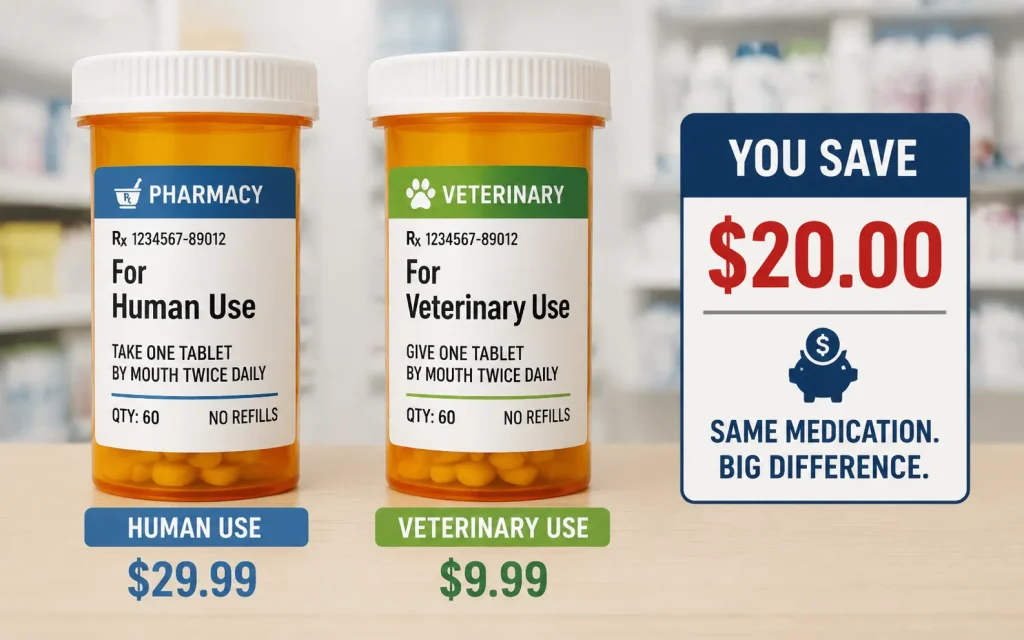
The practical takeaway is that the veterinary supplier channel is not always cheaper once discounts are factored in, and for the large subset of common generic medications where discount card pricing is most aggressive, filling at a retail pharmacy is worth comparing before defaulting to the clinic. How a retail pharmacy discount card applies to your pet’s prescriptions is the foundational knowledge that makes this comparison possible.
Why Veterinary Clinic Dispensing Is Often the Most Expensive Option
Veterinary clinics dispense medications as part of their revenue model. Unlike retail pharmacies, which operate in a competitive market where multiple providers compete on price, a veterinary practice operates in a largely captive dispensing environment. Most pet owners purchase medications at the clinic simply because they do not know they can fill the same prescription elsewhere.
Clinic markups on prescription medications are typically 100 to 200 percent above acquisition cost, which is considerably higher than what retail pharmacies apply even before any discount program is factored in. The same structural pricing dynamics that inflate human drug costs are present in veterinary dispensing, with even less regulatory oversight governing how clinics price their dispensed medications.
You are legally entitled to ask your veterinarian for a written prescription rather than purchasing the medication from the clinic directly. Most veterinarians will provide one when asked, generally at no charge. That written prescription can be filled at any licensed retail pharmacy, where competitive pricing and discount programs apply in ways that do not exist at the clinic counter.
Medications That Cross Over Between Human and Veterinary Use
A significant number of drugs prescribed for dogs and cats are identical in their active ingredient, strength, and manufacturer to human versions of the same medication. These overlapping medications span several major treatment categories, all of which are routinely stocked at retail pharmacies.
| Category | Examples | Commonly Used In |
| Antibiotics | Amoxicillin, doxycycline, cephalexin, metronidazole | Dogs and cats with infections |
| Behavioral and anxiety medications | Fluoxetine, trazodone, alprazolam | Dogs with anxiety or behavioral conditions |
| Pain management | Gabapentin, tramadol | Dogs and cats with chronic or post-surgical pain |
| Seizure control | Phenobarbital, levetiracetam | Dogs and cats with epilepsy |
| Thyroid management | Methimazole | Cats with hyperthyroidism |
| Diabetes management | Insulin formulations | Dogs and cats with diabetes mellitus |
| Allergy and inflammation | Prednisolone, antihistamines | Dogs with allergic skin conditions |
For all of these, the active ingredient in the veterinary prescription is the same molecule available at a retail pharmacy. A retail pharmacist can fill the veterinary prescription provided a valid written prescription from a licensed veterinarian is presented. This is the access point to retail pharmacy pricing and discount card savings for pet prescriptions.
Dosage and Safety Considerations
One important consideration when filling a pet prescription with a human formulation is dosage accuracy. Veterinary dosing is typically calculated by body weight in milligrams per kilogram. The concentration or strength of the human formulation may differ from a veterinary-specific product of the same active ingredient.
Your veterinarian accounts for this when writing the prescription. A properly written veterinary prescription specifies the exact drug, strength, dose, and frequency appropriate for your pet’s weight and species. The pharmacist dispenses exactly what is on the prescription. As a pet owner, your responsibility is to present the prescription accurately and to give the medication exactly as directed, without adjusting the dose based on a different package size or strength than what was prescribed.
Side effects from overlapping medications in pets are generally similar to those in humans at equivalent doses, and include nausea, drowsiness, and gastrointestinal upset for the most common drug classes. Contact your veterinarian if your pet shows unexpected reactions after starting any new medication.
How to Find the Lowest Price on a Pet Prescription
The process for finding the lowest price on a pet prescription is the same as for a human prescription. Ask your veterinarian for a written prescription. Call two or three retail pharmacies and ask for the price on the specific drug, strength, and quantity, both at the standard cash price and with a discount card applied. Compare those numbers against the veterinary clinic’s dispensing price. Fill wherever the final number is lowest.
The process for identifying the cheapest pharmacy for any medication applies directly to pet prescriptions at retail pharmacies. The same discount card produces different prices at different pharmacy locations because negotiated rates are pharmacy-specific rather than chain-wide. Why prices differ between locations of the same pharmacy chain reflects regional supply arrangements and local pricing structures that affect every prescription, human or veterinary.
For medications not available at retail pharmacies because they have no human equivalent, licensed online veterinary pharmacies are the next tier to compare. These platforms typically offer competitive pricing, AutoShip discounts for chronic medications, and home delivery. When evaluating any online pharmacy, confirm that it is licensed by your state board of pharmacy and that it requires a valid veterinarian prescription before dispensing.
NuLifeSpan Rx Pet Prescriptions: Free Discount Card for Your Animal’s Medications
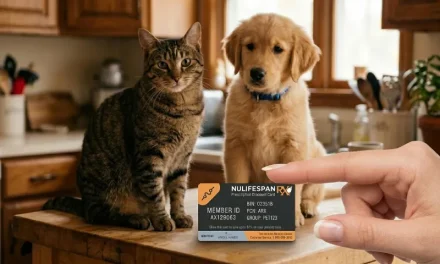
The NuLifeSpan Rx pet prescriptions savings program gives pet owners access to the same free discount card used for human prescriptions, accepted at participating retail pharmacies for veterinary medications. It is completely free, requires no sign-up, and never expires.

Ask your veterinarian for a written prescription at your next appointment. Present the NuLifeSpan Rx card at a participating retail pharmacy and pay the discounted rate instead of the clinic price. For pets on long-term daily medications, this one habit change can save several hundred dollars per year.
When the Retail Pharmacy Route Does Not Apply
Retail human pharmacies do not stock every medication a veterinarian might prescribe. Drugs developed exclusively for animal use with no human equivalent will not be available at a standard retail pharmacy. For these medications, veterinary clinics and licensed online veterinary pharmacies remain the correct dispensing channels.
Compounded medications are another category where veterinary-specific pharmacies have a clear advantage. Some pets require a flavored liquid version of a drug that only exists as a tablet for human use, or a dose strength not produced by any commercial manufacturer. Licensed veterinary compounding pharmacies prepare these custom formulations. Retail human pharmacies generally cannot.
For the large category of medications that do have human equivalents, the retail pharmacy route is worth pursuing on cost grounds. One quick question to your veterinarian at the time of any new prescription confirms which category the drug falls into and whether a retail pharmacy fill is possible.
Loyalty Programs and AutoShip Options for Pet Medications
Pharmacy loyalty programs that award points or cash-back rewards on prescription purchases typically apply to pet prescriptions filled at retail locations in the same way they apply to human prescriptions. If you are already enrolled in a pharmacy loyalty program, filling your pet’s prescription at the same location earns the same reward credits on the discounted transaction amount.
For pets on daily or twice-daily chronic medications, AutoShip programs from licensed online veterinary pharmacies offer 5 to 15 percent savings per order compared to one-time pricing with home delivery on a set schedule. Strategies for consistent long-term savings on pet prescriptions cover how to compare a retail pharmacy discount card price against an online AutoShip price for the same medication, which is the most complete cost evaluation available for any chronic pet prescription.
NuLifeSpan Rx: One Free Card for Your Entire Household, Humans and Pets
The NuLifeSpan Rx prescription discount card saves up to 80 percent on thousands of covered medications at over 35,000 pharmacies nationwide. It works for both human prescriptions and veterinary prescriptions filled at participating retail locations. Free, no sign-up, no expiration.
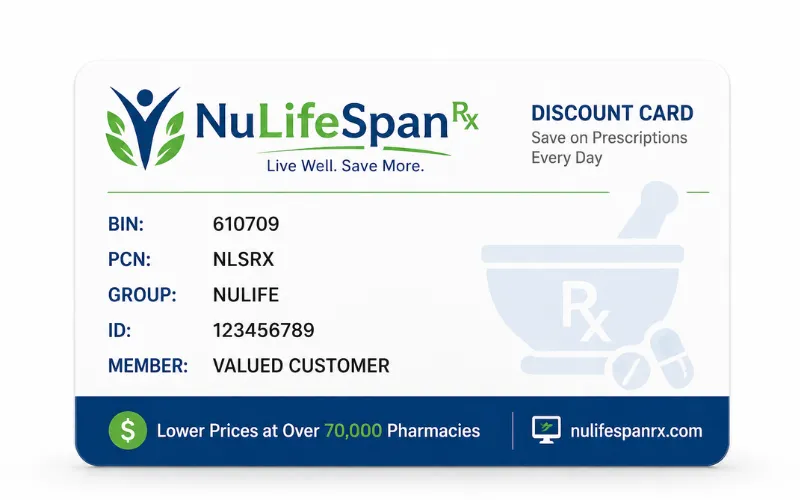
One card handles every fill for every member of your household. Present it at the counter alongside any valid prescription and the discounted price is applied immediately at checkout.
Frequently Asked Questions
Can I fill my pet’s prescription at a regular retail pharmacy?
Yes, for medications that have a human equivalent available at retail pharmacies. Ask your veterinarian for a written or electronic prescription rather than purchasing from the clinic. Take that prescription to any licensed retail pharmacy, present it with a discount card, and fill it at the discounted price. Confirm with the pharmacy in advance that they stock the specific medication before making the trip, as not all veterinary drugs have retail pharmacy equivalents.
Are human medications safe for pets when prescribed by a veterinarian?
Yes, when the prescription is written by a licensed veterinarian specifying the correct drug, strength, dose, and frequency for your pet’s weight and species. Many human and veterinary formulations of the same drug are chemically identical. The veterinarian is responsible for ensuring the prescribed dose is safe and appropriate for the animal. Follow the written prescription exactly as directed and contact your veterinarian immediately if your pet shows unexpected reactions.
How much can I realistically save by filling a pet prescription at a retail pharmacy?
Savings vary by medication and pharmacy. For common generic drugs including antibiotics, thyroid medications, seizure treatments, and behavioral medications, filling at a retail pharmacy with a discount card is typically 30 to 60 percent less expensive than the veterinary clinic dispensing price for the same drug. For some medications the savings are higher. The only way to confirm the saving for any specific prescription is to compare the clinic price against the discount card price at two or three retail pharmacies before choosing where to fill.
Do I need a separate discount card for my pet, or does my regular one work?
The same free prescription discount card that works for human prescriptions is accepted for veterinary prescriptions at most participating retail pharmacies. No separate pet card is required. Present the same card at the counter whether you are filling a prescription for yourself or for your dog or cat. The pharmacist processes it as a standard discounted cash transaction regardless of whether the prescription was written by a physician or a veterinarian.
Will my veterinarian write me a prescription to take to a pharmacy?
Yes. Veterinarians are required in most states to provide a written prescription upon request. Most do so at no additional charge, though some practices charge a small prescription-writing fee. The written prescription contains all the information the retail pharmacy needs: drug name, strength, dose, frequency, quantity, your pet’s name and species, and the veterinarian’s license details. This gives you the flexibility to fill wherever the price is lowest.
Which pet medications are available at retail human pharmacies?
Medications with human equivalents that are routinely stocked at retail pharmacies include antibiotics such as amoxicillin, doxycycline, cephalexin, and metronidazole; behavioral and anxiety medications such as fluoxetine and trazodone; pain management drugs including gabapentin and tramadol; seizure medications including phenobarbital and levetiracetam; thyroid drugs including methimazole; various insulin formulations; and corticosteroids including prednisolone. Veterinary-specific drugs without human equivalents, compounded formulations, and specialty biologics are not available at standard retail pharmacies.
Are there risks to using an online veterinary pharmacy?
There are risks if the online pharmacy is not properly licensed. Unlicensed online pharmacies may dispense counterfeit, expired, or improperly stored medications that can harm your pet. The safest approach is to verify that any online veterinary pharmacy you use is licensed by your state board of pharmacy and requires a valid veterinarian prescription before dispensing. Pharmacies that allow you to purchase prescription medications without a prescription are operating illegally and should be avoided entirely regardless of the price they offer.
Can retail pharmacies fill pet prescriptions for controlled substances?
Yes, in most cases, subject to the same controlled substance regulations that apply to human prescriptions. Medications like phenobarbital, which is a Schedule IV controlled substance, require a valid written prescription and are subject to quantity limits and refill restrictions defined by federal and state law. The prescribing veterinarian must have a DEA registration to prescribe controlled substances for animals, and the pharmacy must verify that the prescription meets all regulatory requirements before dispensing.
Does using a discount card for my pet’s prescription affect my pharmacy loyalty rewards?
In most pharmacy loyalty programs, points or rewards are calculated on the amount you actually pay after the discount card is applied. This means you earn loyalty rewards on a lower purchase amount, which reduces the points earned on that transaction compared to paying the full retail price. However, the net financial outcome is still strongly in your favor: the discount card reduces your spending by far more than the small reduction in loyalty points earned. You are earning rewards on a lower price, which is a better position overall than paying a higher price to earn slightly more points.
Should I use a retail pharmacy or an online veterinary pharmacy for a pet on long-term medication?
Compare both for any long-term prescription. A retail pharmacy with a discount card and a 90-day supply request often produces the lowest per-dose cost for common generics. A licensed online veterinary pharmacy with an AutoShip discount may be more competitive for medications not available at retail pharmacies, for larger supply quantities, or when home delivery is a significant convenience factor. The same comparison approach used for human prescriptions applies directly here: get the specific price for your pet’s exact drug, strength, and quantity from each channel, then fill wherever the total cost including shipping is lowest.
Conclusion
Whether pet medications are cheaper at a human pharmacy than at a veterinary source depends on the medication, the pharmacy, and whether savings tools are applied. At the standard retail cash price, human pharmacies are generally more expensive than veterinary suppliers for the same molecule. With a free discount card applied at the counter, that relationship often reverses for common generic medications, making the retail pharmacy the more affordable option for a significant share of veterinary prescriptions.
The habit that consistently delivers the best outcome is straightforward: ask your veterinarian for a written prescription, compare the discount card price at two or three retail pharmacies against the clinic dispensing price, and fill wherever the number is lowest. Visit the NuLifeSpan Rx blog for more detailed guides on pet and human prescription savings across every medication category and pharmacy type.