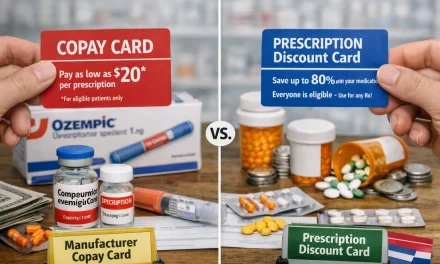
Tretinoin does not have a manufacturer coupon. The brand-name versions are expensive, the generic is widely available, and a free prescription discount card is the most reliable way to bring the cost down to a manageable level without relying on any offer from the drug maker. Here is exactly how to do it.
Why Tretinoin Has No Manufacturer Coupon
Most manufacturer coupons exist to protect market share for brand-name drugs facing generic competition. Tretinoin is different. It has been generic for decades, and the pharmaceutical companies that still sell brand-name versions like Retin-A, Atralin, and Tretin-X are not running the kind of aggressive coupon campaigns you might see for newer specialty medications.
The absence of a manufacturer offer is not unusual for older generics. Why certain medications cost far more than their clinical value suggests often comes back to brand positioning and patent strategy rather than manufacturing cost. For tretinoin specifically, the good news is that the generic version is chemically identical to every brand-name formulation and is available at a small fraction of the brand price. The focus should be on the generic, not on hunting for a coupon that does not exist.
What Tretinoin Actually Costs Without a Discount
Tretinoin is available as a cream, gel, and microsphere gel in concentrations ranging from 0.025 percent to 0.1 percent. Prices vary based on formulation, concentration, and pharmacy.
Typical retail prices without any savings tool:
- Generic tretinoin cream 0.025%, 20g tube: approximately $30 to $60
- Generic tretinoin cream 0.05%, 20g tube: approximately $35 to $70
- Generic tretinoin gel 0.025%, 15g tube: approximately $40 to $80
- Brand-name Retin-A or equivalent: $150 to $400 or more depending on formulation and concentration
The brand-name price is largely irrelevant for most patients because generic tretinoin is therapeutically equivalent and available at every major pharmacy. The variation in generic prices between pharmacies, however, is significant enough to make comparison shopping genuinely worthwhile.
How a Prescription Discount Card Reduces Tretinoin Cost
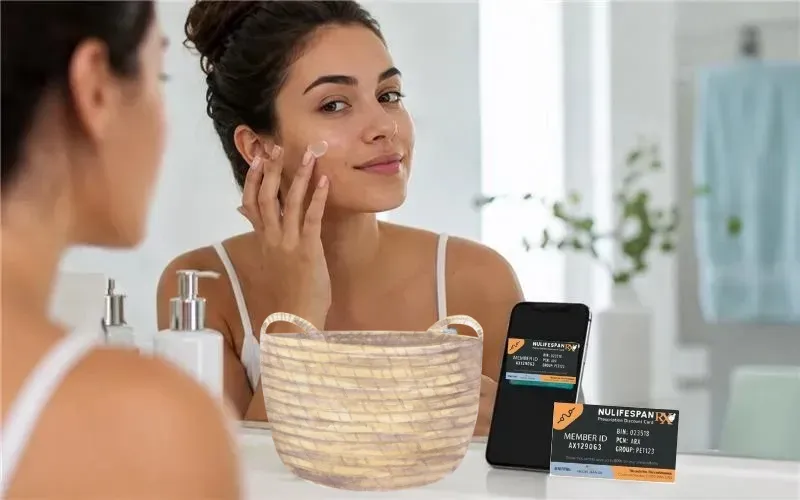
A prescription discount card is the most practical substitute for a manufacturer coupon on tretinoin. These cards work through Pharmacy Benefit Manager networks that have pre-negotiated rates with participating pharmacies. You present the card at the counter, and the discounted price is applied directly. No insurance, no enrollment, and no fee required.
How discount card networks secure lower pharmacy prices for patients involves the card provider earning a small transaction fee from the pharmacy after each fill. The savings are real, and for generic tretinoin the discounted price at competitive pharmacies can fall significantly below retail.
With a discount card, generic tretinoin prices at major pharmacy chains typically range from:
- Tretinoin cream 0.025%, 20g: approximately $12 to $25
- Tretinoin cream 0.05%, 20g: approximately $15 to $30
- Tretinoin gel 0.025%, 15g: approximately $18 to $35
These ranges vary by location and which discount network the pharmacy participates in, which is why checking by zip code before filling is worth the few minutes it takes.
Why Tretinoin Prices Vary So Much Between Pharmacies
The same generic tretinoin prescription can cost $18 at one pharmacy and $55 at another, and this gap is not a pricing error. It reflects how each pharmacy’s contract within discount networks is structured, combined with local market conditions and the pharmacy’s own margin decisions on cash-pay transactions.
Prescription price variation between pharmacy chains follows patterns that are predictable once you understand the system. Large chains negotiate standardized reimbursement rates across their network. Independent pharmacies sometimes offer more flexibility. Warehouse retailers like Costco historically price generics aggressively even for non-members at the pharmacy counter.
For tretinoin specifically, the formulation matters too. Cream and gel versions at the same concentration can be priced differently at the same pharmacy because they are manufactured by different generic companies and sold under different contracts. Checking both formulations if your prescriber has flexibility can occasionally surface a lower-priced option.
Finding the Lowest Tretinoin Price Near You
Before filling any tretinoin prescription, checking prices across nearby pharmacies using a discount card platform’s zip-code search is the single most effective step you can take. Comparing the lowest available price for a specific medication at pharmacies in your area takes a few minutes and frequently surfaces price differences of $15 to $30 on a single tube.
For patients who regularly fill prescriptions at major chains, understanding how each handles generic pricing is useful context. How CVS prices generic prescriptions for cash-paying patients and how Walgreens applies discount card rates at checkout follow different internal structures. The same discount card can produce meaningfully different prices at each chain for the same tube of tretinoin. Finding which pharmacy consistently prices this medication lowest in your specific zip code is worth doing once and then revisiting when your prescription renews.
Tretinoin and Insurance: What to Expect
Insurance coverage for tretinoin is inconsistent and depends heavily on how the prescriber writes the indication. When tretinoin is prescribed for acne, most insurance plans will cover it, typically as a Tier 2 or Tier 3 generic. When it is prescribed for anti-aging or cosmetic purposes, insurance almost universally excludes it since cosmetic indications fall outside covered benefits.
For patients whose insurance does not cover tretinoin or whose copay is higher than the discount card price, using the card is straightforward. Patients on high-deductible plans who have not yet met their deductible will often find the discount card price lower than what insurance charges before the deductible threshold is crossed.
One thing most patients do not know is that pricing information pharmacists are not required to share proactively includes whether a discount card beats your insurance copay. Asking for the card price before the transaction is processed is the patient’s responsibility to initiate.
Getting Tretinoin Through Telehealth: A Cost Consideration

Tretinoin requires a prescription, and for patients who do not have a dermatologist or primary care provider, telehealth has become a common route to access. Several platforms prescribe tretinoin online and often dispense it directly through affiliated pharmacies.
The pricing model on these platforms bundles the consultation fee with the medication cost, which can make the total monthly expense appear opaque. Before committing to a telehealth subscription, it is worth getting a standalone prescription from any licensed provider and filling it at a retail pharmacy using a discount card. The total cost for a consultation plus a discounted generic fill at a pharmacy is often lower than an ongoing telehealth subscription, particularly for patients who need tretinoin long-term rather than for a short course.
Strategies for cutting prescription costs without insurance include this kind of comparison: identifying when a bundled service costs more than its component parts and choosing the unbundled option instead.
Tretinoin Savings If You Have Insurance but a High Copay
Some insurance plans place tretinoin in a higher formulary tier, especially when the prescribing indication is not clearly documented as medical. In those cases, the copay can be $40 to $60 or more, which may exceed the discount card price for the generic.
Saving up to 80 percent on prescriptions without insurance is achievable on tretinoin specifically because the generic market is competitive and the retail markup on this medication is high relative to its manufacturing cost. A patient paying a $45 copay through insurance for a tube of tretinoin that costs $14 through a discount card is paying more than three times the available price without realizing it.
The comparison takes seconds at the pharmacy counter and requires only that you ask before the transaction is finalized.
Additional Ways to Reduce the Cost of Tretinoin
Beyond a discount card and pharmacy comparison, a few additional strategies can reduce what you pay over time.
Strategies worth considering:
- Ask your prescriber for the largest tube size available, since the per-gram cost is typically lower on larger tubes even though the upfront price is higher
- Request the 0.025 percent concentration if you are new to tretinoin, since it is often the most affordable starting point and the appropriate strength for initial use
- Confirm with your prescriber whether cream or gel is clinically equivalent for your needs, since one formulation may be priced lower at your pharmacy than the other
- Check whether your pharmacy offers cashback or reward programs on prescription purchases that can offset the cost of regular fills
Frequently Asked Questions
Is there a manufacturer coupon for tretinoin or Retin-A
No current manufacturer coupon program exists for tretinoin or its brand-name equivalents that is broadly available to cash-paying patients. Brand-name Retin-A and similar versions are not actively promoted with coupon campaigns. The most effective savings tool for tretinoin is a free prescription discount card applied to the generic version at a participating pharmacy.
Does insurance cover tretinoin
It depends on the indication. Tretinoin prescribed for acne is typically covered as a generic under most insurance plans, usually at Tier 2 or Tier 3. Tretinoin prescribed for cosmetic anti-aging is generally excluded from coverage as a non-covered cosmetic use. If your plan denies coverage, a discount card on the generic is the most practical alternative.
Is generic tretinoin the same as Retin-A
Yes. Generic tretinoin contains the same active ingredient at the same concentration as brand-name Retin-A and is required to meet FDA bioequivalence standards. For the vast majority of patients, the clinical experience is identical. The price difference between brand and generic is substantial and there is no clinical reason to default to the brand name.
Why is my tretinoin so expensive at my usual pharmacy
Retail prices for tretinoin at major chains without a discount tool can be high relative to the drug’s actual manufacturing cost. The markup on dermatology medications is often significant. Presenting a discount card at the counter before the transaction is processed and comparing prices at multiple nearby pharmacies are the two steps most likely to bring the cost down substantially.
Can I use a discount card for tretinoin if I have insurance
Yes. You choose between insurance and a discount card at the point of sale for each prescription. If the discount card price is lower than your insurance copay, you use the card for that fill. The two cannot be combined on the same transaction, but there is no rule preventing you from using the card whenever it is the cheaper option.
The Bottom Line
The absence of a manufacturer coupon for tretinoin is not the obstacle it might seem. Generic tretinoin is widely available, a free prescription discount card brings the cost down to $12 to $30 at competitive pharmacies, and comparing prices across nearby locations before filling consistently surfaces the lowest available price. For a medication used long-term for acne or skin maintenance, those savings compound meaningfully over months and years. The discount card is the coupon.