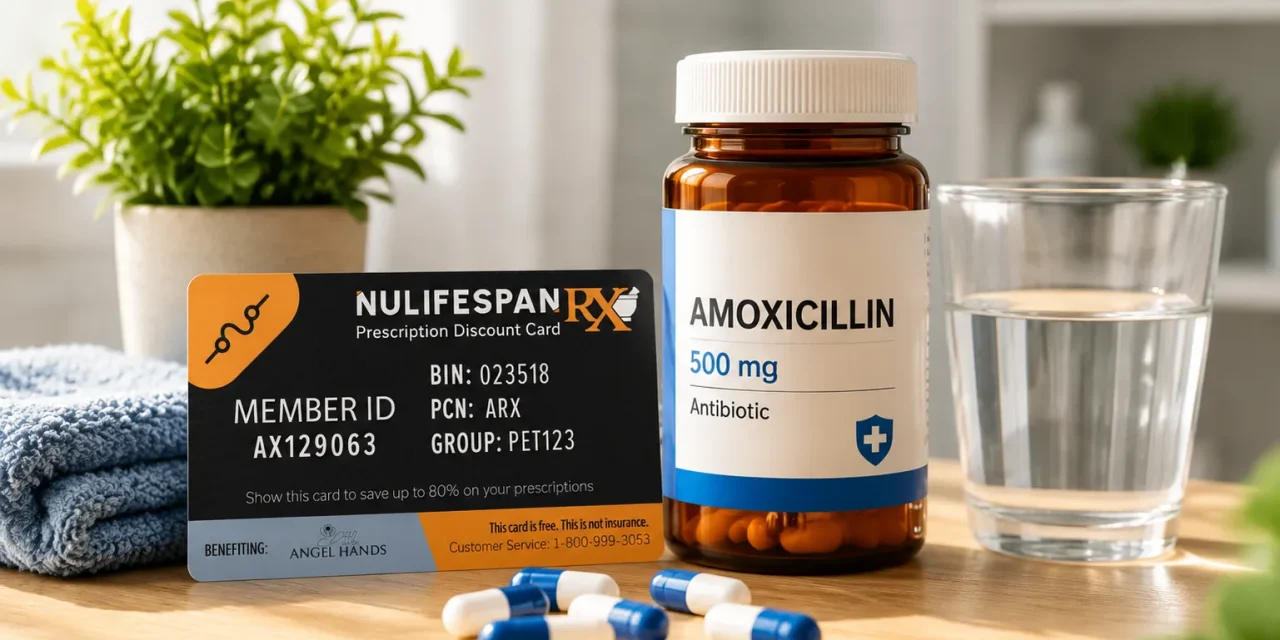
For most patients, a coupon for amoxicillin is unnecessary. Generic amoxicillin is one of the least expensive prescription antibiotics available, and at many pharmacies it costs $4 to $10 for a standard course without any savings tool at all. That said, prices are not uniform across every chain, and a free prescription discount card can push the cost even lower at certain locations. Here is what you actually need to know before filling.
What Amoxicillin Costs Without Any Coupon or Discount
Amoxicillin has been off-patent for decades and is manufactured by dozens of generic companies. That level of competition keeps the base price genuinely low compared to most prescription medications. For a standard 10-day course treating a common bacterial infection, the cash price at retail without any discount tool is typically modest.
Approximate retail prices for generic amoxicillin without a discount:
- 500mg capsules, 30 count: approximately $10 to $20 at most major chains
- 875mg tablets, 20 count: approximately $12 to $25 depending on pharmacy
- 250mg/5ml oral suspension, 150ml: approximately $15 to $30 for the liquid form commonly prescribed for children
- 400mg/5ml oral suspension, 100ml: approximately $20 to $40
These prices are already low by prescription standards. Why amoxicillin stays affordable while other antibiotics do not comes down to the age of the generic market and the number of manufacturers competing for the same product. When dozens of companies produce an identical drug, pricing pressure keeps costs near the floor.
Where a Discount Card Still Makes a Difference
Even on an already affordable medication, a discount card can reduce the price further and is worth presenting at the counter simply because there is no cost or effort involved in using one.
With a free prescription discount card, amoxicillin prices at competitive pharmacies can drop to:
- 500mg capsules, 30 count: as low as $4 to $8
- 875mg tablets, 20 count: approximately $5 to $10
- 250mg/5ml oral suspension, 150ml: approximately $8 to $15
The savings in absolute dollar terms are modest on amoxicillin compared to more expensive medications. However, for families filling multiple prescriptions during a sick season, or for uninsured patients managing costs carefully, even a $5 to $10 reduction per prescription adds up over time.
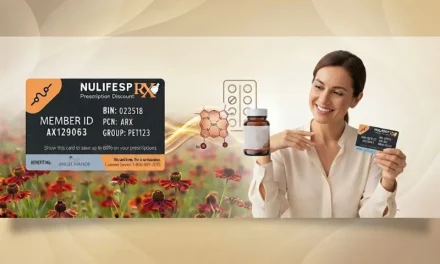
How free prescription discount cards reduce pharmacy costs works the same way regardless of the medication’s base price. The card connects you to a pre-negotiated rate that the pharmacy has agreed to honor through its discount network. No enrollment, no insurance, and no fee required. You present the card at the counter and pay the discounted price directly.
The $4 Generic Programs Worth Knowing About
Several major pharmacy chains operate low-cost generic programs that include amoxicillin at a flat rate, sometimes as low as $4 for a standard course. These programs were designed specifically for affordable generics and do not require a discount card to access, though using a card alongside a price check confirms you are getting the best available option.
How Walmart prices common generic medications reflects a deliberate strategy of positioning its pharmacy as a value destination. Amoxicillin is frequently on the list of drugs available at the lowest cash-pay tier at large retailers, and the flat-rate pricing is sometimes more competitive than what a discount card produces at a traditional chain pharmacy.
Checking both the flat-rate program price and the discount card price at your preferred pharmacy before filling ensures you are choosing the lower of the two options rather than assuming one is always better.
Why Prices Still Vary Between Pharmacies Even for a Cheap Drug
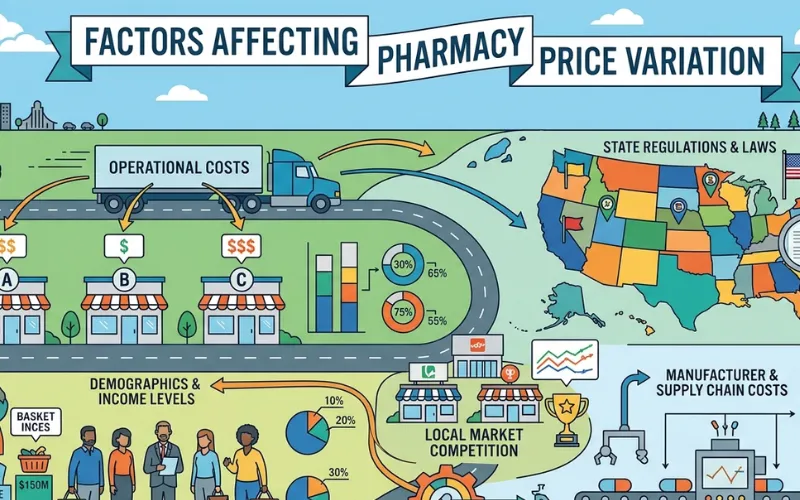
What drives prescription price differences between pharmacy chains involves each pharmacy’s individual contracts with generic manufacturers, how they structure cash-pay pricing relative to their cost of acquisition, and which discount networks they participate in. A community hospital pharmacy may charge $22 for a course of amoxicillin that costs $5 at a big-box retailer a mile away. Neither price is wrong in a regulatory sense, but the difference is real and avoidable.
Finding the lowest available price at nearby pharmacies before filling an antibiotic prescription is especially valuable for liquid amoxicillin suspensions, where the price variation between locations tends to be larger in absolute terms than for tablet forms.
Amoxicillin and Insurance: When the Card Wins
For patients with insurance, amoxicillin is almost universally placed in the lowest formulary tier. Most plans cover it with a $0 to $10 copay, which means insurance is typically the right choice for insured patients.
However, two situations exist where a discount card may be worth using instead:
The first is when a high deductible has not been met. Patients on high-deductible plans who have not reached their deductible are charged the full contracted price by their insurance until the threshold is crossed. For amoxicillin, the contracted insurance price before the deductible can sometimes exceed the discount card price, particularly at pharmacies with higher standard rates.
The second is when the copay itself is higher than the discount card price. This is rare for amoxicillin given its low base cost, but it does happen on certain plan designs. Asking the pharmacist to check the discount card price before processing the prescription through insurance takes seconds and removes any uncertainty.
What your pharmacist is not required to tell you includes whether the discount card price is lower than your copay. That comparison is the patient’s responsibility to initiate.
Amoxicillin for Children: Where to Focus the Savings Effort
Pediatric amoxicillin is prescribed as an oral suspension, and the liquid form carries more price variability than the tablet versions. Parents filling a prescription for a child’s ear infection or strep throat are more likely to encounter meaningful price differences between pharmacies than an adult filling a standard capsule course.
The concentration and bottle size matter for pediatric dosing, and different pharmacies may stock different sizes or manufacturers of the same suspension, which affects pricing. Comparing prices at CVS without insurance and discount card pricing at Walgreens for pediatric suspensions specifically can surface a $10 to $15 difference on a product that already has a low total price, which is a significant percentage reduction even if the absolute dollar saving seems modest.
For families managing ongoing pediatric prescriptions or who fill antibiotics several times per year, finding which local pharmacy consistently prices medications lowest is a practical step that pays off across multiple fills rather than just one.
When Amoxicillin Is Not Enough: Broader Prescription Savings Strategies
Amoxicillin is the easy case. The real value of developing a prescription savings habit around a cheap antibiotic is that the same tools, discount cards, pharmacy comparison, and zip-code-based price lookup, work on every other prescription in your household.
A patient who learns to compare prices and use a discount card for a $10 antibiotic is well positioned to apply the same approach to a $150 specialty medication or a $60 monthly maintenance prescription. Reducing prescription costs across an entire medication regimen follows the same framework regardless of the drug’s base price.
For households that fill prescriptions regularly, earning rewards or cashback on medication purchases adds another layer of savings on top of the discounted price. Even on an inexpensive fill like amoxicillin, stacking a discount card price with a reward program means you are extracting maximum value from every transaction.
Amoxicillin Availability and Shortage Considerations
Generic amoxicillin has experienced periodic supply constraints, particularly for the pediatric oral suspension. When demand spikes during respiratory illness seasons, pharmacies sometimes run short of certain concentrations or bottle sizes. This can force patients to fill at a different pharmacy than planned, which is another reason knowing the prices at multiple nearby locations in advance is useful rather than scrambling during an illness.
If your preferred pharmacy is out of stock, knowing which nearby pharmacies consistently carry common generics at competitive prices gives you an immediate backup option without starting the price comparison process from scratch while managing a sick child or dealing with your own infection.
Frequently Asked Questions
Do I need a coupon for amoxicillin
In most cases, no. Generic amoxicillin is already priced at $4 to $20 for a standard course at major pharmacies without any savings tool. A free discount card can reduce that further, but the medication is affordable enough that the absence of a coupon is not a significant obstacle for most patients.
What is the cheapest pharmacy to fill amoxicillin
Warehouse retailers like Costco and flat-rate generic programs at large retail pharmacies frequently offer amoxicillin at the lowest base prices. The specific cheapest option in your area depends on your zip code and which discount networks nearby pharmacies participate in. Checking by zip code on a discount card platform before filling gives you a real answer based on your location.
Is liquid amoxicillin more expensive than capsules
Generally, yes. The oral suspension used for children costs more than the tablet or capsule forms on a per-course basis, and it also shows more price variation between pharmacies. Using a discount card and comparing prices across nearby locations is more impactful for the liquid form than for standard adult tablets.
Can amoxicillin be covered by insurance
Yes. Amoxicillin is covered by virtually every insurance plan as a Tier 1 generic, typically with a very low or zero copay. If your plan charges a higher copay or if you have not yet met your deductible, comparing the discount card price against your insurance price before filling is a simple step worth taking.
Does brand-name amoxicillin exist and is it worth considering
Brand-name amoxicillin products like Amoxil still exist but are rarely prescribed or stocked because generic amoxicillin is therapeutically identical and costs significantly less. There is no clinical reason to use a brand-name version when a generic is available, and most prescribers default to generic without specifying the brand.
The Bottom Line
Amoxicillin is one of the few prescription medications where a coupon is genuinely not necessary for most patients. The generic is already inexpensive, and in many cases a flat-rate pharmacy program or a free discount card brings a standard course to under $10. The more useful habit to develop is comparing prices across nearby pharmacies before filling, presenting a discount card at the counter regardless of the base price, and applying that same approach consistently to every other prescription in your household. The savings on amoxicillin are modest. The savings across a year of prescriptions using the same strategy are not.