
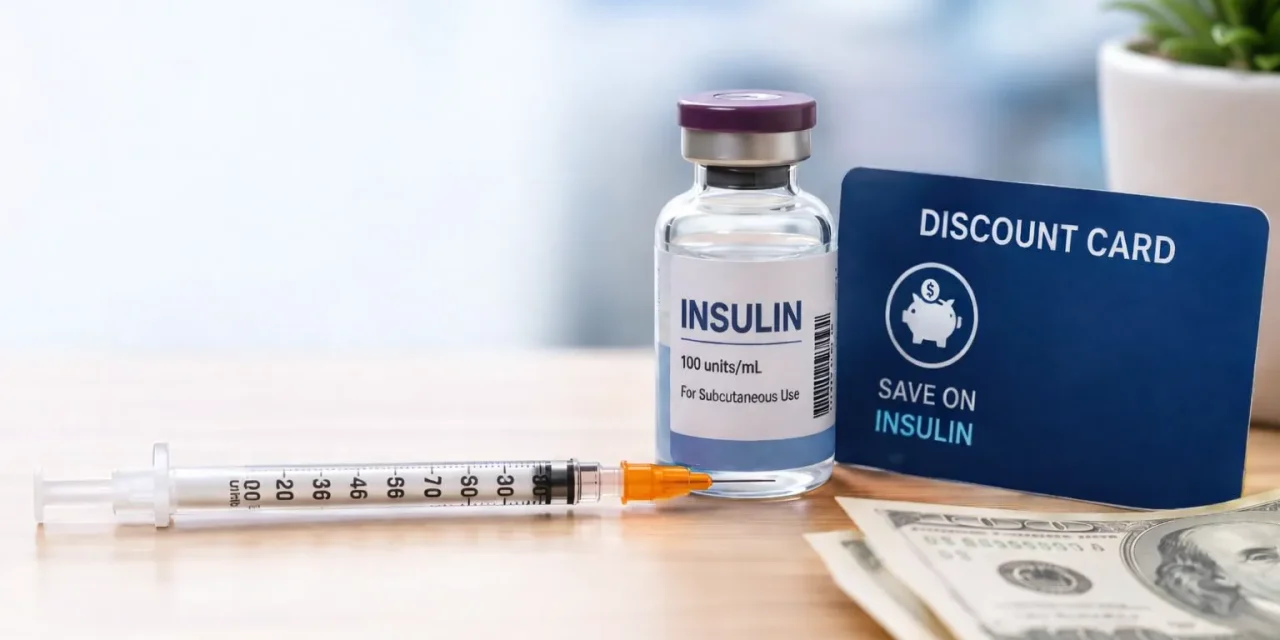
Without insurance, insulin costs range widely: as low as $25 to $75 per vial for over-the-counter human insulin like Walmart’s ReliOn brand, up to several hundred dollars per vial for brand-name analog insulins at full retail price. The $35 monthly cap you may have heard about is federal law for Medicare Part D and Part B enrollees, not a universal price for every uninsured or commercially insured patient, though all three major insulin manufacturers now offer their own $35-per-month cash-pay programs that most patients can access directly.
Insulin pricing in the United States has changed more in the past three years than in the prior two decades, and the changes are genuinely good news for most patients. But the coverage is uneven enough, and the terminology confusing enough, between the Medicare cap, manufacturer programs, and over-the-counter options, that it’s worth walking through exactly who qualifies for what before assuming any single number applies to your situation.
The Medicare $35 Cap: What It Actually Covers
Under the American Diabetes Association’s insulin affordability resources, the Inflation Reduction Act of 2022 capped out-of-pocket costs for Medicare Part D enrollees at $35 per month for each covered insulin product, effective January 1, 2023, with no deductible required first. A parallel cap applies to insulin delivered through a covered insulin pump under Medicare Part B, effective July 1, 2023. Both caps remain in effect for 2026 and apply regardless of which phase of your Part D benefit you’re in, deductible, initial coverage, or catastrophic.
This cap is per insulin product, not a household total. If you use two different types of insulin, such as a long-acting and a rapid-acting formulation, you could pay up to $35 for each, for a combined $70 per month, rather than a single combined cap. The cap only applies to insulin products that are on your specific Part D plan’s formulary, so confirming your insulin is covered by your plan matters as much as the cap itself.

What About Commercial Insurance?
This is the detail most people get wrong. The federal $35 cap from the Inflation Reduction Act applies specifically to Medicare, not to employer-sponsored or marketplace commercial insurance plans. There is no federal law requiring a commercial insurer to cap insulin copays at $35.
That said, more than 30 states have passed their own insulin copay cap laws for state-regulated commercial plans, with limits that are often $35 per month or somewhere in that range, though the exact amount and which plans are covered varies by state. Separately, all three major insulin manufacturers, Eli Lilly, Novo Nordisk, and Sanofi, now voluntarily offer their own $35-per-month savings card programs that extend similar pricing to many commercially insured and uninsured patients directly, independent of any state law.
Options if You’re Uninsured
Manufacturer $35 Savings Programs
Eli Lilly, Novo Nordisk, and Sanofi each offer a direct cash-pay program capping the cost of many of their insulin products at $35 per month for eligible patients, including many uninsured patients. Eligibility rules and covered products vary by manufacturer, so it’s worth checking directly with whichever company makes your specific insulin rather than assuming all three programs work identically.
Over-the-Counter Human Insulin
Regular and NPH human insulin, an older insulin formulation that works differently than newer rapid- and long-acting analog insulins, is available without a prescription at some retailers. Walmart’s ReliOn brand is the most widely known example, priced at roughly $25 to $75 per vial depending on the specific product and location.
Human insulin is not a direct substitute for every patient on a modern analog insulin regimen, and switching between insulin types changes how and when the medication needs to be taken. This is a conversation to have with your prescriber before switching, not a decision to make on price alone, since the timing and dosing differences between human and analog insulins have real clinical implications.
Patient Assistance Programs
Beyond the $35 cash-pay programs, each major manufacturer also operates a separate patient assistance program that can provide insulin at no cost to qualifying low-income, uninsured patients. These programs typically have their own income-based eligibility requirements and application process distinct from the standard savings card.
340B-Eligible Community Health Centers
Federally qualified health centers and other 340B-eligible providers can often offer significantly reduced, income-based pricing on insulin and other medications for patients who receive care through their facility. If cost is a barrier, asking whether a local community health center offers this pricing is worth the phone call.
Comparing Your Options at a Glance
| Situation | Typical Monthly Cost | Where to Look |
| Medicare Part D or Part B (covered insulin) | $35 per product, no deductible | Confirm formulary coverage with your plan |
| Commercial insurance, state cap applies | Often $35 or a state-set limit | Check your state’s insulin cap law |
| Uninsured, manufacturer $35 program | $35 per month | Apply directly through the manufacturer of your specific insulin |
| Uninsured, OTC human insulin | $25–$75 per vial | Retailers like Walmart (ReliOn brand) |
| Uninsured, standard retail cash price | Up to several hundred dollars per vial | Varies significantly by pharmacy; compare before filling |
| Low-income, patient assistance program | $0 for eligible patients | Apply through the manufacturer’s PAP |
Using a Discount Card Alongside These Options
A NuLifeSpan Rx prescription discount card can still be worth checking for insulin, particularly for older or generic-equivalent insulin formulations where a manufacturer $35 program may not apply. As with any prescription, a discount card cannot be combined with insurance or a manufacturer copay program on the same fill; you compare the options and use whichever produces the lowest price for that specific purchase. For patients also managing other maintenance medications, Senior Health Savings: Reducing Out-of-Pocket Costs for Common Maintenance Medications covers additional strategies that pair well with insulin cost management.
For Medicare enrollees specifically working through how their Part D benefit interacts with other prescription costs beyond insulin, What to Do When You Reach the Medicare Part D Coverage Gap explains how the current three-phase benefit structure and annual out-of-pocket cap work.
A Note on Never Rationing Insulin

Insulin is a life-sustaining medication, and rationing or skipping doses to manage cost carries serious, sometimes rapid health risks, including diabetic ketoacidosis, which can become life-threatening within hours for someone with type 1 diabetes. If cost is causing you to consider skipping or reducing doses, contact your prescriber or pharmacist immediately, since urgent short-term options, including manufacturer emergency assistance programs and patient assistance applications, exist specifically for this situation and can often be arranged faster than people expect.
Frequently Asked Questions
Does the $35 insulin cap apply to everyone, or just Medicare?
The federal $35 cap under the Inflation Reduction Act applies specifically to Medicare Part D and Part B enrollees. It does not automatically apply to commercial insurance, though more than 30 states have their own insulin copay cap laws, and all three major insulin manufacturers separately offer voluntary $35-per-month cash-pay programs open to many uninsured and commercially insured patients.
What is the cheapest insulin available without a prescription?
Over-the-counter human insulin, such as Walmart’s ReliOn brand, is typically the least expensive option at roughly $25 to $75 per vial. This is an older insulin formulation that works differently than newer analog insulins, so switching to it should be discussed with your prescriber rather than decided on price alone.
Can I use a prescription discount card for insulin if I also qualify for a manufacturer $35 program?
You can compare both, but you can’t apply them to the same transaction. For most patients, a manufacturer’s own $35 cash-pay program will beat a general discount card price on that specific insulin product, since it’s designed as a direct manufacturer discount. A discount card is worth checking for older or lower-cost insulin formulations where a manufacturer program may not apply.
Does insulin count toward my Medicare Part D deductible?
No. Because insulin is capped at $35 per month with no deductible required under Medicare Part D, you pay up to $35 immediately without first meeting your plan’s regular deductible. This is a specific carve-out for insulin and does not apply the same way to other medications on your plan.
What should I do if I can’t afford my insulin this month?
Contact your prescriber or pharmacist immediately rather than rationing or skipping doses, which can be dangerous within hours for some patients. Manufacturer patient assistance programs, emergency short-term assistance programs, and 340B-eligible community health centers can often provide faster help than people expect, and your care team can point you to the fastest available option for your specific situation.
Conclusion
Insulin pricing in 2026 is genuinely more manageable than it was even a few years ago, but the improvements are split across several different programs rather than one universal fix. Medicare enrollees have a hard federal cap. Commercially insured patients may have a state-level cap or can use a manufacturer’s voluntary program. Uninsured patients have manufacturer cash-pay programs, over-the-counter human insulin, and patient assistance programs as realistic paths, roughly in that order of cost. Knowing which category applies to you is the first step to making sure you’re never paying more than necessary for a medication this critical.
Medical information disclaimer: This article is for general informational purposes only and is not medical or financial advice. Insulin pricing, manufacturer programs, and state and federal cap laws change over time; confirm current details with your insurer, pharmacist, or the manufacturer of your specific insulin. Never adjust your insulin dosing or skip doses without consulting your prescriber, and seek immediate medical attention for any signs of diabetic emergency.











Trackbacks/Pingbacks