A discount card is a strong tool for the medications most people fill most often. It is a much weaker one for specialty drugs, and anyone facing a biologic price tag deserves a straight answer about that rather than a sales pitch. If you have been paying for prescriptions without coverage and just been handed a prescription with a four-figure monthly price, a card is unlikely to be the thing that solves it.
That does not mean nothing helps. It means the things that help are different, and knowing which lever to pull matters more here than anywhere else in the pharmacy. This guide explains why your medication is so expensive when it falls into this category, what a discount card realistically does and does not change, and where the real savings sit.
What counts as a specialty drug

There is no single universal definition, but the working one comes from Medicare. CMS allows Part D plans to place a drug on a specialty tier when the drug ingredient cost is 950 dollars or more for a thirty-day supply. That threshold is the practical dividing line most of the industry uses.
Drugs in this category are largely biologics and biosimilars used for complex conditions, including rheumatoid arthritis, multiple sclerosis, cancer, hepatitis C, inflammatory bowel disease, and psoriasis. They are taken by a relatively small share of patients but account for a large and growing share of drug spending. KFF reported that specialty tier drugs came to represent over 20 percent of total Part D spending, up from roughly 6 to 7 percent in earlier years.
Why a discount card moves the needle less here
The honest explanation is arithmetic, not policy.
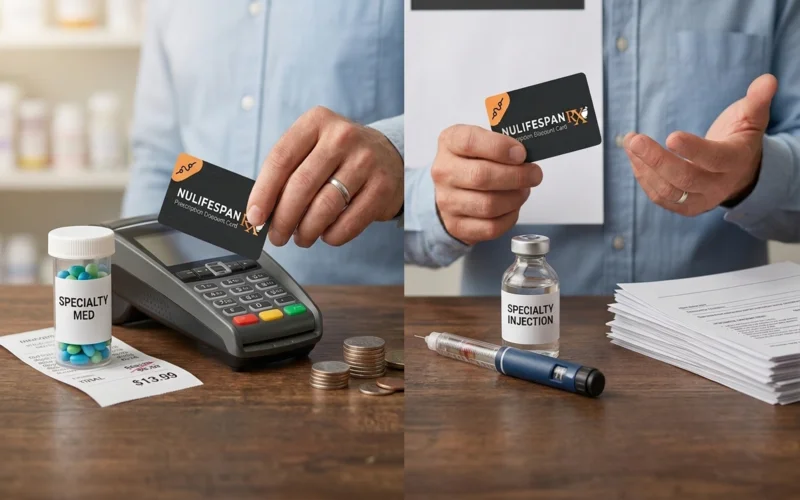
A discount card lowers a cash price by a set amount or percentage negotiated with pharmacy networks. Under the NuLifeSpan Rx program terms, the discount varies by prescription and pharmacy and can reach up to 95 dollars off the retail price. On a generic maintenance drug, that can be most of what you were going to pay. On a drug priced at 950 dollars a month or more, the same discount is a single-digit percentage of the bill.

This is not a flaw in how the card works. It is what the card is for. Understanding how pharmacy discount networks actually work makes the limit obvious: these programs negotiate against retail pharmacy pricing, and retail pharmacy pricing is not where specialty drugs live.
Anyone who has wondered whether prescription discount cards are a scam usually arrived at that question after expecting a card to solve a problem it was never built to solve. The card is real and it works. It works on retail prescriptions.
Where specialty drugs are actually dispensed
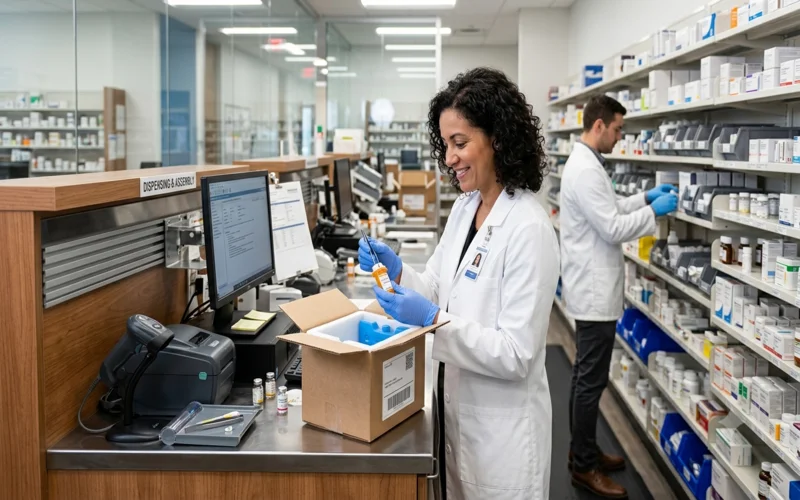
Most specialty medications do not come from the pharmacy counter where you pick up an antibiotic. They are dispensed through specialty pharmacies, often under limited distribution arrangements where only a small number of pharmacies are authorised to supply a given drug. Some require cold-chain shipping and arrive at your home rather than being collected.
A further group never passes through a pharmacy benefit at all. Biologics given by infusion in a clinic or hospital are typically billed under the medical benefit rather than the pharmacy benefit, which means there is no pharmacy transaction for a discount card to apply to in the first place.
Specialty drugs also attract more paperwork before anyone dispenses anything. If you are unfamiliar with what prior authorization means for prescriptions, expect to encounter it here.
What does lower the cost of a specialty drug
Manufacturer patient assistance programs
These are the single most important option for someone without coverage. Many manufacturers of expensive biologics run programs that supply the drug at reduced cost or at no cost to patients who meet income criteria. Eligibility rules and application processes vary by manufacturer, so start with the drug maker directly or ask the prescribing clinic, since specialty practices usually have staff who handle these applications routinely.
Manufacturer copay assistance
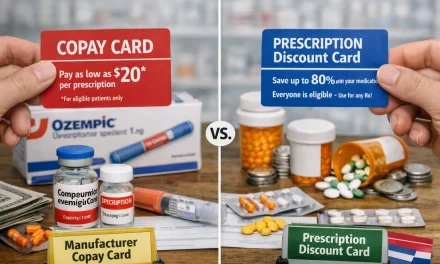
If you do have insurance, the manufacturer may offer a copay program that covers part of your share. These work differently from a discount card, and the distinction between a copay card and a discount card matters more with specialty drugs than with anything else. One caveat to raise with your plan: some insurers operate accumulator or maximiser programs that stop manufacturer assistance from counting toward your deductible.
Nonprofit foundation grants
Independent charitable foundations run disease-specific funds that help with drug costs. These are separate from manufacturer programs, have their own eligibility criteria, and sometimes open and close depending on available funding, so it is worth checking more than once.
Biosimilars
A biosimilar is not a generic, but it plays a comparable role in bringing prices down. Where a biosimilar exists for your biologic, it is worth asking your prescriber whether it is appropriate for you. The way price competition works between generic and brand-name drugs is similar in principle, even though the science and the approval pathway are different.
Medicare protections if you are enrolled
Part D now includes an annual cap on what enrollees pay out of pocket, which changes the picture substantially for anyone on a high-cost drug. If you have previously been caught by the Part D coverage gap, it is worth reviewing where you now stand.
Where the card still helps someone on a specialty drug
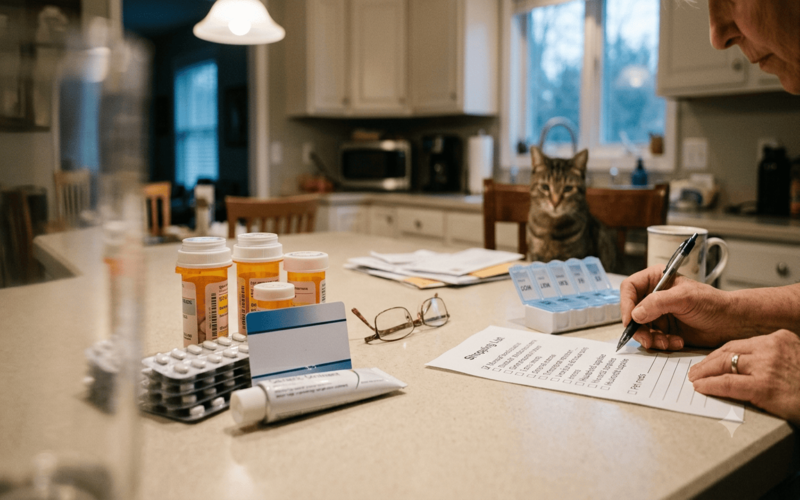
This part gets overlooked. Very few people on a biologic take only that biologic.
- The supporting medication prescribed alongside it, such as methotrexate or folic acid in rheumatoid arthritis.
- Drugs for side effects or complications, including antiemetics and corticosteroids.
- Everything unrelated: blood pressure, cholesterol, thyroid, mental health, and pain prescriptions.
- Prescriptions for the rest of the household, and for pets, since the card covers veterinary prescriptions filled at participating pharmacies.
For most patients, the specialty drug is one line on a longer list. A card will not fix the biggest line, but it can meaningfully reduce the rest, and the rest is often where a month gets tight. The broader tactics for how to lower your monthly prescription bill apply to those prescriptions in full.
One point that bears repeating, because it causes confusion at exactly the moment people can least afford it. A discount card is not the same thing as health insurance. The NuLifeSpan Rx program is not insurance and not a Medicare prescription drug plan, and a discounted purchase does not count toward a deductible or out-of-pocket maximum. If you are facing a specialty drug cost without coverage, a card is a useful supplement to a coverage conversation, not a replacement for one.
FAQs about specialty drugs and discount cards
Can I use a prescription discount card on a biologic?
Sometimes, but the benefit is usually small relative to the price. Many biologics are dispensed through specialty pharmacies under limited distribution arrangements, and infused biologics are often billed under the medical benefit rather than the pharmacy benefit, so no pharmacy discount applies. Check the price at participating pharmacies for your specific drug rather than assuming either way.
What makes a drug a specialty drug?
Price is the main criterion in practice. CMS allows Part D plans to use a specialty tier for drugs with an ingredient cost of 950 dollars or more for a thirty-day supply. Most drugs in that range are biologics treating complex conditions, and many also carry handling or administration requirements that ordinary pharmacies are not set up for.
Why is my specialty drug not available at my regular pharmacy?
Many specialty medications are distributed through a restricted network of authorised pharmacies. Some need refrigeration and controlled shipping. Your prescribing clinic will usually direct the prescription to the correct pharmacy rather than leaving you to find one.
Are biosimilars cheaper than the original biologic?
Generally yes, though the gap is narrower than the one between a brand-name small molecule drug and its generic. A biosimilar is highly similar to the reference product rather than an identical copy, and whether one is suitable for you is a clinical decision for your prescriber.
What is a patient assistance program and how do I apply?
It is a program run by a drug manufacturer that provides medication at reduced or no cost to patients who meet income and coverage criteria. Applications go through the manufacturer, and specialty clinics often have staff who handle them regularly, so ask at your prescribing practice before starting from scratch.
Can I use a manufacturer copay card together with my insurance?
Usually yes, since copay assistance is designed to reduce your share of an insured claim. That is different from a discount card, which is used instead of insurance rather than alongside it. Ask your plan whether an accumulator or maximiser program applies, because that affects whether the assistance counts toward your deductible.
Does a discount card help at all if I take a specialty drug?
Yes, just not usually on the specialty drug itself. It applies to the supporting prescriptions, the unrelated maintenance medications, and prescriptions for the rest of your household. Since the card is free with no enrollment fee and no eligibility requirement, there is no cost to having it available for those fills.