A chronic condition does not bill you once. It bills you every month, for as long as you have it. There is the refill, the lab work, the follow-up visit, and the supplies that never appear on a pharmacy receipt. None of these feel dramatic on their own. Added across twelve months, they become one of the largest recurring costs in a household budget, and without coverage the whole of it lands on you.
The number is knowable, though, and most of it turns out to be adjustable once you can see where it goes. This guide breaks down what a year of chronic disease management actually costs when you are paying for prescriptions without coverage, which parts of the bill move the most, and the practical steps that lower your monthly prescription bill without changing your treatment.
What chronic disease management costs each year
For someone managing one common chronic condition without insurance, the yearly cost usually falls between a few hundred dollars and several thousand. Generic maintenance medication with routine monitoring sits at the low end. Brand-name drugs with no generic equivalent, injectable therapies, and conditions requiring frequent testing sit at the high end.
The range is wide because chronic disease management is not one expense. It is three: the medication you take every month, the monitoring that tracks whether it is working, and the visits that keep the prescription current. Each one behaves differently, and only one of them has real room to move.
This is not an unusual situation to be in. CDC researchers reported that in a recent survey year, 76.4 percent of US adults, roughly 194 million people, had at least one chronic condition.
Where the money actually goes
Prescription refills
Refills are the largest recurring line for most people, and the one most worth attention. Maintenance drugs are taken indefinitely, so a small price difference compounds. A fifteen dollar gap on a single monthly prescription is a hundred and eighty dollars over a year. Someone taking three maintenance drugs is looking at three times that from price differences alone, before anything about the treatment itself changes.
Generics are what make this manageable. According to the Association for Accessible Medicines, generic and biosimilar medicines account for about 90 percent of all prescriptions filled in the United States but only around 12 percent of total prescription drug spending. If your maintenance drugs have generic equivalents, the cash price is often far lower than people expect.
Monitoring, labs, and supplies
This is the category that quietly breaks budgets, because none of it arrives as a single bill. Depending on the condition, it can include test strips, lancets, a blood pressure cuff, a peak flow meter, or periodic lab panels ordered by a provider. These purchases are irregular enough that most people never total them, which is exactly why they get underestimated.
Office visits and prescription renewals
A maintenance prescription generally cannot be refilled forever without a provider seeing you. Without insurance, those visits are paid in cash. Federally qualified health centers and sliding-scale community clinics price visits against income, and are worth identifying before you need one rather than after.
Why the same prescription costs different amounts
Pharmacy pricing is not standardized. The same drug, at the same dose, from the same manufacturer, can carry noticeably different cash prices at two pharmacies in the same town. This surprises people, but it follows directly from how pharmacy contracts and cash prices are set. We have covered the mechanics of why drug prices vary between pharmacies in more detail, and the practical consequence is simple. If you fill at whichever pharmacy is closest without checking, you are likely paying more than you need to on a bill you will pay again next month.
For a long-term prescription, finding the cheapest pharmacy once is a decision that pays out every refill for as long as you take the drug.
What common maintenance medications cost without insurance
Exact prices move too often to publish reliably, and they vary by pharmacy and location. What holds steady is the pattern of which categories are cheap and which are not.
- Blood pressure and cholesterol. Amlodipine, lisinopril, losartan, and atorvastatin are long-established generics and typically sit among the least expensive maintenance drugs to fill in cash.
- Type 2 diabetes. Metformin is an inexpensive generic. Newer classes of diabetes medication are considerably more expensive and often have no generic option.
- Thyroid. Levothyroxine is a high-volume generic and generally inexpensive, though patients are sometimes kept on a specific manufacturer, which limits substitution.
- Mental health and nerve pain. Sertraline, bupropion, and gabapentin are widely available as generics at low cash prices.
- Asthma and COPD. Inhalers are the outlier. Generic competition is thinner, and cash prices are usually far higher than oral generics.
- Insulin. Costs vary sharply by product and formulation, and this category has changed considerably in recent years.
- Insulin is worth its own read if it applies to you, since the cost of insulin without insurance depends heavily on which product you are prescribed. If your prescription is for a brand-name drug, it is also worth understanding the real differences between generic and brand-name drugs before assuming the brand is necessary.
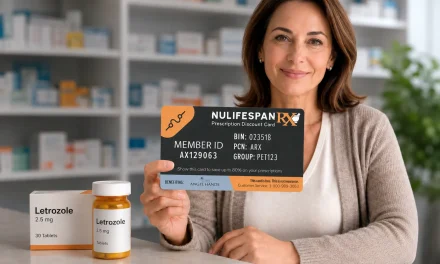
To see the actual cash price of your medication at pharmacies near you, use the NuLifeSpan Rx pricing tool. Discounts vary by prescription and pharmacy and can reach up to 95 dollars off the retail price.
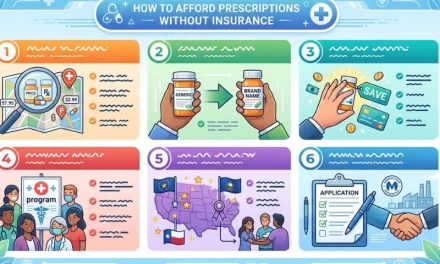
Four ways to cut the yearly total
Ask about generic and therapeutic alternatives
If your prescription is a brand-name drug, ask your prescriber or pharmacist whether a generic equivalent exists, or whether a different drug in the same class would work for you. This is a conversation to have with a clinician, not a change to make on your own, but it is a conversation many patients never start.
Move to a 90-day supply where it makes sense
Filling three months at once often costs less per dose than three separate monthly fills, and it removes two trips and two chances to run out. The arithmetic behind 90-day supply savings works best for stable, long-term prescriptions, which is exactly what chronic disease management involves.
Check the price before you fill, every time
Cash prices change. A pharmacy that was cheapest last year may not be cheapest now. Checking before each refill takes a minute and is the single highest-return habit on this list.
Look into manufacturer and patient assistance programs
Many drug manufacturers run assistance programs for patients who meet income criteria, and these are underused simply because people do not know they exist. They are most relevant for expensive brand-name drugs where no generic alternative is available.
When a discount card beats a copay
Having insurance does not automatically mean insurance gives you the better price. There are three situations where paying the discounted cash price comes out ahead.
- Your deductible has not been met and you are effectively paying full price anyway.
- Your plan does not cover the specific drug you were prescribed.
- You are in the Medicare coverage gap and paying a larger share of the cost.
The comparison between a copay card and a discount card is worth understanding, as is how a discount card behaves under a high-deductible plan. If you are on Medicare, the Part D coverage gap is the point where this comparison matters most.
One important limitation. The NuLifeSpan Rx program is not insurance and is not a Medicare prescription drug plan. When you use the discounted price instead of your benefits, that purchase does not count toward your deductible or your out-of-pocket maximum. For a drug you take year-round, that tradeoff is worth doing the math on rather than assuming either way.
Building a yearly medication budget
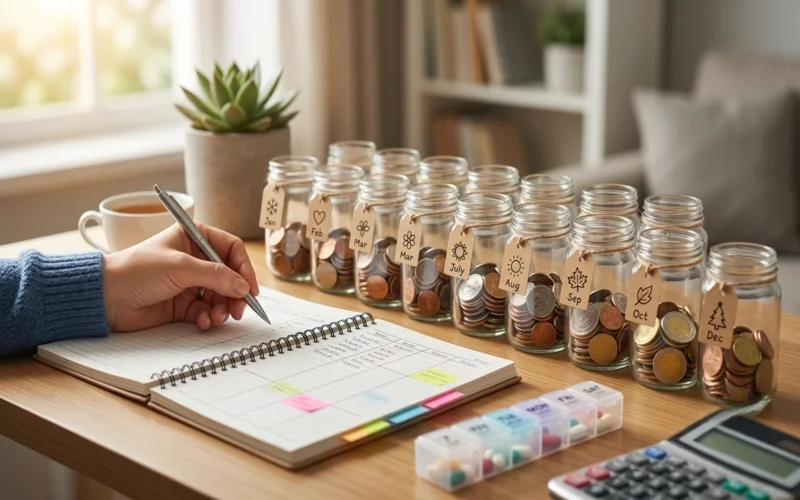
The exercise takes about fifteen minutes and changes how the whole expense feels.
- List every prescription you take on an ongoing basis, with the dose and how often you refill it.
- Multiply each one out to a yearly figure. Twelve monthly fills, or four quarterly fills on a 90-day supply.
- Add your monitoring supplies and any routine lab work.
- Add the visits needed to keep your prescriptions current.
- Identify the two or three items carrying most of the total. Those are the only ones worth optimizing.
Most people find the total is concentrated rather than spread evenly. One or two drugs usually account for the majority, which means the work of cutting the bill is narrower than it first appears.
This matters more than a budgeting exercise normally would, because cost pressure changes behavior in ways that carry real risk. KFF polling found that about 43 percent of US adults reported not taking a medication as prescribed in the past year because of cost, including roughly 19 percent who cut pills in half or skipped doses. Stretching a prescription is not a savings strategy. Finding a lower price for the same prescription is. If you are struggling to afford a medication this month, talk to your prescriber or pharmacist about alternatives before changing how you take it.
Frequently asked questions about chronic disease costs
How much does it cost to manage a chronic condition without insurance?
For most people managing one common condition, the yearly total runs from a few hundred dollars to several thousand. Generic maintenance medication with routine monitoring sits at the low end. Brand-name or injectable therapies push it substantially higher. Your own figure depends on which drugs you take, how often you are monitored, and where you fill.
Which chronic disease medications are cheapest as generics?
Long-established generics for blood pressure, cholesterol, thyroid, type 2 diabetes, and common mental health prescriptions are usually the least expensive to fill in cash. Inhalers and newer diabetes drugs tend to be the most expensive, largely because generic competition is limited.
Can I use a prescription discount card if I have no insurance at all?
Yes. The NuLifeSpan Rx card requires no insurance, no enrollment fee, and no eligibility check. It is designed for exactly this situation and is accepted at more than 35,000 pharmacies nationwide.
Is a 90-day supply cheaper than three separate monthly refills?
Frequently, yes, though not always. It depends on the drug and the pharmacy. Because the difference repeats every quarter for as long as you take the medication, it is worth checking once rather than assuming.
Why does the same prescription cost more at one pharmacy than another?
Cash prices are set by individual pharmacies and their contracts, not by a national standard. Two pharmacies in the same town can quote noticeably different prices for an identical prescription, which is why comparing before you fill is worthwhile.
Can I use a discount card and my insurance on the same prescription?
Not on the same transaction. You use one or the other, whichever gives the lower price that day. Keep in mind that a discounted purchase does not count toward your insurance deductible or out-of-pocket maximum.
What should I do if I cannot afford my maintenance medication this month?
Talk to your prescriber or pharmacist before you change anything about how you take it. Ask whether a generic equivalent or a different drug in the same class is an option, whether a 90-day fill would reduce the per-dose cost, and whether the manufacturer runs a patient assistance program. Then compare cash prices at pharmacies near you. Skipping or splitting doses to stretch a supply is not a safe substitute for finding a lower price.