
Quick answer: Generic prescription omeprazole without insurance typically costs $10 to $40 for a 30 day supply depending on dose. OTC omeprazole runs $10 to $20 for a 14 day course. Brand-name Prilosec can exceed $150 to $200 a month for the identical active ingredient.
Omeprazole, sold under the brand name Prilosec, is a proton pump inhibitor used to treat gastroesophageal reflux disease and related conditions. It is also one of the few medications sold three separate ways: over the counter, as a generic prescription, and as the brand-name product, each priced differently for the same drug. This article focuses on how those specific choices affect what you pay. For a broader look at managing acid reflux medication costs in general, see our acid reflux medication cost guide.
Omeprazole Pricing by Dosage
Omeprazole is prescribed at 10 mg, 20 mg, and 40 mg strengths. Cash price scales with dose, though not always in a straight line, since most pharmacies stock the 20 mg strength in the highest volume.
10 mg
Used for milder symptoms or as a step-down dose, this is typically the least expensive strength, generally $8 to $20 for a 30-day generic supply.
20 mg
The most commonly prescribed strength and the one most pharmacies keep in stock, usually $10 to $30 for a 30-day supply.
40 mg
Prescribed for more severe reflux or ulcer treatment, this strength tends to run somewhat higher, often $15 to $40 for a 30-day supply.
Generic Omeprazole Versus Brand-Name Prilosec
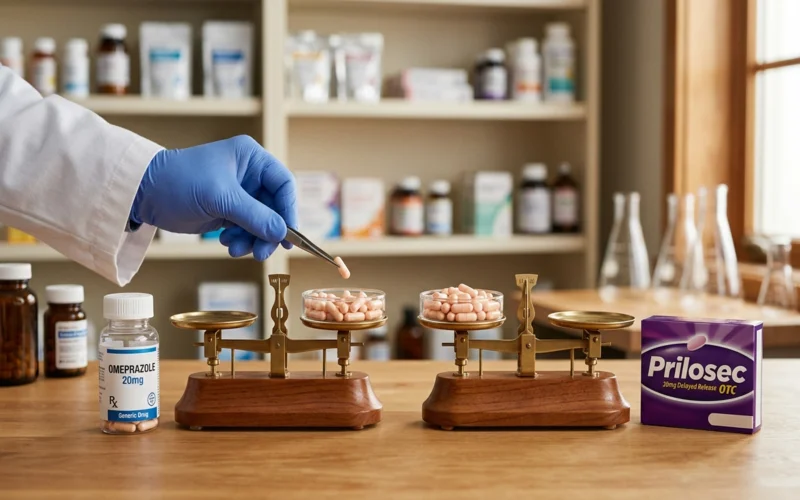
The active ingredient is identical between generic omeprazole and brand Prilosec, so the price gap is brand markup rather than a difference in how the drug works.
- Generic omeprazole: typically $10 to $40 for a 30-day supply without insurance.
- Brand-name Prilosec: commonly $150 to $200 or more for the same 30-day supply.
Is generic omeprazole as effective as Prilosec? Yes. Generic omeprazole contains the same active ingredient, dose, and release mechanism as brand-name Prilosec and is held to the same FDA approval standard, so there is rarely a clinical reason to pay the brand price out of pocket.
OTC Omeprazole Versus Prescription Strength
Prilosec OTC is sold at a lower dose intended for short-term, self-directed use, and priced accordingly.
- OTC omeprazole: roughly $10 to $20 for a 14-day course, sold without a prescription.
- Prescription-strength omeprazole: priced per the dosage breakdown above.
For occasional heartburn, the OTC version is usually the cheaper path. For ongoing GERD management under a doctor’s care, the prescription version is dosed and monitored differently, which is worth discussing with your prescriber rather than deciding on price alone.
Can I use a discount card on OTC omeprazole? Discount cards apply to prescription fills processed through a pharmacy’s system, not to over-the-counter purchases rung up at the register, so OTC omeprazole is usually paid at the shelf price.
How NuLifeSpan Rx Helps
Whether you land on the OTC version, a generic prescription, or brand-name Prilosec, NuLifeSpan Rx is a free way to check whether you are paying more than necessary.
- The card is 100% free, never expires, and has no enrollment process, income limits, or eligibility requirements.
- It is accepted at more than 35,000 pharmacies nationwide, including major chains and independents.
- Savings can reach up to 80% off the retail price, on generics and brand-name drugs alike.
- It works whether or not you have insurance, and it is worth comparing even with coverage, since the card price sometimes beats a copay.
NuLifeSpan Rx is a prescription discount program, not insurance and not a Medicare prescription drug plan. Prices vary by pharmacy and medication.
30-Day Versus 90-Day Omeprazole Supply
Once your dose is established, moving to a 90-day supply is one of the more reliable ways to reduce the per-dose cost of a maintenance drug like omeprazole, since it spreads the pharmacy’s dispensing fee across more tablets. Whether that holds at your specific pharmacy is worth checking before you switch supply length.
How to Lower Your Omeprazole Cost
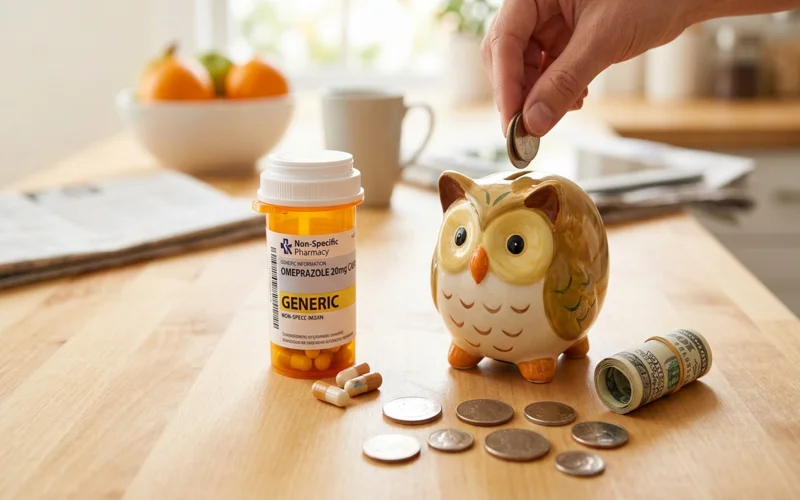
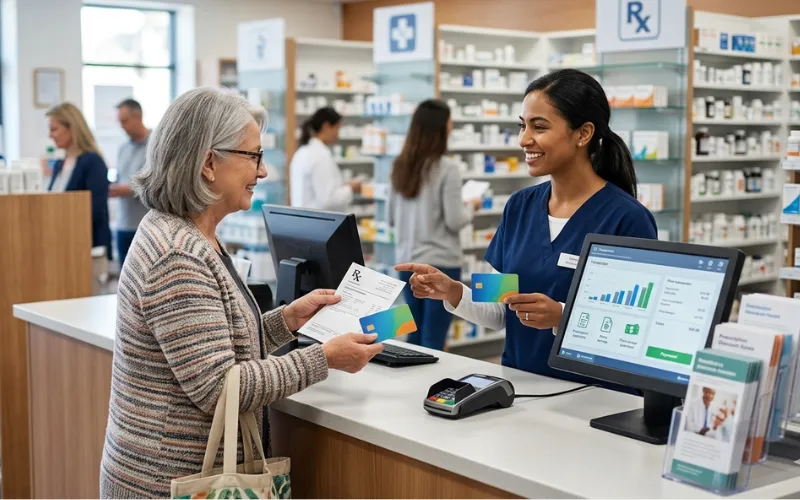
- Ask your pharmacist to run the price with a free prescription discount card before assuming insurance or cash price is your only option.
- Compare the OTC and generic prescription price side by side. Depending on your dose and pharmacy, one is sometimes cheaper than the other.
- Ask your prescriber about a 90-day supply once your dose is stable.
- Avoid paying brand price for Prilosec unless your prescriber has a specific clinical reason for it.
Why does my omeprazole cost change between pharmacies? Pharmacies set their own cash prices for generics, so the same dose and quantity can vary by $10 or more between a large chain and a smaller independent pharmacy.
Conclusion
Omeprazole is priced differently depending on how you buy it, and dose, brand versus generic, and OTC versus prescription each move the price in a predictable direction. For most patients without insurance, generic prescription omeprazole at the lowest effective dose offers the best balance of cost and control, with a 90-day supply and a discount card lowering the price further once your dose is stable.
Before you fill your next omeprazole prescription, check the price with NuLifeSpan Rx. The free card is accepted at thousands of pharmacies nationwide and can lower your cost at the register without changing your prescription.
Frequently Asked Questions
Is it safe to switch between OTC and prescription omeprazole on my own?
Talk to your prescriber before switching. The strengths and intended use differ, and ongoing GERD management is usually monitored differently than short-term OTC use.
Does omeprazole cost more at 40 mg than taking two 20 mg tablets?
Not usually. Pharmacies price omeprazole per tablet regardless of strength in most cases, so taking the prescribed single higher-dose tablet is typically cheaper than filling two lower-dose prescriptions.
Will my omeprazole price change if I refill early or late?
The price itself will not change, but refilling outside your plan’s allowed window can affect insurance coverage. This does not apply to cash or discount card pricing.
Does insurance always beat a discount card for omeprazole?
Not always. Some insurance copays for omeprazole exceed the cash price with a discount card, especially for the generic version, so it’s worth comparing both before you pay at the register.
Can I use a discount card with Medicare Part D for omeprazole?
You can’t combine them on the same fill, but you can choose whichever is cheaper that month. Since omeprazole is often available at low cash prices, the discount card sometimes beats a Part D copay, particularly before you meet your deductible.
Is there a difference in omeprazole cost between chain pharmacies and independent pharmacies?
Yes, cash prices for generic omeprazole can differ between large chains and independent pharmacies, so it’s worth calling ahead or checking prices at a couple of nearby options before filling.









Trackbacks/Pingbacks