Prednisone without insurance typically costs between $3 and $20 for a short course at retail, and with a free prescription discount card that drops to as little as $3 to $8 for a 30-tablet supply depending on the dosage and pharmacy. It is one of the more affordable prescription medications available, but prices vary enough between pharmacies that comparing before you fill is worth doing.
What Prednisone Actually Costs Without a Discount
Prednisone is a generic corticosteroid, and like most generics, its price at the pharmacy counter varies based on dosage strength, quantity, and which chain you use. The average cash price without any savings tool is around $13 for 10 tablets of 20mg, but a 30-tablet supply of 10mg can be found as low as $7.85 using a coupon at certain locations.
A general price picture by dosage without discounts:
- 10mg, 30 tablets: approximately $7 to $15 at retail
- 20mg, 10 tablets: approximately $13 on average
- 40mg, 30 tablets: approximately $6 to $25 depending on the pharmacy
- 50mg, 5 tablets: approximately $17 at retail for higher-strength short courses
Brand-name versions like Deltasone and Rayos carry significantly higher price tags. Since generic prednisone meets the same FDA bioequivalence standards, there is rarely a clinical reason to fill the brand name when the generic is available at a fraction of the cost.
How Prices Compare Across Major Pharmacy Chains
The same prednisone prescription can cost meaningfully different amounts depending on which pharmacy you choose. This is not a minor variation. For a 30-tablet supply of 40mg prednisone, the price range across major chains shows just how much pharmacy selection matters.
A comparison of discounted prices for prednisone 40mg, 30 tablets using savings tools:
- CVS: as low as $3.34 with a discount coupon
- Walgreens: approximately $6.22
- Walmart: approximately $6.22
- Costco: approximately $6.22
CVS offers the most competitive discounted price in this example, though that relationship does not hold for every medication or dosage. Why the same prescription costs different amounts at different pharmacies comes down to each chain’s individual contracts with manufacturers, their network participation, and how they structure discounts for cash-paying patients.
Geography also plays a role. Prescription prices in certain metropolitan areas tend to run higher than in smaller markets, reflecting differences in operational costs and local competitive dynamics. The practical implication is that the price on a national average chart may not reflect what you will actually pay at a specific location.
Using a Discount Card to Lower the Cost Immediately
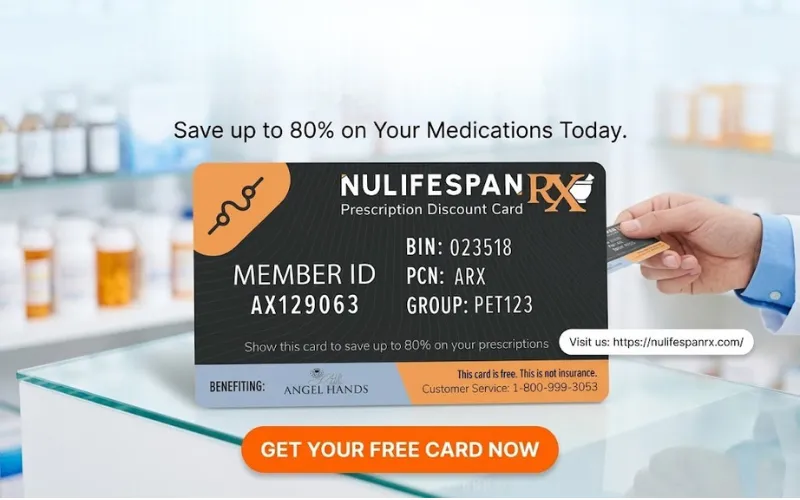
A prescription discount card is the fastest and most straightforward way to reduce what you pay for prednisone. These cards work through pre-negotiated rates that pharmacies have agreed to honor via their discount network contracts. There is no application process, no enrollment fee, and no insurance required. You present the card at the counter and pay the discounted price directly.
Savings on prednisone through discount card programs can reach up to 90 percent off the retail price at certain pharmacies. For a medication that already costs relatively little, those savings in absolute dollar terms may seem modest. On a $13 prescription, cutting it to $3 saves $10. On a medication taken repeatedly for a chronic condition like autoimmune disease or severe asthma, those savings accumulate into a meaningful amount over time.
How free prescription discount cards generate these savings involves no cost passed to the patient. The card provider earns a small transaction fee from the pharmacy after each discounted fill. For patients wondering whether a no-cost card can genuinely produce real savings, the answer is yes, and prednisone is one of the clearest examples of the model working exactly as intended.
Finding the Lowest Price Before You Fill
The best practice for any prescription, including one as affordable as prednisone, is checking prices across multiple pharmacies before committing to a fill location. The price difference between the cheapest and most expensive option for the same prednisone prescription at the same dosage can be $10 to $20, which is significant relative to the total cost of the medication.
Finding the most affordable price for prednisone at pharmacies near you using a zip-code-based search on a discount card platform takes a few minutes and shows you the actual negotiated price at each nearby location rather than a national estimate. For patients who fill short prednisone courses infrequently, this step ensures you are not overpaying on what should be an inexpensive prescription.
For patients who regularly use a specific chain, understanding the pricing mechanics at that location is useful. How CVS structures pricing for cash-paying patients and how discount card pricing is applied at Walgreens follow different internal structures, which is why the same discount card can produce a $3 price at one chain and a $6 price at another for the same fill. Which pharmacy consistently offers the lowest price for prednisone in your area is something worth confirming by zip code rather than assuming based on general reputation.
Understanding Prednisone’s Insurance Tier Placement
For patients who do have insurance, prednisone is typically classified as a Tier 1 generic, the lowest cost tier on most formularies. This means copays are generally low, sometimes as little as $0 on certain plan types.

A few things worth checking with your specific plan:
- Whether immediate-release and delayed-release prednisone formulations are placed at the same tier, since some plans treat them differently
- Whether your deductible applies before the Tier 1 copay kicks in, which would mean paying full price until the deductible is met
- Whether your plan type is an HMO or PPO, since network restrictions can affect which pharmacies your copay applies at
For patients on high-deductible plans who have not yet met their deductible, the discount card price will frequently be lower than what insurance charges for prednisone. How patients on high-deductible plans can lower prescription costs often starts with this exact situation: a medication that should be inexpensive under insurance is full-price until the deductible clears, making the discount card the better financial choice for that fill.
When to Ask About Patient Assistance Programs
Prednisone is inexpensive enough that patient assistance programs are rarely necessary for this specific medication. At $3 to $8 per month with a discount card, the out-of-pocket burden is manageable for most patients even without insurance. However, patients who take prednisone as part of managing a chronic autoimmune condition may also be filling other, more expensive medications simultaneously.
In that broader context, covering multiple prescription costs without insurance often involves a combination of discount cards for lower-cost generics like prednisone and patient assistance programs for more expensive specialty medications. Pharmaceutical company assistance programs, nonprofit prescription foundations, and state pharmaceutical assistance programs can reduce or eliminate costs for patients meeting income eligibility criteria across their full medication regimen.
What Pharmacists Are Not Required to Tell You About Prednisone Pricing
At the pharmacy counter, the default transaction processes through whatever pricing structure is already in the system, whether that is the retail price, an insurance copay, or a previously applied discount card. Most patients do not realize that comparing options is their responsibility to initiate, not the pharmacist’s.
What pharmacists are not required to proactively share includes the fact that a discount card may produce a lower price than your insurance copay, particularly when your deductible is still active. For prednisone, where the discounted price can be as low as $3, this is especially relevant for patients whose insurance charges even a modest $10 copay on generics before the deductible is met. Presenting the discount card before the transaction is processed is a simple step that requires no approval and no explanation.
Frequently Asked Questions
How much does prednisone cost per tablet without insurance
The per-tablet cost for generic prednisone without any savings tool ranges from roughly $0.40 to $1.50 depending on the dosage and pharmacy. With a discount card, per-tablet prices can drop to under $0.25 at pharmacies offering the most competitive discounted rates. Higher-strength tablets like 50mg carry a higher per-tablet cost than lower-strength options.
Is there a meaningful difference between generic prednisone and brand-name Deltasone or Rayos
No clinically meaningful difference exists for most patients. Generic prednisone contains the same active ingredient and meets FDA bioequivalence standards. The cost difference is substantial, with brand-name versions costing significantly more while providing no added therapeutic benefit for the overwhelming majority of patients.
Does prednisone require prior authorization from insurance
Generally, no. Prednisone is a well-established, widely prescribed generic corticosteroid that most insurance plans cover without prior authorization at Tier 1. Delayed-release formulations like Rayos may face different coverage requirements depending on the plan.
Can a discount card be used for prednisone even if the prescription is for a short course
Yes. Discount cards apply to every prescription regardless of whether it is a short course, a one-time fill, or an ongoing monthly prescription. There is no minimum duration of treatment required to use a discount card, and no ongoing commitment is needed after the transaction.
Why does prednisone cost more in some geographic areas than others
Geographic price variation in prescription drugs reflects local market conditions, including pharmacy operating costs, competition density, and regional contract structures. Urban areas with higher overhead costs often have higher retail prices for the same medications. Using a zip-code-based price comparison tool before filling shows the actual price at your specific location rather than a national average.
The Bottom Line
Prednisone is among the most accessible and affordable generic medications available, but paying the retail price without a discount tool means paying more than necessary. A free prescription discount card brings the cost to $3 to $8 at major pharmacies, and comparing prices across nearby locations before filling can reduce costs further. For patients managing chronic conditions that require prednisone alongside other medications, the same discount strategy applied across all prescriptions adds up to meaningful savings over time.