Iron infusion cost without insurance is not one number. A single session can run from a few hundred dollars to several thousand, and the price you’re quoted depends on which IV iron product is used, how many sessions your treatment plan calls for, and whether you’re being treated in a hospital outpatient department, an independent infusion center, or a physician’s office. This guide breaks the total bill into its separate parts so you know what you’re actually paying for, and explains where a prescription discount card can and cannot help.
If you already have a written prescription for an oral or injectable medication related to your iron treatment, you can search that exact medication using the NuLifeSpan Rx pricing tool to compare pharmacy prices near you.
What Is an Iron Infusion?
An iron infusion delivers iron directly into the bloodstream through an IV, bypassing the digestive system entirely. According to MedlinePlus, iron deficiency anemia develops when the body doesn’t have enough iron to produce adequate hemoglobin, the protein in red blood cells that carries oxygen.
Oral iron supplements are usually tried first because they’re simpler and less expensive, but a healthcare provider may recommend IV iron instead when oral iron isn’t absorbed well, causes side effects severe enough that a patient can’t continue taking it, or when iron levels need to be corrected faster than oral supplementation allows, such as before surgery or during pregnancy with more significant deficiency. The decision to move from oral to IV iron is a clinical one, made by a healthcare provider based on bloodwork and how a patient has responded to prior treatment, not a preference-based choice.
How Much Does an Iron Infusion Cost Without Insurance?
There is no single national price for an iron infusion. Reporting on medical billing for IV iron treatment has generally found that individual infusion sessions can range from around $400 on the lower end to more than $4,000 on the higher end, depending on the product used, the dose required, and where the infusion takes place.
Some patients need only one or two sessions to reach an adequate iron level, while others require a series of infusions spread across several weeks, which multiplies the total cost. Because pricing varies this widely by product, dose, and facility, the only way to get an accurate number for your own situation is to ask the infusion center or hospital billing department for a written, itemized estimate before you schedule treatment.
What Makes Up the Total Iron Infusion Cost?
The number you see for “an iron infusion” is rarely just the medication. A full course of treatment can include several separate charges:
- IV iron medication. The cost of the iron product itself, which varies by brand and dose.
- Infusion center or facility fee. A charge for use of the treatment room, chair, and equipment.
- Administration or nursing fee. The cost of clinical staff time to start the IV, monitor you during the infusion, and manage any reaction.
- Physician consultation. The visit where a provider evaluates your iron levels and determines whether IV iron is appropriate.
- Blood testing. Lab work to confirm iron deficiency and determine how much iron you need.
- Follow-up laboratory work. Repeat labs to check whether the infusion corrected your iron levels.
- Number of treatment sessions. Some IV iron products can deliver a full dose in one visit, while others require the same total dose split across multiple appointments.
Because these are typically billed as separate line items, the medication price alone almost never represents the total bill. Ask specifically whether the facility fee, administration fee, and medication charge are itemized separately or bundled into one price, since this affects how the total is calculated and whether any single portion is negotiable.
Different Types of IV Iron
Several IV iron products are prescribed in the United States, and they are not interchangeable in dosing or scheduling. According to a MedlinePlus drug information page, commonly used IV iron injections include ferric carboxymaltose, ferumoxytol, iron dextran, and iron sucrose. A newer formulation, ferric derisomaltose, is also in use. In general terms:
- Iron sucrose is typically given in smaller doses per session, which often means a full course requires more than one visit.
- Ferric carboxymaltose can deliver a larger dose in a single infusion, which sometimes allows a full course to be completed in one or two visits.
- Ferumoxytol is another option that can deliver a substantial dose relatively quickly.
- Ferric derisomaltose is a newer formulation approved for delivering a large single dose in one infusion for many patients.
Because these products differ in how much iron they deliver per session and how they’re scheduled, two patients with a similar degree of deficiency can end up with very different total costs depending on which product they’re prescribed, even before facility fees are considered. Your provider, not you, determines which product is appropriate based on your bloodwork, medical history, and how you tolerate the infusion. Cost alone is not a reason to ask a provider to switch products without a full conversation about whether that switch is medically appropriate for you.
Iron Infusion vs Oral Iron Costs
Oral iron, whether an over-the-counter supplement or a prescription iron product, is almost always the less expensive starting point, and it’s usually tried first for that reason as well as convenience. IV iron becomes the recommended option when oral iron isn’t tolerated, isn’t absorbed adequately, or isn’t fast enough for the clinical situation.
The two are not interchangeable treatments for the same problem; they represent different points along a treatment pathway that your provider selects based on lab results and how you’ve responded to prior treatment. If a prescription oral iron product is written and filled at a retail pharmacy, that prescription is the type of expense you can compare using the NuLifeSpan Rx pricing tool. An IV iron infusion administered at a facility is billed differently, as explained below.
Factors Affecting Iron Infusion Costs Without Insurance
Several variables combine to determine what you’ll actually be billed:
- Which IV iron product is prescribed and its per-vial or per-dose cost.
- Total dosage needed, based on how low your iron levels are.
- Number of sessions required to deliver the full prescribed dose.
- Facility type. Hospital outpatient departments generally bill differently, and often at a higher rate, than independent infusion centers or physician offices.
- Geographic location, since regional pricing for both facility fees and professional services varies.
- Consultation fees for the initial visit and any follow-up appointments.
- Laboratory testing before, and sometimes after, the infusion.
- Administration fees charged by the facility for the nursing time and monitoring involved.
- Manufacturer assistance, which some IV iron manufacturers offer to eligible patients and which can reduce the medication portion of the bill.
Does a Prescription Discount Card Cover Iron Infusions?
This is one of the most important distinctions to understand before you schedule treatment. In most cases, the IV iron medication used during an infusion is purchased and billed directly by the infusion center, hospital, or physician’s office, similar to how a vaccine given during an office visit is billed. That means the medication generally isn’t something you fill at a retail pharmacy yourself, and a prescription discount card, including NuLifeSpan Rx, most often will not apply to it.
NuLifeSpan Rx is a prescription discount program, not health insurance, and it’s designed to help you compare potential prices on eligible medications filled at participating retail pharmacies. It does not reduce an infusion center’s facility fee, administration or nursing fee, laboratory charges, or the cost of the physician consultation, since none of those are retail pharmacy prescription costs.
If your provider ever writes iron infusion medication as a retail prescription for you to obtain separately, an arrangement that is uncommon but does happen in some cases, you can search that exact medication using the NuLifeSpan Rx pricing tool to see whether retail pricing is available. For the more typical situation, where the infusion center bills the medication directly, ask the billing department about self-pay rates, itemized estimates, and payment plans instead.
Ways to Manage Iron Treatment Costs Without Insurance
A few practical steps can help you manage the expense of IV iron treatment as an uninsured or cash-paying patient:
- Request an itemized cost estimate before scheduling treatment, so you know the facility fee, administration fee, and medication cost separately.
- Ask whether the medication and administration are billed as one combined charge or as separate line items.
- Compare appropriate treatment locations, since hospital outpatient departments, independent infusion centers, and physician offices often price differently for the same treatment.
- Ask the billing office about self-pay discounts or payment plans for uninsured patients.
- Ask whether a manufacturer patient-assistance program is available for the specific IV iron product prescribed.
- If a related prescription, such as an oral iron product, is filled at a retail pharmacy, compare pharmacy prices for that exact prescription before you fill it.
- Ask your healthcare provider about medically appropriate alternatives if cost is a significant concern, rather than changing your treatment on your own.
Do not stop or switch iron treatment on your own because of cost. Any change to your treatment plan should be discussed with the healthcare provider managing your care.
How NuLifeSpan Rx May Help With Related Prescriptions
While NuLifeSpan Rx cannot reduce an infusion center’s facility or administration charges, it may help with an eligible medication filled at a retail pharmacy, such as an oral iron prescription that’s part of your broader treatment plan:
- Search the exact prescription, strength, and quantity using the NuLifeSpan Rx pricing tool.
- Review the prices shown at participating pharmacies near you.
- Select the pharmacy and price that fits your situation.
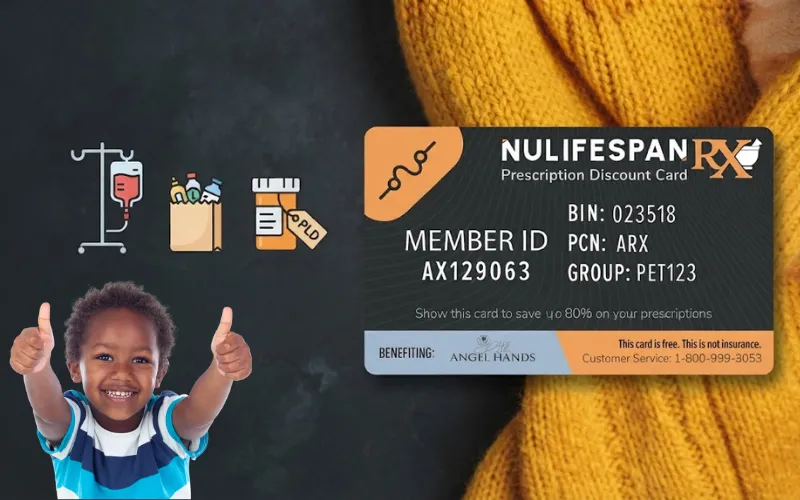
- Access your free NuLifeSpan Rx discount card digitally, or download and print it.
- Present the card at the pharmacy counter when it offers a lower price than the cash price.
- Pay the applicable discounted price if it’s your preferred payment option for that fill.
Also see our related guide on anemia medication cost without insurance for a broader look at how anemia evaluation and treatment expenses break down beyond IV iron specifically, and our guide on finding the cheapest pharmacy for any medication for general prescription-comparison strategies.
Important Limitations
- NuLifeSpan Rx is a prescription discount program. It is not insurance.
- Savings vary by medication, strength, quantity, and pharmacy, and there is no guaranteed savings amount.
- The card does not reduce infusion center facility fees, administration or nursing fees, laboratory testing, or physician consultation charges.
- The card cannot be combined with insurance for the same prescription transaction.
- Discount-card purchases do not count toward any insurance plan’s deductible or out-of-pocket maximum.
- This article is educational and does not diagnose iron deficiency or recommend a specific treatment. Testing and treatment decisions should be made with a licensed healthcare provider.
Conclusion
Iron infusion cost without insurance is really a combination of separate charges: the medication, the facility fee, the administration fee, and the testing that surrounds treatment. The medication price alone rarely reflects what you’ll actually be billed, and because the IV iron itself is usually billed directly by the facility rather than filled at a retail pharmacy, a prescription discount card typically won’t reduce that part of the bill. The most reliable next step is to ask your infusion center for an itemized estimate before scheduling, and to search any related retail prescription before you fill it.
Frequently Asked Questions
How much is an iron infusion without insurance?
There is no single set price. Individual sessions have been reported to range from around $400 to more than $4,000, depending on the IV iron product used, the dose needed, and whether treatment takes place in a hospital, an independent infusion center, or a physician’s office. The most accurate figure for your situation comes from an itemized estimate from the billing department.
Why are iron infusions expensive?
The total bill usually includes several separate charges: the IV iron medication, a facility fee for the infusion chair and equipment, an administration or nursing fee, and sometimes a physician consultation and lab testing. Newer IV iron products that allow a full dose in fewer visits can also carry a higher per-dose medication cost than older formulations.
How many iron infusions might someone need?
This depends on how low your iron levels are and which IV iron product your provider prescribes. Some products deliver a larger dose per session and may complete treatment in one or two visits, while others require smaller doses spread across more sessions. Your provider determines the number of sessions based on your bloodwork.
Is the IV iron medication charged separately from the infusion?
Often, yes, though billing practices vary by facility. Ask specifically whether the medication cost, facility fee, and administration fee are itemized separately or combined into one charge, since this affects how the total price is calculated.
Does a prescription discount card cover an iron infusion?
No, in most cases. IV iron medication used during an infusion is typically purchased and billed directly by the infusion center or physician’s office rather than filled at a retail pharmacy, so a prescription discount card, including NuLifeSpan Rx, generally doesn’t apply to it. Discount cards may still help with a related prescription, such as oral iron, if it’s filled at a participating retail pharmacy.
Are iron infusions more expensive than oral iron?
Yes, typically. Oral iron, whether over-the-counter or prescription, is usually far less expensive than IV iron, which is why it’s generally tried first when appropriate. IV iron is recommended when oral iron isn’t tolerated, isn’t absorbed well enough, or isn’t fast enough for the clinical situation, and its higher cost reflects the facility, administration, and medication charges involved.