
GLP-1 medications like Wegovy, Zepbound, and Saxenda are widely advertised alongside promises of a “$25 a month” price. That number is real for some patients, but manufacturer savings cards come with eligibility rules that leave many people paying far more than the advertised rate. Here is how these programs actually work, who qualifies, and what to do if you do not.
What Is a Manufacturer Savings Card?
A manufacturer savings card, sometimes called a copay card or copay assistance program, is a program run directly by the drug’s manufacturer, such as Novo Nordisk or Eli Lilly. It is not insurance. Instead, it works as a secondary payer: your commercial insurance processes the claim first, and the manufacturer’s card then covers some or all of the remaining amount you would otherwise owe, up to a set monthly or annual cap.
Because the card functions this way, it can only reduce a copay that already exists. If your insurance does not cover the drug at all, there is no copay for the card to reduce, and the advertised low price generally will not apply.
The Core Eligibility Rule: You Need Commercial Insurance That Covers the Drug
Every major GLP-1 savings card, including the Wegovy Savings Card, the Zepbound Savings Card, and Saxenda’s manufacturer program, share the same basic requirement: you must have commercial (private) health insurance, and that insurance must already list the medication on its formulary.
If either condition is not met, the standard low advertised price typically does not apply. Some manufacturers offer a smaller, secondary discount tier for patients whose insurance does not cover the drug but who still have commercial coverage for other benefits, though the discount at that tier is meaningfully smaller than the flagship rate.
Why Government Insurance Is Always Excluded
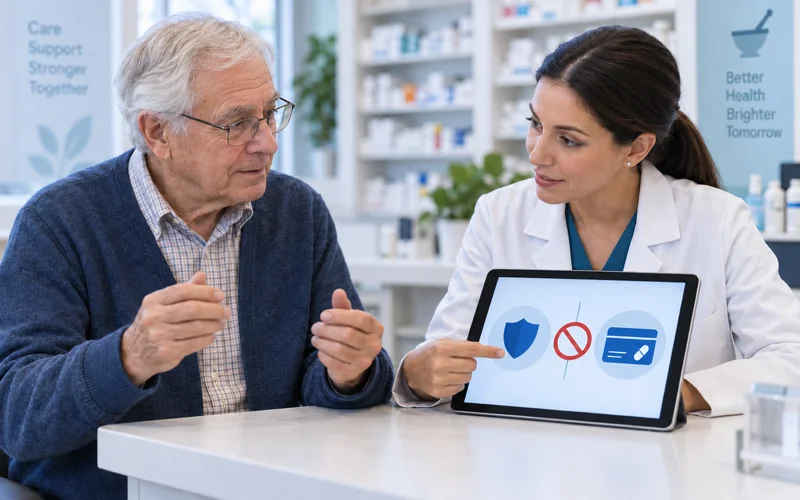
Federal anti-kickback laws prohibit pharmaceutical manufacturers from offering copay coupons to patients enrolled in Medicare, Medicaid, TRICARE, or VA benefits. This is not a policy choice by Novo Nordisk or Eli Lilly, it is a legal restriction that applies across the entire pharmaceutical industry. If you are on any government insurance program, a manufacturer savings card will not apply to your prescription, regardless of what the advertising implies.
Patients on government insurance who need help affording a GLP-1 medication should instead look at:
- Whether their specific plan formulary covers the drug and, if so, what the plan’s own copay or coinsurance is.
- The manufacturer’s separate patient assistance program, which is typically income-based and structured differently from a commercial copay card.
- NuLifeSpan Rx’s resources for underinsured and Medicare patients, which cover other ways to lower costs outside a manufacturer savings card.
What the Savings Actually Look Like
Savings cards typically cap the patient’s monthly out-of-pocket cost at a low flat amount, often around $25, but only up to a maximum total benefit per fill or per year. If your insurance-assigned copay is higher than the card’s maximum benefit, you will still owe the difference. For example, if your plan’s copay for the drug is $600 and the card’s maximum monthly benefit is $150, you could still owe $450 after the card is applied, not $25.
This is one of the most common sources of confusion for patients, who see “$25 a month” in an advertisement and expect that number regardless of their specific plan design.
Savings Cards vs. Manufacturer Self-Pay Programs
It is worth distinguishing a savings card from a manufacturer’s direct self-pay program, such as NovoCare Pharmacy (used for Wegovy and Saxenda) or LillyDirect (used for Zepbound). These self-pay programs are a completely separate option built for patients who do not have insurance coverage for the drug at all.
Instead of discounting a copay, they sell the medication directly to the patient at a set cash price, which is often several hundred dollars per month, well below full retail but well above the flagship savings card rate. If you are uninsured or your plan excludes GLP-1 coverage entirely, the manufacturer’s self-pay program, not the savings card, is usually the more realistic path to a lower price.
Common Reasons a Savings Card Gets Rejected at the Pharmacy
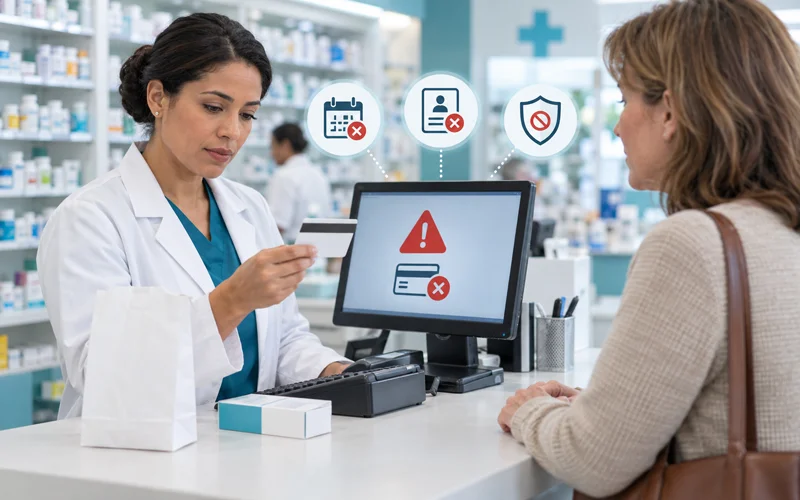
- The patient’s insurance plan does not cover the medication, so there is no copay left to discount.
- The patient has any form of government insurance, even as a secondary payer alongside commercial coverage.
- The card has already reached its annual maximum benefit for that patient.
- The prescription is for a dose or formulation not covered by the specific card program.
- The pharmacy processed the claim incorrectly or the card was not activated before the fill.
If a card is rejected, ask the pharmacist to confirm the specific reason, since some issues, like an inactive card or an incorrect group number, can be corrected on the spot.
Practical Steps Before You Rely on a Savings Card
- Confirm with your insurance company, not just the manufacturer’s website, that the specific GLP-1 medication is on your plan’s formulary.
- Check whether prior authorization is required and whether it has been approved before you go to the pharmacy.
- Read the current terms on the manufacturer’s own program page, since maximum benefit amounts and eligibility details are updated periodically.
- Ask your pharmacist to run a test claim with the card before you commit to a first fill, so you know your real out-of-pocket cost in advance.
If a Savings Card Will Not Work for You
Patients who do not qualify for a manufacturer savings card still have options worth exploring:
- The manufacturer’s direct self-pay program (NovoCare Pharmacy or LillyDirect), which does not require existing insurance coverage of the drug.
- Income-based patient assistance programs, which are separate from savings cards and often available to uninsured or underinsured patients.
- Comparing cash prices across pharmacies near you, since retail pricing on GLP-1 medications can vary meaningfully by pharmacy even without a manufacturer program.
- A general prescription discount card, which may offer a smaller but still real reduction off cash price at participating pharmacies.
NuLifeSpan Rx Discount Card vs. Manufacturer Savings Cards
A free discount card like NuLifeSpan Rx works differently from a manufacturer savings card, and it helps to know which one fits your situation. NuLifeSpan Rx has no insurance requirement, no formulary check, and no income eligibility rules; you simply show the card at a participating pharmacy. That makes it a reasonable option for anyone locked out of a manufacturer card, whether because they lack commercial insurance, their plan does not cover the drug, or they are on Medicare or Medicaid.
The tradeoff is that a general discount card typically will not match a manufacturer’s flagship $25 rate on a specialty GLP-1 drug when you do qualify for it. In practice, check the manufacturer card first if you have qualifying commercial insurance, and use a NuLifeSpan Rx discount card as your fallback, or for every other prescription the manufacturer program does not cover.
Important Limitations
Savings card terms, maximum benefit amounts, and eligibility rules are set by each manufacturer and can change without much public notice. This article describes how these programs are generally structured as of 2026, not a guarantee of your specific savings. Always confirm current terms directly with the manufacturer’s official program page or with your pharmacist before assuming a specific dollar amount applies to you. This article is educational and is not medical or insurance advice.
Compare Your Real Options Before You Pay
Manufacturer savings cards only help a specific group of patients. Before assuming you do or do not qualify, compare current pharmacy prices near you and talk with your pharmacist about which combination of insurance, manufacturer programs, and discount cards gives you the lowest realistic price for your prescription.
Frequently Asked Questions
Can I use a GLP-1 savings card if I do not have insurance?
Generally no. Manufacturer savings cards for GLP-1 drugs require existing commercial insurance coverage of the medication. If you are uninsured, look at the manufacturer’s self-pay program instead.
Why did my insurance cover the drug but the savings card still did not bring my cost to $25?
Savings cards cap the total benefit amount. If your plan’s copay is higher than that cap, you will owe the remainder after the card is applied.
Do GLP-1 savings cards work with Medicare or Medicaid?
No. Federal law prohibits manufacturer copay cards from being used with any government health insurance program, including Medicare, Medicaid, TRICARE, and VA benefits.
Is a manufacturer self-pay program the same as a savings card?
No. A savings card reduces an existing insurance copay. A self-pay program, like NovoCare Pharmacy or LillyDirect, sells the medication directly to uninsured patients at a set cash price and does not require any existing coverage of the drug.
How do I know if my specific plan covers a GLP-1 medication?
Call the member services number on your insurance card and ask directly whether the specific drug is on your plan’s formulary and whether prior authorization is required, rather than relying on the manufacturer’s general eligibility language.
What should I do if my savings card is rejected at the pharmacy?
Ask the pharmacist for the specific rejection reason. Some issues, such as an inactive card, can be resolved immediately, while others, such as a formulary exclusion, will require a different cost-saving approach.




Trackbacks/Pingbacks