
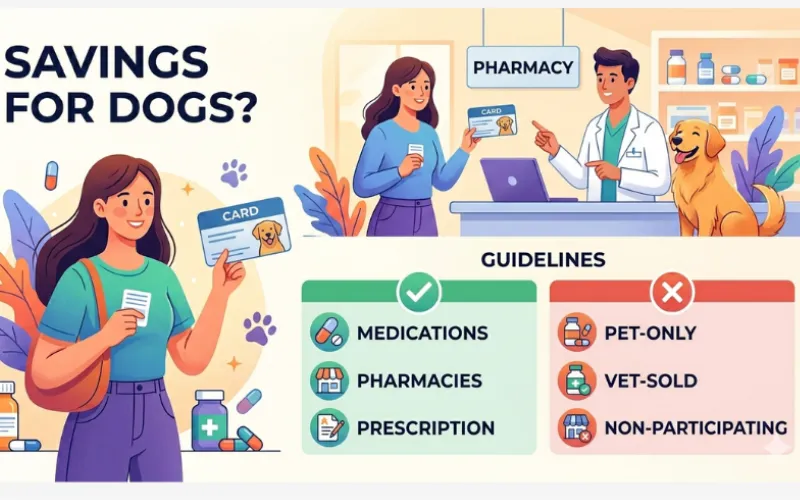
How to Save Money on Pet Prescriptions
You can save money on pet prescriptions by using discount pet pharmacy apps, asking your vet for generic alternatives, comparing prices across pharmacies, and enrolling in prescription savings programs – often cutting costs by 30-80%. With a bit of planning, even pet owners on a tight budget can keep their animals on the medications they need without draining their bank account.
What Are Pet Prescriptions and Why Are They So Expensive?
Pet prescriptions are medications prescribed by a licensed veterinarian to treat, manage, or prevent health conditions in animals. Just like human prescriptions, they span a wide range – from antibiotics and anti-inflammatories to thyroid medications and heart treatments.
The high cost comes from multiple layers: brand-name drug monopolies, low competition in the veterinary pharmacy market, and the fact that many pet medications are compounded or dosed differently from human equivalents. According to the American Pet Products Association, Americans spent over $35 billion on veterinary care in 2023, and prescription costs represent one of the fastest-growing segments of that spending. If you have ever wondered why your cat’s prescription costs so much, the answer usually comes down to these same factors: limited generic competition and specialty formulations that only a handful of pharmacies stock.
What Drives Pet Prescription Prices Higher
- Brand-name medications with no generic equivalent on the market yet
- Compounding fees for liquid, chewable, or flavored formulations
- Limited pharmacy competition in smaller or rural markets
- Specialty conditions that require ongoing, higher-cost treatment
The Real Cost of Ignoring Pet Prescription Savings
Before jumping into solutions, it’s worth understanding the scale of the problem. A single month of thyroid medication for a dog can cost $40-$90. Epilepsy medications can run $80-$150/month. Specialty dermatology or cancer medications can reach hundreds of dollars per prescription.
- Many pet owners skip doses or discontinue medications because of cost
- Approximately 1 in 4 pet owners report financial stress as a reason for skipping vet visits
- Unmanaged conditions often lead to costlier emergency care later
Ignoring savings options doesn’t just affect your wallet – it can directly impact your pet’s health outcomes. That’s why using resources like NuLifespan’s pet prescription savings platform is worth every minute of your time.
Compare Prices Before You Buy: Shop Around for the Best Deal
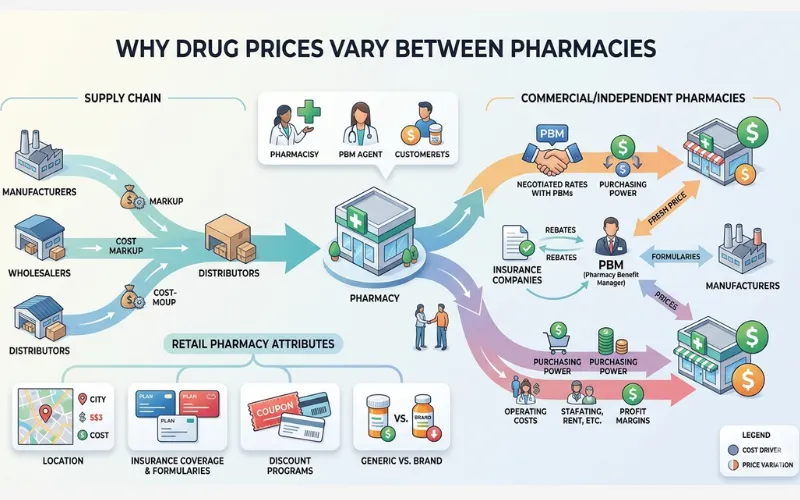
Prescription prices for the exact same pet medication can vary widely from one pharmacy to the next, sometimes by more than double. Before you fill or refill any prescription, it pays to shop around and compare a few options rather than defaulting to the first counter you see. For a side-by-side look at how pricing shifts by pharmacy type, NuLifespan’s guide to finding the cheapest pharmacy for any medication is a useful starting point.
Where to Check Prices
- Your vet’s in-house pharmacy (convenient, but rarely the cheapest option)
- Big-box retail pharmacies that also fill human prescriptions
- Online pet pharmacies that ship directly to your door
- Discount comparison apps that pull live pricing from multiple pharmacy networks
Quick Price-Comparison Checklist
- Get the exact drug name, strength, and quantity from your vet before you start comparing
- Check at least three sources, including one online pharmacy and one discount app
- Ask each pharmacy if it offers additional deals for cash-paying customers
- Factor in shipping costs and delivery time for online and wholesale orders
Ask Your Vet About Generic Alternatives First
The single most impactful conversation you can have is with your vet before leaving the clinic. Brand-name pet medications often have FDA-approved generic equivalents that are chemically identical but cost a fraction of the price. Common examples include generic gabapentin for pain management and generic omeprazole for stomach issues, both of which can cost significantly less than their brand-name counterparts.
Questions to ask your vet:
- Is there a generic version of this medication?
- Can a human-grade equivalent be dispensed at a retail pharmacy?
- Is a compounded version available through a licensed compounding pharmacy?
- Would a different dosing frequency reduce my overall monthly cost?
Many vets are open to these discussions – they want your pet to stay on treatment. Don’t wait for your vet to volunteer the information; ask directly.
Negotiating Price With Your Veterinarian
Most pet owners never think to negotiate, but clinics have more flexibility than people assume. It’s reasonable to ask whether the practice matches competitor pricing, offers a cash-pay discount, or can split a long-term prescription into a smaller trial size before you commit to a full 90-day supply. If cost is the barrier to keeping your pet on treatment, say so directly; many vets would rather adjust the plan than have you stop the medication altogether.
Use a Pet Prescription Discount App or Program
One of the fastest-growing tools for affordability is the pet prescription discount app. These programs work similarly to GoodRx for humans – they negotiate pre-discounted rates with pharmacy networks and pass the savings directly to you.
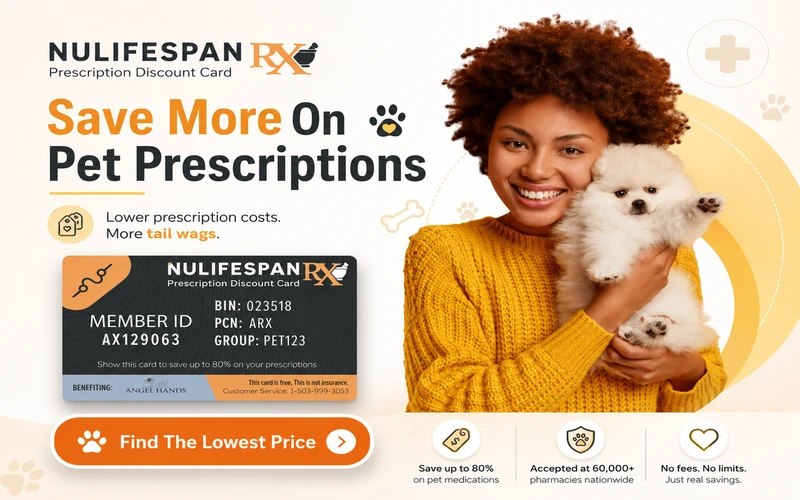
Download the NuLifespan app to instantly compare prices at pharmacies near you and access exclusive member discounts on hundreds of pet medications. It’s free to use and takes less than two minutes to set up.
How these programs typically work:
- Search your pet’s medication by name
- Compare prices across multiple pharmacy partners
- Show your discount card or digital coupon at the counter
- Pay the reduced price – no insurance required
Understand Prescription Savings Cards and Manufacturer Coupons
Discount apps and prescription savings cards solve a similar problem in different ways. A savings card is a physical or digital card with a fixed discount code that a pharmacy applies at checkout, while an app usually generates a new coupon each time you search, based on current pharmacy pricing. Both are free to use and require no insurance enrollment. For a full breakdown of how the leading options stack up, see NuLifespan’s comparison of veterinary prescription discount cards.
Manufacturer coupons are a separate, often overlooked source of savings. Drug makers frequently offer rebates or trial-size coupons on brand-name pet medications, especially for chronic-condition treatments where there is no generic option yet. Checking the manufacturer’s website before you buy a brand-name prescription can turn up deals that a pharmacy won’t advertise on its own.
Myths vs. Facts: Common Misconceptions About Pet Prescription Savings
Pet owners often talk themselves out of saving money based on outdated or incorrect beliefs. Let’s clear up the biggest ones.
- Myth 1: Generic pet medications are less effective. Fact: FDA-approved generics contain the same active ingredient in the same dosage. Efficacy is bioequivalent by law, per FDA’s bioequivalence standards.
- Myth 2: You can only fill prescriptions at your vet’s office. Fact: Vets are legally required in most U.S. states to provide a written prescription upon request, which you can fill anywhere.
- Myth 3: Online pet pharmacies are risky. Fact: VIPPS-accredited (Veterinary Internet Pharmacy Practice Sites) online pharmacies are fully regulated and safe. Always verify accreditation before ordering.
- Myth 4: Discount programs only cover common medications. Fact: Many discount platforms cover specialty, compounded, and brand-name medications too – including less common treatments.
- Myth 5: Prescription savings cards work the same as pet insurance. Fact: A savings card gives you an instant discount at the register with no premium or claims process, while insurance typically reimburses you later and may exclude pre-existing conditions.
Consider Human Pharmacies for Crossover Medications
This strategy surprises most pet owners: many veterinary medications are also used in human medicine, and filling them at a human pharmacy with a GoodRx or NuLifespan coupon can slash the price dramatically.
Medications commonly available at human pharmacies for pets include amoxicillin, metronidazole, prednisolone, omeprazole, and certain thyroid medications. Ask your vet to write the prescription in a format compatible with human pharmacies – many will if you explain the cost concern.
Visit NuLifespan’s drug search tool to check if your pet’s medication has a crossover equivalent and what the best available price is.
Buy Online: Choosing a Safe, Affordable Online Pet Pharmacy
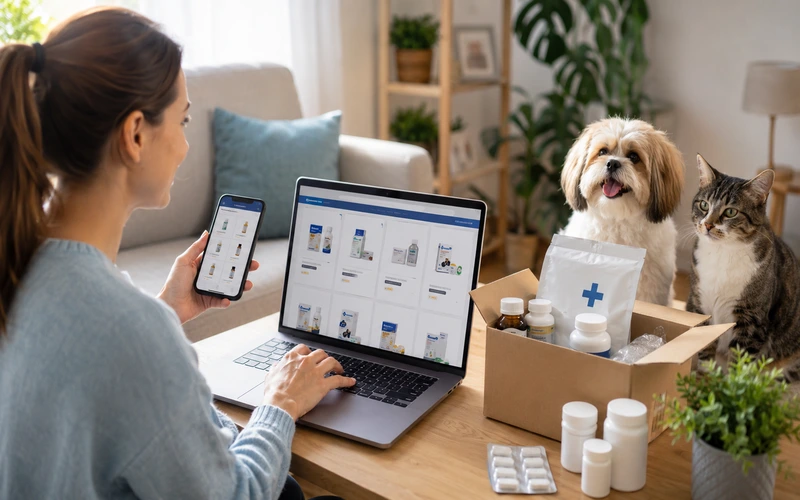
Online pet pharmacies can offer some of the lowest prices available, especially when you buy a 90-day supply or order several medications in one shipment. The tradeoff is that you need to know how to tell a legitimate pharmacy from a sketchy one before you hand over your payment details.
How to Verify an Online Pet Pharmacy Is Legitimate
- Look for VIPPS or NABP.net accreditation displayed on the site, backed by NABP’s Digital Pharmacy Accreditation program
- The pharmacy should require a valid prescription or vet verification, never just a credit card
- A real U.S. address and licensed pharmacist contact should be listed
- Be cautious of prices that are dramatically lower than every other source – it can signal counterfeit or expired stock
Once you’ve confirmed a pharmacy is legitimate, buying in bulk or ordering a wholesale-size supply online is often where the biggest savings show up, particularly for maintenance medications your pet will need long term.
Don’t Overlook Flea, Tick, and Heartworm Prevention Costs
Parasite prevention is technically a prescription in most cases, but pet owners rarely think to apply the same savings strategies to it that they use for other medications. Flea, tick, and heartworm preventatives are a recurring, year-round expense, which makes even a small discount add up over a full year of refills.
The same discount apps, savings cards, and online pharmacies covered earlier in this guide typically carry flea and heartworm brands as well. It’s also worth checking the manufacturer’s own site directly, since companies that make popular preventatives often run seasonal rebates or mail-in offers that stack on top of pharmacy pricing.
Explore Pet Insurance and Underinsured Pet Solutions
If your pet is on long-term or recurring medication, pet insurance with prescription coverage may make financial sense. But what about pets that are already underinsured or on a plan that doesn’t cover enough?
Key options for underinsured pet owners:
- Supplement your existing policy with a discount savings program
- Apply for a CareCredit veterinary payment plan
- Use manufacturer rebate programs for brand-name specialty drugs
- Join pet owner advocacy groups that negotiate bulk pricing
For pets that fall through the cracks of standard insurance plans, NuLifespan’s underinsured pet solutions provides a structured pathway to maintaining affordable treatment without compromising care quality.
Prescription Management: Buying in Bulk and Timing Refills
Once you’ve found the most affordable source for your pet’s medication, smart purchasing habits can compound those savings further. Many pharmacies offer a 90-day supply at a significantly reduced per-pill or per-dose cost compared to monthly fills, and some online pharmacies extend additional wholesale-style pricing on longer supply orders.
- A 30-day supply of a common pet antibiotic may cost $18; a 90-day supply may cost $38 – saving $16 per cycle
- Set a pharmacy auto-refill to avoid emergency pricing when you run out at the last minute
- Check manufacturer websites for patient assistance programs or coupon cards
- Ask about loyalty programs if you use the same pharmacy consistently
Avoid Medication Waste: Proper Dosing, Storage, and Timing
Saving money on pet prescriptions is not just about paying less at checkout. It also means not paying twice for the same medication because a dose was measured wrong, a bottle expired early, or a refill was ordered too soon.
- Use the dosing syringe or measuring device that comes with the medication rather than estimating, since over-dosing wastes product and under-dosing can extend treatment time
- Store medications exactly as labeled – many liquid and compounded prescriptions lose potency quickly if left in heat, light, or humidity
- Align refill dates across multiple pets or medications where possible to combine shipping and avoid ordering a partial supply at full price
- Double-check expiration dates before buying a large or wholesale quantity you may not use in time
Financial Assistance Programs for Low-Income Pet Owners
For pet owners facing a genuinely tight budget, several organizations exist specifically to help cover the cost of veterinary treatment and medication. These programs are worth checking before assuming a treatment is out of reach.
- Nonprofit organizations such as RedRover, The Pet Fund, and Brown Dog Foundation offer grants toward veterinary and prescription costs for qualifying pet owners
- University veterinary teaching hospitals often provide reduced-cost care, including prescriptions, as part of student training programs
- Local humane societies and SPCA chapters frequently run low-cost clinics with discounted or subsidized medications
- Manufacturer patient assistance programs can reduce or waive the cost of certain specialty and chronic-condition drugs for owners who qualify
When to Go Straight to the Source: NuLifespan
If you’re looking for one platform that consolidates all of these savings strategies – discount codes, drug comparisons, crossover options, and underinsured solutions – NuLifespan.com offers an integrated system built specifically for this purpose.
Their platform allows you to compare drug prices, access member pricing, and find the best pharmacy partner for your pet’s specific needs, all in one place. For families managing multiple pets or chronic conditions, this kind of centralized tool can represent hundreds of dollars in annual savings.
Comparison: Key Ways to Save on Pet Prescriptions at a Glance
| Strategy | Ease of Use | Potential Savings | Best For |
| Ask for generics | Easy | 30-70% | All pet owners |
| Discount app | Easy | 15-60% | Most pet owners |
| Savings card or manufacturer coupon | Easy | 10-50% | Brand-name and specialty drugs |
| Human pharmacy crossover | Moderate | 40-80% | Common medications |
| Online pet pharmacy | Moderate | 20-50% | Ongoing prescriptions |
| 90-day or wholesale supply | Easy | 10-30% | Chronic conditions |
| Pet insurance | Complex | Varies | New pet owners |
| Financial assistance programs | Moderate | Varies | Low-income pet owners |
Frequently Asked Questions About Saving Money on Pet Prescriptions
Are there discount programs for pet medications?
Yes. Discount apps and prescription savings cards both negotiate reduced pricing with pharmacy networks and pass the savings on to pet owners, with no insurance enrollment required.
Can I buy pet prescriptions online safely?
Yes, as long as the pharmacy is VIPPS or NABP accredited, requires a valid prescription, and lists a verifiable U.S. address and licensed pharmacist.
Do pet insurance plans cover prescriptions?
Many plans cover prescription medications as part of illness or accident coverage, though coverage details, waiting periods, and pre-existing condition exclusions vary by provider.
Can I use human medication for my pet?
Some medications, such as amoxicillin, metronidazole, prednisolone, and omeprazole, are used in both human and veterinary medicine and can sometimes be filled at a human pharmacy with a vet’s prescription.
How does a prescription savings card work for pets?
A savings card carries a fixed discount code that a participating pharmacy applies at checkout, lowering the price of the medication on the spot without requiring insurance.
Is bulk buying pet meds cheaper?
Yes. A 90-day or wholesale-size supply typically costs less per dose than repeated monthly fills, as long as the medication won’t expire before you use it.
What programs help with low-income pet owners’ medication costs?
Nonprofits such as RedRover, The Pet Fund, and Brown Dog Foundation, along with university veterinary teaching hospitals and manufacturer patient assistance programs, offer reduced-cost or subsidized options for qualifying pet owners.







Trackbacks/Pingbacks