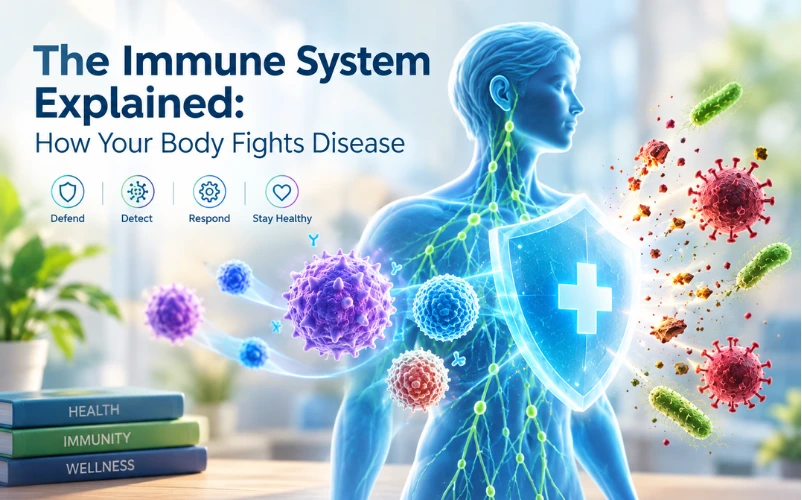
Every day your body meets bacteria, viruses, and other invaders, and most of the time you never notice. That quiet protection comes from your immune system. When it overreacts or underreacts, treatment sometimes involves drugs such as prednisone, which calm immune activity.
The immune system is not a single organ. It is a network of cells, tissues, and proteins that identify threats and respond in layers. Agencies such as the CDC explain how vaccines train this network. Here is how the whole system works in plain language. For people who need antibiotics, our guide to amoxicillin explains what the generic usually costs.
Staying healthy also means affording the medicines you need. NuLifeSpan Rx offers a free discount card that can lower pharmacy prices. It is not insurance.
The Two Layers of Defense
Your body defends itself with two connected systems. One reacts within minutes and the other builds precise, lasting protection over days. The subsections below describe each layer in turn: the general-purpose first responders that meet every invader the same way, and the trained specialists that target one germ and remember it for years afterward.
Innate Immunity: The First Responders
Skin, mucus, stomach acid, and cells such as neutrophils and macrophages form the innate system. It reacts to any invader in the same general way, by blocking entry, swallowing germs, and sending out inflammation signals. Think of it as the security guards at the door, who act fast but do not remember faces. Fever, redness, and swelling are signs this system is working, since heat and extra blood flow help bring defenders to the scene. Even a small cut shows it in action, as the area turns red and warm while cells rush in to clean up.
Adaptive Immunity: The Specialists
The adaptive system takes days to organize, but it targets a specific germ. B cells make antibodies that lock onto invaders. T cells destroy infected cells and coordinate the response. After the threat passes, memory cells remain so the next encounter is faster and stronger. This is why you rarely catch chickenpox twice, and why the first time you meet a new virus usually feels worse than a repeat visit. Adaptive immunity is slower to start than innate immunity, but it brings precision, and it is the part of the system that vaccines are designed to train.
The Organs and Cells Behind the Scenes
These defenders live and train in specific places throughout the body, and knowing where helps explain symptoms you have probably noticed yourself. The subsections below cover the organs where immune cells are made and taught their jobs, and the body surfaces such as the gut where a large share of day-to-day defense takes place.
Bone Marrow, Thymus, and Lymph Nodes
Immune cells are born in the bone marrow. T cells mature in the thymus, a small organ behind the breastbone, while lymph nodes and the spleen act as meeting points where cells gather information from the blood and lymph. Lymph vessels carry fluid, and with it any stray germs, through the nodes so defenders can inspect it. Swollen glands during an infection show those meeting points are busy, because immune cells multiply there. Glands in the neck often swell with a sore throat, and they usually shrink back once the infection clears.
Mucosal Barriers and the Gut
A large share of immune activity sits along the gut, airways, and other surfaces that touch the outside world, because these are the main places germs try to enter. A healthy gut lining and a balanced community of gut bacteria help the immune system tell friends from foes, so it can ignore food and helpful microbes while still reacting to real threats. Eating a varied diet with plenty of fiber from vegetables, fruit, beans, and whole grains supports that community. Mucus, stomach acid, and tiny hairlike structures in the airways add further protection by trapping and clearing particles before they cause trouble.
How Vaccines Train Your Defenses
Vaccination is a controlled rehearsal. It lets the adaptive system practice against a germ without causing the disease. The subsections below describe how that practice produces lasting memory, and why some vaccines need to be repeated or updated over time to keep protection strong against germs that change or protection that gradually fades.

Building Memory Without the Illness
A vaccine shows immune cells a harmless piece or version of a germ. B and T cells respond and create memory cells. If the real germ arrives later, the response is fast enough to prevent or lessen illness. Depending on the vaccine, the harmless material might be a weakened germ, an inactivated one, a single protein, or genetic instructions for making one. You may feel a sore arm or a mild fever afterward, which is a sign the immune system is responding. The result is protection built through safe practice instead of through the illness itself.
Why Boosters and Yearly Shots Exist
Some protection fades with time, and some viruses, such as influenza, change from year to year. Boosters and updated vaccines refresh memory and keep up with those changes. That is why flu shots are updated each season, and why some vaccines, such as tetanus, are repeated at set intervals through adulthood. Needs also differ by age, pregnancy, job, travel plans, and health conditions. Ask your clinician which shots are right for your age and health, and keep a record of your vaccines so you know when the next one is due.
When the Immune System Goes Wrong
A strong immune system is not always a better one. Balance matters, because a response that is too aggressive can damage healthy tissue and one that is too weak leaves you open to infection. The subsections below look at each side, starting with allergies and autoimmune disease, then moving to the causes and signs of weakened defenses.
Overreaction: Allergies and Autoimmunity
Allergies occur when the immune system treats harmless substances such as pollen or peanuts as threats, producing symptoms from sneezing and itching to, in severe cases, anaphylaxis. In autoimmune diseases, it attacks the body’s own tissues. Conditions like rheumatoid arthritis and lupus are examples, and the National Institute of Allergy and Infectious Diseases funds research on both groups of disorders. Treatment depends on the condition, and often aims to calm the overactive response while protecting everyday function. If you suspect an allergy or an autoimmune problem, a clinician can arrange testing and guide next steps.
Underreaction: Immune Weakness
Aging, certain medicines, and chronic illness can weaken defenses. Some medical treatments and conditions such as diabetes, kidney disease, or poor nutrition can also make infections more likely or more serious. People living with long-term conditions benefit from careful planning, including chronic disease management and regular follow ups. Practical steps include staying current on recommended vaccines, washing hands often, and contacting your care team early when a fever or infection appears instead of waiting it out. Never stop a prescribed medicine on your own without talking to your doctor first.
Everyday Habits That Support Immunity
No product can “boost” immunity instantly, but lifestyle supports its normal function. The two subsections below cover the daily habits with the strongest backing, namely sleep, food, and movement, and the simple prevention steps that reduce how often your defenses are tested. None are glamorous, but together they matter more than most supplements.

Sleep, Food, and Movement
Adults who sleep well, eat a varied diet, exercise regularly, and manage stress tend to have more reliable immune responses. Most adults need seven or more hours of sleep, and short sleep is linked to catching more infections. A diet rich in vegetables, fruit, whole grains, lean protein, and healthy fats supplies the vitamins and minerals immune cells need. Moderate activity such as brisk walking on most days helps too. Not smoking and limiting alcohol also help, since both damage the airways and other barriers that stop germs. Consistency over months matters far more than any single healthy day.
Hygiene and Prevention
Wash your hands with soap and water for about 20 seconds, especially before eating and after using the restroom or being in public places. Stay current on vaccines, and cook food to safe temperatures to avoid foodborne illness. Keep surfaces you touch often reasonably clean, and stay home when you are sick so you do not pass germs along to others. Simple steps like these reduce how often your defenses are tested, which leaves your immune system with more energy to deal with the threats that do get through.
Myths About Immunity
Health marketing often exaggerates what the immune system needs. Clearing up a few common ideas helps you spend time and money wisely. The subsections below take on two popular myths, one about vitamins and one about cold weather, and then outline the signs that mean it is time to see a doctor instead of waiting things out.
Myth: Megadoses of Vitamins Prevent Illness
Vitamin C and zinc may modestly shorten some colds in certain studies, but high doses do not prevent infection and can cause side effects such as stomach upset. Getting enough of these nutrients is important, yet most people who eat a varied diet already do. Extra amounts beyond what the body needs are simply passed out or can cause problems. Supplements are not a substitute for sleep, food, and vaccines. If you think you may have a deficiency, or you take regular medicines, ask your doctor or pharmacist before starting anything new.
Myth: Being Cold Makes You Sick
Colds come from viruses, not temperature, so a chilly walk without a jacket will not give you one. Cold weather matters mostly because people spend more time indoors together, where viruses spread more easily, and because dry winter air may help some viruses survive. Spending time outdoors is actually a good habit in any season. To stay well in colder months, focus on what works: wash your hands, get your seasonal vaccines, sleep enough, and stay home when you have symptoms so you do not pass them on.
When to See a Doctor
Get medical advice if you have infections that keep returning, wounds that heal slowly, persistent fever, or unexplained weight loss. These can point to an immune problem or another condition that needs evaluation. Other reasons to call a clinician include infections that need repeated rounds of treatment, ongoing diarrhea, or unusual tiredness that does not improve with rest. A doctor can review your history, examine you, and order blood tests if needed. Try to note when symptoms began and how often they occur, since that timeline gives your care team valuable clues.
Conclusion
Your immune system works in layers, with fast general defenders and slower, specialized cells that remember past threats. It trains through exposure and vaccines, and it performs best with good sleep, food, and activity. More is not always better, since overreaction causes allergies and autoimmune disease. See your doctor if you get sick often or infections do not clear.
Frequently Asked Questions
Can you boost your immune system?
You can support it through sleep, nutrition, activity, and vaccines, but products claiming to instantly boost immunity are not backed by strong evidence. A healthy immune system is balanced, not simply stronger. The most reliable approach is steady daily habits plus staying current on recommended vaccines, rather than relying on pills, powders, or drinks sold with big promises.
Why do I get sick more often as I age?
The immune system gradually becomes less responsive with age, a change called immunosenescence. Vaccines and healthy habits help offset it. Older adults also tend to have more chronic conditions and take more medicines, which can add to infection risk. That is why recommended shots, regular exercise, good nutrition, and prompt medical attention for infections matter even more later in life.
What is the difference between innate and adaptive immunity?
Innate immunity responds quickly and generally. Adaptive immunity responds more slowly, targets specific germs, and remembers them. Innate defenses include skin, mucus, and cells that swallow invaders, while adaptive defenses rely on B cells and T cells. The two work together, and the memory built by the adaptive side is what vaccines take advantage of to protect you later.
What are antibodies?
Antibodies are Y-shaped proteins made by B cells that lock onto specific parts of germs, called antigens. They can block germs from entering cells, tag them for destruction by other immune cells, and neutralize toxins. After an infection or vaccine, memory B cells remain, so the body can make antibodies faster if the same germ returns.
Does sleep affect immunity?
Yes. Sleep supports immune function, and people who sleep poorly tend to catch more infections and may respond less strongly to vaccines. During sleep the body releases signaling proteins that help coordinate immune responses. Most adults need seven or more hours. Keep a steady schedule, and see a clinician if you have long-term insomnia or loud snoring.
What is herd immunity?
Herd immunity, also called community protection, happens when enough people in a population are immune to a disease, through vaccination or prior infection, that the germ struggles to spread. This protects people who cannot be vaccinated, such as newborns or those with weakened immune systems. The level of coverage needed varies by disease.
Medical disclaimer: This article is for general education and is not medical advice. Talk to a qualified healthcare professional about your own health, symptoms, and medications. NuLifeSpan Rx is a free prescription discount program and is not insurance.