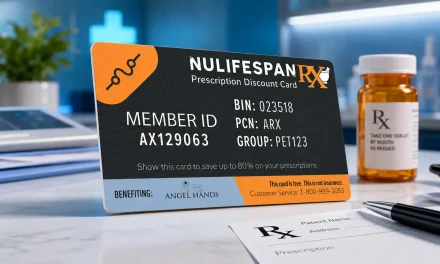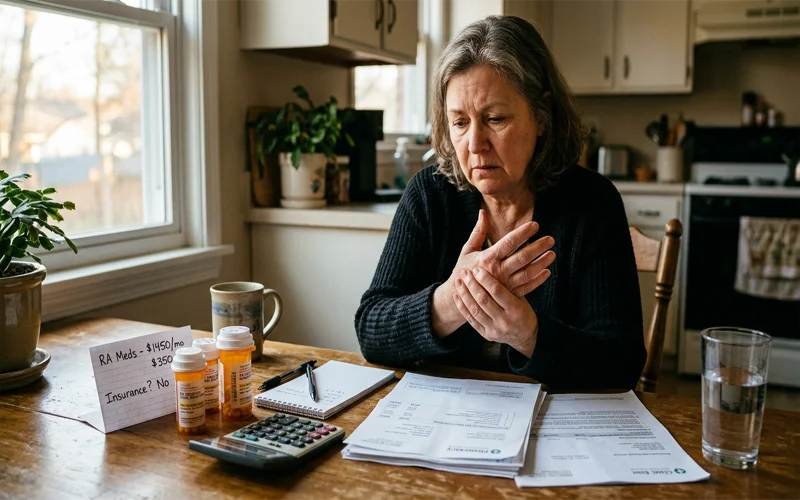
Prescription costs are one of the most stressful parts of managing arthritis. Whether a diagnosis is new or joint pain has been treated for years, the price of medication without insurance can be a shock at the pharmacy counter. Costs depend on the type of drug, the dosage, the pharmacy chosen, and even the region where a prescription is filled.
A free prescription discount card is one of the simplest ways to see a lower price before committing to a pharmacy, and it works alongside, not instead of, medical guidance from a treating physician. According to the Centers for Disease Control and Prevention, arthritis affects roughly one in five adults in the United States and is a leading cause of work disability, which helps explain why so many patients end up managing it, and its cost, for years at a time.
Compare your prescription savings with NuLifeSpanRX today
This guide walks through what typically drives arthritis medication pricing, the categories of treatment available, and practical ways to reduce out-of-pocket costs. It is not medical advice, and any decision about starting, stopping, or changing a medication should be made with a doctor or rheumatologist.

Why Arthritis Medication Costs Can Be Expensive
Arthritis is a chronic condition, and treatment often continues for months or years rather than a single course. That long-term nature is part of what makes the overall cost of care add up, even when a single prescription seems manageable on its own. Unlike a short course of antibiotics, arthritis treatment is usually an ongoing relationship between a patient, a provider, and a pharmacy, which means small price differences compound over time.
Brand-Name vs. Generic Medications
Brand-name arthritis drugs, especially newer biologic treatments, tend to carry the highest prices because manufacturers hold exclusive rights before a generic version can be produced. Once a generic version of an older drug becomes available, it is usually far less expensive for the same active ingredient. This is one of the biggest single factors in what a patient ultimately pays.
Long-Term Treatment Costs
Because arthritis is managed rather than cured, many patients take medication daily or weekly for extended periods. Even a moderate monthly cost becomes significant over a year or more, which is why comparing prices before settling on a pharmacy is worth the extra step. A ten or twenty dollar difference per fill can turn into hundreds of dollars annually.
Insurance Coverage Differences
Insurance plans differ in which arthritis drugs they cover, the tier they assign, and the copay required. Without insurance, a patient pays the pharmacy’s cash price directly, which is often the full list price unless a discount card or assistance program is applied. This is exactly the gap that a discount program is designed to close.
Common Arthritis Medications and Their Potential Costs
Prices change over time and vary by pharmacy, so the information below should be treated as general context rather than a firm quote. Current pharmacy pricing, checked through a tool like NuLifeSpanRX’s pricing tool, is the only reliable source for an exact number on a specific day.
- NSAIDs (non-steroidal anti-inflammatory drugs): available in both prescription and over-the-counter strengths; generic versions are typically the most affordable option.
- DMARDs (disease-modifying antirheumatic drugs): used to slow disease progression in rheumatoid arthritis; cost depends heavily on whether a generic version exists.
- Biologic medications: advanced treatments for moderate to severe rheumatoid arthritis, and typically the most expensive category due to complex manufacturing and limited generic competition.
- Corticosteroids: often used for short-term flare management, generally at a lower cost than biologics.
- Pain management medications: cost varies widely depending on the specific drug and formulation.
Arthritis Medication Costs Without Insurance
The table below outlines general cost factors by medication category. Exact prices depend on the pharmacy, location, and current market conditions, so use this as a starting point for a conversation with a pharmacist rather than a final number.
| Medication Type | Common Examples | Typical Cost Factors |
| NSAIDs | Naproxen, celecoxib | Generic availability, dosage strength |
| DMARDs | Methotrexate, sulfasalazine | Generic vs. brand, pill count per month |
| Biologic medications | Adalimumab, etanercept | Manufacturer pricing, limited generic equivalents |
| Corticosteroids | Prednisone | Short-term use, low-cost generics widely available |
| Pain management medications | Acetaminophen combinations, topical agents | Formulation, prescription strength vs. over-the-counter |
Factors That Affect Prescription Prices
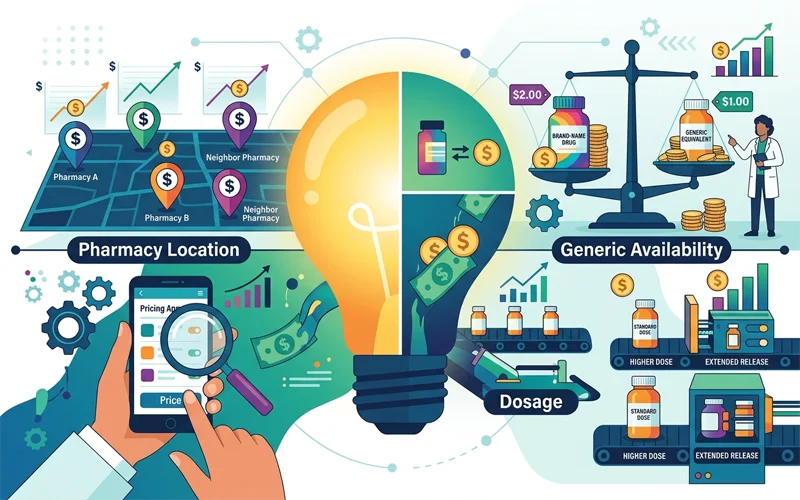
Several variables combine to determine what a patient actually pays at the counter, and none of them show up on the label.
Pharmacy Location
Cash prices for the same medication can differ from one pharmacy chain to another, and even between two locations of the same chain in different neighborhoods. This is why a quick price check before filling a new prescription is rarely wasted effort.
Generic Availability
If a generic version of a medication exists, it is almost always priced lower than the brand-name equivalent, sometimes by a wide margin. Asking a pharmacist whether a generic substitution is available is a simple first step.
Dosage
Higher doses and extended-release formulations often cost more per prescription than standard-strength versions of the same drug, since manufacturing and packaging costs scale with strength and format.
Manufacturer Pricing
Biologic and specialty drugs are priced directly by the manufacturer, which is part of why they show the widest price swings between pharmacies and regions. There is often less room for a pharmacy to negotiate on these products.
Discount Programs
Manufacturer coupons, pharmacy loyalty programs, and prescription discount cards can each reduce the cash price, sometimes significantly, when used at a participating pharmacy.
Ways to Save Money on Arthritis Prescriptions

Bringing costs down usually comes from a combination of small, practical steps rather than a single fix.
- Use a prescription discount card to access negotiated pricing at participating pharmacies.
- Compare pharmacy prices before filling a new prescription, since cash prices can vary by a wide margin for the same drug.
- Ask a doctor about generic alternatives whenever a brand-name drug is prescribed.
- Look into manufacturer assistance programs, which some drug makers offer to patients who qualify based on income or insurance status.
How NuLifeSpanRX Helps Reduce Prescription Costs
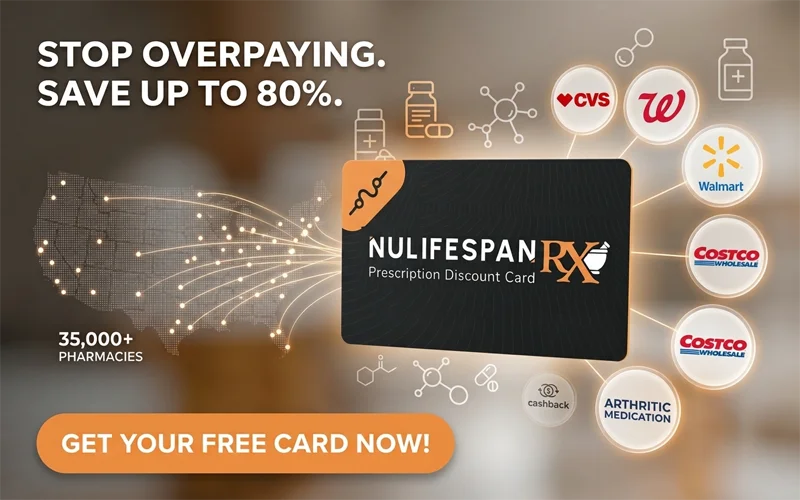
NuLifeSpanRX offers a free prescription discount card that works at over 35,000 pharmacies nationwide, including CVS, Walgreens, Walmart, Costco, and thousands of independents. Instead of paying the full cash price, cardholders can access negotiated rates on many arthritis medications, including generics and select brand-name drugs, and can earn cashback on eligible purchases.
Before filling a new prescription, it is worth checking the medication price and comparing it against standard pharmacy rates on the pricing tool to see whether the discount card lowers the cost. Check your medication price and see available savings options.
Frequently Asked Questions
How much does arthritis medication cost without insurance?
Costs vary widely by drug type. Generic NSAIDs and corticosteroids are typically the least expensive, while biologic medications for rheumatoid arthritis carry the highest cash prices. Checking current pharmacy pricing is the most accurate way to know what a specific prescription will cost.
What is the cheapest arthritis medication?
Generic NSAIDs and older DMARDs are generally among the lowest-cost options. The right medication depends on the specific diagnosis and should be decided with a doctor rather than chosen by price alone.
Can a prescription discount card help with arthritis medication?
Yes. A discount card can provide access to negotiated pricing at participating pharmacies, which often lowers the cash price compared with paying full retail.
Are generic arthritis medications cheaper?
In most cases, yes. Generic versions contain the same active ingredient as the brand-name drug and are typically priced lower once a generic version becomes available.
How can I lower my arthritis prescription costs?
Comparing pharmacy prices, using a prescription discount card, asking a doctor about generic alternatives, and checking manufacturer assistance programs are practical ways to reduce out-of-pocket spending.
Does insurance always cover arthritis biologics?
Coverage varies by plan. Some insurers require prior authorization or step therapy before approving biologic medications, and the coverage tier affects the copay amount.
Why do arthritis medication prices differ between pharmacies?
Cash prices are set independently by each pharmacy, so the same medication at the same dosage can carry a different price from one location to another, even within the same chain.