Autoimmune medication costs without insurance range from a few dollars a month for some generic pills to several thousand dollars per refill for a brand-name biologic. Where you fall in that range depends on your diagnosis, the type of medication, how often it is taken, and whether it comes from a retail pharmacy, a specialty pharmacy, or an infusion center. If you have read our guide to arthritis medication costs, this article widens the view to other autoimmune conditions and the recurring expenses that come with them.
Because these costs repeat for months or years, the real question shifts from “what does one fill cost?” to “what can I sustain without interrupting treatment?” Below, costs are broken down by treatment category, followed by hidden expenses, assistance programs, and budgeting steps.
See what your next refill should cost. Cash prices for generic autoimmune medications such as hydroxychloroquine can vary widely between pharmacies. Search your prescription to compare participating pharmacies before your next monthly fill.

Why Are Autoimmune Medications Often Expensive?
Autoimmune diseases are usually chronic, so even moderately priced medications add up over a year. The steepest costs come from biologics, which are large, complex proteins made in living cells rather than simple chemicals made in a lab. They are harder to manufacture, often need refrigeration, and are given by injection or infusion, and many were shielded from competition by patents for years.
Distribution adds another layer, since many biologics are dispensed only through specialty pharmacies or given in a clinic. Yet several widely used autoimmune medications are decades-old generics, so the picture is uneven: affordable foundations for many patients, with very high costs concentrated in advanced therapies.
Common Autoimmune Medication Categories and Their Costs
Treatments fall into a handful of broad categories, and each has its own cost pattern. Your specialist chooses among them based on the condition, its severity, other health factors, and how earlier treatments worked, so the categories below describe costs, not a treatment order to follow on your own.
Conventional DMARDs and other oral generics
Conventional disease-modifying antirheumatic drugs (DMARDs) include methotrexate, hydroxychloroquine, and sulfasalazine. Methotrexate is widely used for rheumatoid arthritis and psoriasis and is also used for psoriatic arthritis; when taken for these conditions it is typically dosed once a week, not daily, and taking it incorrectly can be dangerous. The MedlinePlus methotrexate guide explains dosing safety and the regular blood tests the medication requires. Hydroxychloroquine is commonly used for lupus and rheumatoid arthritis.
These generics are inexpensive for pharmacies to buy, but cash prices still vary. For 60 tablets of hydroxychloroquine 200 mg, published average retail cash prices reviewed in October 2026 ranged from about $40 to more than $250 depending on the source, while discount-card prices at some pharmacies were under $30. That spread makes comparison especially valuable for a daily medication.
Corticosteroids
Prednisone and similar corticosteroids are low-cost generics used to calm flares and, for some conditions, as longer-term treatment. The tablets themselves rarely strain a budget. The costs that matter come later, since long-term steroid use may call for monitoring of bone density, blood sugar, blood pressure, and eye health. Steroids taken longer than a short course generally should not be stopped suddenly.
Immunosuppressants
Azathioprine and mycophenolate are generic immunosuppressants used for conditions such as lupus, inflammatory bowel disease, and autoimmune hepatitis, depending on the patient. The medications are typically moderate in price as generics, but they require regular blood count monitoring, and some prescribers order genetic or enzyme testing before starting azathioprine. Those lab costs belong in your budget alongside the prescription.
Biologics
Biologics such as adalimumab, etanercept, infliximab, ustekinumab, and others target specific parts of the immune response. Some are self-injected at home and dispensed by specialty pharmacies; others, such as infliximab, are given by intravenous infusion in a clinic. Prices are high. Brand-name Humira (adalimumab) carries a 2026 list price of about $6,922 per carton of two 40 mg pens, which covers roughly a month at a common every-other-week schedule. Uninsured patients without assistance can face charges near that level.
Biosimilars
Biosimilars are FDA-approved biologics that are highly similar to an existing biologic with no clinically meaningful differences in safety or effectiveness. The FDA’s overview of biosimilars and interchangeable biosimilars explains that some are also approved as interchangeable, which allows pharmacy-level substitution where state law permits. Several adalimumab biosimilars launched in 2023 and later, and the lowest-list-price versions sit around $1,000 to $1,400 per two-pen carton, roughly 80 to 86 percent below Humira’s list price. Your prescriber must agree a biosimilar is appropriate, and the specific product affects price and substitution rules.
How Medication Costs Vary by Autoimmune Condition
Because each condition uses a different mix of treatments, typical costs differ as well. Rheumatoid arthritis treatment often begins with methotrexate, a low-cost generic, and moves to biologics or other targeted therapies only when needed. Psoriasis and psoriatic arthritis may involve topical treatments, methotrexate, oral options like apremilast, or biologics, with costs climbing sharply at the brand-name end.
Lupus care is often built around hydroxychloroquine, with corticosteroids and immunosuppressants added for more active disease; a small number of biologics, some given by infusion, are used for certain patients. Inflammatory bowel disease can range from generic mesalamine for some forms of ulcerative colitis to biologics such as infliximab, adalimumab, vedolizumab, or ustekinumab for moderate to severe disease. Multiple sclerosis disease-modifying therapies include several oral medications and injectables now available as generics, along with infused therapies given at medical facilities.
| Treatment category | Examples | Where it is usually dispensed or given | Cost considerations |
| Conventional DMARDs | Methotrexate, hydroxychloroquine, sulfasalazine | Retail pharmacy | Generic and often low cost; cash prices vary widely; lab monitoring adds cost |
| Corticosteroids | Prednisone | Retail pharmacy | Very low medication cost; long-term use brings monitoring costs |
| Immunosuppressants | Azathioprine, mycophenolate | Retail pharmacy | Generic, moderate cost; frequent blood tests |
| Self-injected biologics | Adalimumab, etanercept | Specialty pharmacy | Thousands per month at brand list price; assistance programs are key |
| Biosimilars | Adalimumab biosimilars, ustekinumab biosimilars | Specialty or retail pharmacy, varies by product | Often far below the original biologic’s list price; prescriber approval needed |
| Infused therapies | Infliximab, some lupus and MS therapies | Clinic, hospital outpatient, or infusion center | Drug plus facility and administration fees; usually billed as medical care |
Examples are illustrative, not complete. None of the figures in this article are NuLifeSpan Rx prices.
Keep long-term costs in view. A free NuLifeSpan Rx discount card can lower prices on many eligible retail prescriptions at participating pharmacies. It is not insurance, and it may not apply to specialty or infusion medications.

Hidden Expenses Beyond the Medication Price
The prescription is only one line in an autoimmune treatment budget. Specialist visits with a rheumatologist, dermatologist, gastroenterologist, or neurologist are usually needed several times a year. Laboratory monitoring is routine for many medications: blood counts and liver and kidney tests for methotrexate and immunosuppressants, regular eye exams for long-term hydroxychloroquine use, and tuberculosis and hepatitis screening before many biologics.
Infusions carry their own costs. When a medication is given in a hospital outpatient department or infusion center, the bill typically includes the drug, a facility fee, and an administration fee, and these are generally billed as medical services rather than pharmacy prescriptions. Prescription discount cards usually do not apply to facility-administered treatment. Prices for the same infusion can differ between a hospital and a freestanding center, so ask whether a lower-cost site of care is available.
Financial Assistance Options for Uninsured Patients
Several types of help exist, and each works differently. Manufacturer patient assistance programs are the most important resource for uninsured patients prescribed a brand-name biologic, since many can provide medication at reduced or no cost to people who meet income and residency requirements. Applications usually involve your prescriber’s office and income documentation and are renewed yearly. Copay cards, by contrast, generally require commercial insurance.
Other options fill different gaps. Nonprofit disease foundations sometimes help with costs, although many of their funds are limited to insured patients’ copays. Nonprofit hospitals are required to maintain written financial assistance policies, which can reduce infusion and visit bills for eligible patients. Community health centers offer sliding-scale fees based on income for primary care and some prescriptions. Coverage itself may also be within reach: checking Medicaid eligibility, or enrolling in a Health Insurance Marketplace plan during open enrollment, which typically begins November 1, can change your options entirely. Our guide to more ways to afford prescriptions covers additional strategies.
How to Build a Sustainable Long-Term Prescription Budget
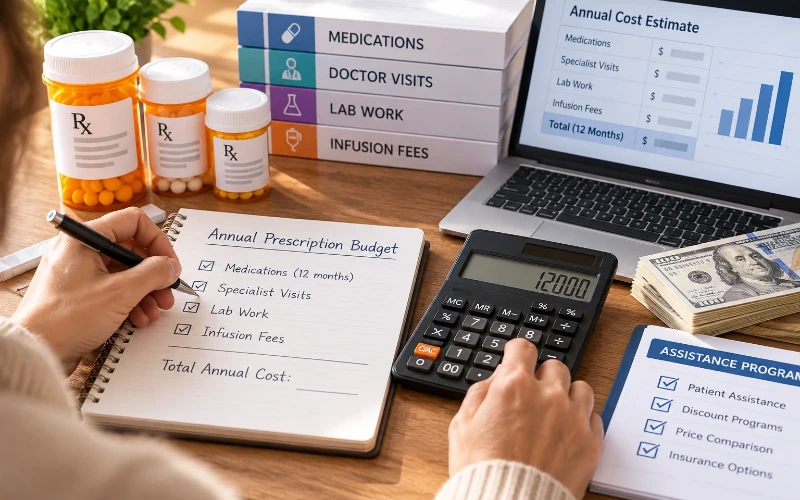
Start by estimating a full year: multiply each medication’s monthly price by 12, then add specialist visits, lab work, and infusion fees. The annual number shows where assistance applications, price comparisons, or coverage changes will matter most.
Next, protect treatment continuity. Stopping or rationing an autoimmune medication can lead to flares, organ damage in some conditions, and higher costs for urgent care, and with some biologics, gaps in treatment may make the medication less effective when it is restarted. Replacing or discontinuing a medication without your specialist’s guidance can create serious health risks. If you see a cost problem coming, contact your specialist’s office before you miss a dose, not after.
Finally, keep the moving parts organized. Track renewal dates for assistance programs, ask whether a 90-day supply of stable generic medications lowers the per-unit price, and check the NuLifeSpan Rx list of covered drugs for retail prescriptions you fill regularly. Revisit costs at each visit, since new generics and biosimilars keep reaching the market.
Questions to Ask Your Specialist About Medication Costs
Specialists and their staff often know about cost resources patients never hear of unless they ask. Raising cost early also gives the care team time to plan around it rather than react to a missed refill. Bring these questions to your next appointment:
- Is there a generic or biosimilar option that is medically appropriate for me?
- What lab tests and visits will this treatment require each year?
- Does the manufacturer have a patient assistance program, and can your office help me apply?
- Is there a lower-cost location for my infusions?
- If cost becomes a barrier, what is the safest plan, and who should I contact before I miss a dose?
Many offices also have a nurse, social worker, or financial counselor who handles these questions.
This article is for informational purposes only and does not replace advice from a licensed healthcare professional. Medication costs and availability may vary.
Making Autoimmune Treatment Affordable Over Time
Managing autoimmune medication costs without insurance is less about finding one cheap fill and more about building a plan you can keep. Generic DMARDs, corticosteroids, and immunosuppressants are often affordable when you compare prices, while biologics and infused therapies usually require manufacturer assistance, biosimilar options, or a change in coverage to become sustainable. Labs, visits, and facility fees belong in the same annual budget. The steadiest path is a collaborative one: share cost concerns with your specialist early, let the care team help with assistance applications, and never stop or switch treatment on your own. Consistent treatment is often the most cost-effective choice over the long run.
Frequently Asked Questions
What is one of the lowest-cost rheumatoid arthritis medications without insurance?
Generic methotrexate is among the lowest-cost rheumatoid arthritis medications, and it is often the first DMARD prescribed. Cash prices still differ between pharmacies, so comparing prices for your exact strength and quantity helps. The right medication depends on your disease activity and health history, so cost should be discussed with your rheumatologist rather than used alone to choose treatment.
How much does Humira cost without insurance?
Brand-name Humira has a 2026 list price of about $6,922 per carton of two 40 mg pens, and pharmacy cash prices can be similar or higher. Lower-list-price adalimumab biosimilars cost far less, and AbbVie and biosimilar manufacturers run patient assistance programs for eligible uninsured patients. Ask your prescriber whether a biosimilar or an assistance program fits your situation.
Can I use a prescription discount card for biologics?
Sometimes, but results vary. Discount cards apply to eligible prescriptions filled at participating retail pharmacies, and many biologics are dispensed through specialty pharmacies or given in clinics, where discount cards often do not apply. For high-cost biologics, manufacturer patient assistance programs usually offer more help. Check your specific medication before relying on a discount card.
How can I afford lupus medication without insurance?
Hydroxychloroquine, a foundation of lupus treatment for many patients, is available as a generic, and comparing pharmacy prices can lower its cost considerably. For brand-name lupus therapies, manufacturer assistance programs are the main resource. Community health centers, hospital financial assistance, and checking eligibility for Medicaid or Marketplace coverage can help with visits and lab monitoring.
What happens if I stop my autoimmune medication because of cost?
Stopping suddenly can lead to disease flares, and for some conditions, lasting damage to joints, skin, the gut, or other organs. Some medications, such as long-term steroids, also need a gradual taper. If cost is becoming a barrier, contact your specialist before missing doses so they can help with assistance options or a safe, affordable plan.