
Every meal sends your body instructions about energy, repair, and inflammation. Over decades, those instructions add up. Diet gaps can even show up on a lab report, such as B12 deficiency, which affects nerves, mood, and energy. For more on the body’s defenses, read our overview of how the immune system works.
Large population studies link eating patterns with how long people live and how many healthy years they keep. The World Health Organization states that a healthy diet protects against malnutrition and noncommunicable diseases such as heart disease, diabetes, and some cancers. This guide covers the patterns with the strongest evidence. Food is also central to managing type 2 diabetes and keeping cholesterol in a healthy range.
Nutrient gaps sometimes need a prescription. NuLifeSpan Rx offers a free discount card that can lower pharmacy prices. It is not insurance.

The Eating Patterns Linked to Longer, Healthier Lives
No single food extends life, but whole patterns of eating show consistent results across large studies. People who follow these patterns tend to have lower rates of heart disease, type 2 diabetes, and early death. What they share is a focus on minimally processed plant foods, healthy fats, and moderate portions. The two subsections below describe the Mediterranean pattern and the wider idea of plant-forward eating.
The Mediterranean Pattern
The Mediterranean diet emphasizes vegetables, fruit, legumes, whole grains, nuts, olive oil, and fish, with modest amounts of dairy and red meat. A large Spanish trial found it lowered the risk of major cardiovascular events in high-risk adults. It is among the most studied patterns for heart health and healthy aging. In practice it is less a strict plan than a way of cooking and eating: meals built around vegetables and beans, olive oil instead of butter, fish a couple of times a week, and fruit for dessert. It also works well in family-style, shared meals.
Plant-Forward Eating
Diets rich in plants provide fiber, potassium, and antioxidants while keeping saturated fat modest. You do not have to be vegetarian. Studies suggest that shifting more of your plate toward plants, even partially, is associated with lower risk of chronic disease. Simple moves include making beans or lentils the centerpiece of a few dinners each week, adding a vegetable to every meal, and choosing whole grains over refined ones. Meat, eggs, and dairy can still have a place, but they become supporting players rather than the main event, which also tends to lower grocery bills.
The Building Blocks Your Body Needs
Beyond patterns, specific nutrients play recognizable roles in how the body ages, from preserving muscle to keeping blood vessels healthy. Some are needed in larger amounts, while others are small but easy to miss. The two subsections below cover protein, fiber, and healthy fats, and then the vitamins and minerals that older adults most often run low on.
Protein, Fiber, and Healthy Fats
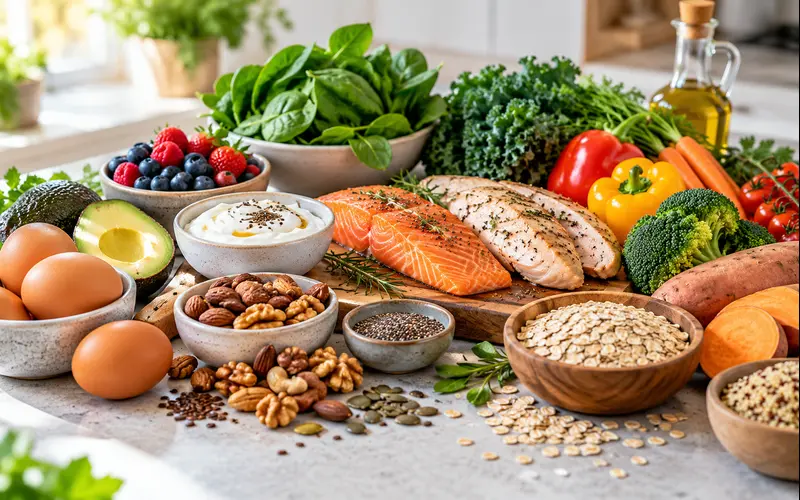
Protein maintains muscle, which supports balance, strength, and metabolism as you age. Spreading it across meals, with eggs, yogurt, beans, fish, or poultry, is more practical than eating one large serving. Fiber feeds gut bacteria, steadies blood sugar, and lowers cholesterol, and it comes from vegetables, fruit, legumes, and whole grains. Unsaturated fats from fish, nuts, seeds, and olive oil support the heart and brain. Together these three make meals more filling, which helps with portion control without any strict counting or special products.
Vitamins and Minerals That Often Run Low
Older adults are more likely to run low on vitamin B12, vitamin D, calcium, and iron, because absorption and appetite can change with age and some medicines affect nutrient levels. Low iron can lead to anemia and fatigue. Fatigue, tingling, or unexplained weakness are reasons to ask for blood work rather than guess. Get levels checked before starting supplements, since more is not always better and some nutrients can cause harm in excess. A clinician or dietitian can match any advice to your results and your medical history.
What to Limit and Why
What you reduce matters as much as what you add. Three categories deserve attention: ultra-processed foods and added sugar, salt, and excess alcohol. None of them need to be banned outright, but each can quietly crowd out better choices when it becomes a daily habit. The subsections below explain the concern with each and give general guidance from the World Health Organization.

Ultra-Processed Foods and Added Sugar
Diets high in ultra-processed foods are associated with higher rates of obesity, type 2 diabetes, and heart disease. These foods, such as packaged snacks, sugary drinks, and ready meals, are often easy to overeat and low in fiber. The WHO recommends keeping free sugars below 10 percent of total energy intake, and below 5 percent for added benefit. Reading labels for added sugars helps, and so does swapping sweetened drinks for water or unsweetened tea. Start with the item you consume most often, and change just that one.
Salt and Excess Alcohol
The WHO advises under 5 grams of salt per day, about one teaspoon, to protect blood pressure. Most salt comes from packaged and restaurant foods rather than the shaker, so cooking at home more often and comparing labels can make a real difference. Heavy alcohol use raises the risk of liver disease, some cancers, and accidents. If you drink, keeping intake modest and having alcohol-free days is a sensible approach. People with high blood pressure or liver conditions should ask their clinician what is safe for them.
Putting It Into Practice
Knowing the research is easy. Turning it into a routine is the hard part, so keep the changes small and realistic. The two subsections below give a simple plate template you can use at any meal, and then a few ways to make new habits last beyond the first few weeks.
A Simple Plate Template
The American Heart Association offers similar everyday guidance. Fill half your plate with vegetables and fruit, a quarter with protein, and a quarter with whole grains or starchy vegetables. Add a source of healthy fat, such as olive oil, avocado, or nuts, and drink mostly water. This template works for breakfast, lunch, or dinner, and it needs no calorie counting. It also flexes easily across cuisines, whether you are building a stir-fry, a curry with lentils and rice, or a sandwich with a side salad.
Make Changes Stick
Swap one habit at a time, such as fish twice a week or a daily handful of nuts. Small changes that you keep will outperform a dramatic overhaul that lasts two weeks. Stocking the kitchen with easy options, like frozen vegetables, canned beans, and oats, makes the better choice the convenient one. People managing prediabetes often see strong results from steady food changes combined with activity. Speak to a registered dietitian for personal guidance, especially if you have a medical condition or take regular medication.
A Sample Day of Longevity-Friendly Eating
Patterns are easier to follow when you can picture them on a plate. Here is what a day might look like using the principles above, built from ordinary, affordable foods. Treat it as a flexible example rather than a rulebook, and swap in dishes that suit your culture, taste, and budget.

Breakfast and Lunch
Start with plain yogurt or oatmeal topped with berries and walnuts, or eggs with vegetables and whole-grain toast. Both options pair protein or fiber with some healthy fat, which keeps you full through the morning. For lunch, try a bean and vegetable soup or a big salad with chickpeas, olive oil, and grilled fish or chicken. Leftovers work well here, so cooking a larger batch of soup or grains on a quieter evening can cover several lunches and reduce the temptation to rely on takeout.
Dinner and Snacks
Dinner could be baked salmon, roasted vegetables, and brown rice or quinoa. Snack on fruit, a handful of nuts, or hummus with carrots. Drink water, tea, or coffee in moderation. Adjust portions and ingredients to your health needs, allergies, and budget, and ask your doctor or dietitian if you take medications that interact with certain foods. Grapefruit and vitamin K-rich leafy greens are two well-known examples worth asking about. If fish is not a regular option for you, beans, tofu, or eggs can fill the protein role.
Conclusion
Eat mostly plants, choose whole foods, include protein and healthy fats, and limit ultra-processed food, sugar, salt, and alcohol. Use the plate template as an easy guide at any meal, and make one small change at a time so it lasts. Check for nutrient gaps with a clinician rather than guessing with supplements. Consistency over years matters more than perfection on any day, so a missed meal or a treat is no reason to give up.
Frequently Asked Questions
What is the best diet for longevity?
Evidence points to patterns, not a single best diet. The Mediterranean diet has the strongest research base, and any plan rich in plants and low in ultra-processed food shows benefits. The best choice is usually the one you can enjoy and sustain for years, since consistency matters more than strict rules. If you have a health condition, a dietitian can tailor the approach.
Do supplements help you live longer?
Supplements can correct a deficiency but have not been shown to extend life in healthy people. Food comes first, because it delivers fiber and many nutrients that work together. A clinician can test for gaps in vitamin B12, vitamin D, or iron and advise whether a supplement makes sense. Taking high amounts without a reason can cause harm, so check with a professional before starting one.
Is intermittent fasting good for longevity?
Early research is promising for weight and blood sugar, but long-term human evidence on lifespan is limited. Eating windows may help some people control portions, yet what you eat during those windows still matters most. It is not suitable for everyone, including people who are pregnant, have a history of disordered eating, or take medicines for diabetes. Talk to your doctor first.
Does eating less food extend life?
Calorie restriction extends life in some animals, but evidence in humans is limited and mixed. Extreme dieting can cause muscle loss, nutrient gaps, and bone loss, especially in older adults. A better goal is to eat enough high-quality food, maintain a healthy weight, and keep your muscle. Talk to a clinician or dietitian before cutting calories sharply.
How much protein do older adults need?
The standard recommended allowance for adults is 0.8 grams per kilogram of body weight each day, and many experts suggest older adults may benefit from somewhat more to preserve muscle, especially alongside resistance exercise. Spreading protein across meals works well. People with kidney disease should check with their doctor first, since their protein needs differ.
Is coffee or tea good for longevity?
Moderate coffee and tea intake is associated in large observational studies with lower risk of some chronic diseases, though these studies cannot prove cause and effect. Up to about 400 milligrams of caffeine a day, roughly four cups of brewed coffee, is considered safe for most healthy adults. Watch added sugar and cream, and cut back if caffeine disturbs your sleep or raises your heart rate.
Medical disclaimer: This article is for general education and is not medical advice. Talk to a qualified healthcare professional about your own health, symptoms, and medications. NuLifeSpan Rx is a free prescription discount program and is not insurance.