Metformin for longevity is a popular idea, but it is not a proven one. Metformin is a decades-old, low-cost type 2 diabetes drug that affects several biological pathways linked to aging, and some studies of people with diabetes suggest metformin users live longer than expected. However, no completed randomized trial has shown that metformin slows aging or extends lifespan in people without diabetes. Its potential anti-aging benefits remain under investigation.
Metformin is already a familiar option in type 2 diabetes treatment, which is a separate question from whether it can slow aging in healthy people. The trial designed to answer that second question, Targeting Aging with Metformin, is described on the American Federation for Aging Research’s official TAME page as still needing funding to launch. This article separates what is established, what is being studied, and what remains unproven.
Pay Less for Medicines Your Doctor Prescribes
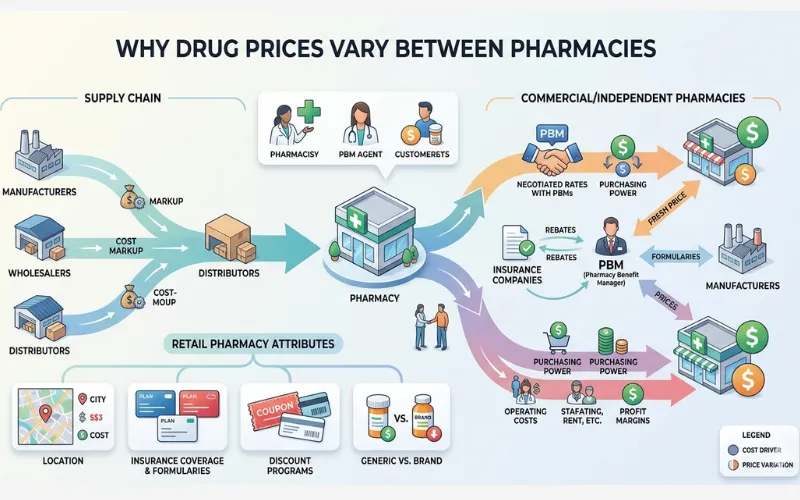
Generic medicines like metformin are often inexpensive, but the counter price still differs from one pharmacy to the next, and other prescriptions can cost far more. The NuLifeSpan Rx discount card, which costs nothing to get, shows the discounts available at participating pharmacies. It is a savings program, not insurance, and it is meant for medicines a licensed prescriber has ordered for you.

What Is Metformin and What Is It Approved to Treat?
Metformin is a biguanide, a class of oral diabetes medicine first approved in the United States in 1995. The FDA has approved it to improve blood sugar control in adults and certain children with type 2 diabetes, used along with diet and exercise. It lowers blood glucose mainly by reducing the amount of sugar the liver releases and by helping muscles respond better to insulin. On its own, it rarely causes low blood sugar.
Doctors also prescribe metformin off-label, meaning for uses not listed on the FDA label. Examples include prediabetes in some higher-risk adults, polycystic ovary syndrome, and weight gain linked to certain psychiatric medicines. Off-label prescribing is legal and common, but it is a clinical judgment for an individual patient. Metformin is not FDA-approved to treat aging, slow aging, or extend lifespan, and the FDA does not currently recognize aging itself as a condition a drug can be approved to treat.
Why Scientists Are Studying Metformin for Longevity
Interest in metformin anti-aging research grew from two directions: laboratory evidence that it touches pathways tied to aging, and observational data from people with diabetes. The mechanisms below are hypotheses about how metformin might influence aging biology. They are real effects seen in cells, animals, or tissue samples, but none of them proves that metformin helps humans live longer.
AMPK Signaling
AMPK is an enzyme that acts like a cellular fuel gauge. When energy runs low, AMPK switches on processes that conserve energy and improve fuel use. Metformin activates AMPK, and similar signaling is seen with calorie restriction, which extends lifespan in many animal species.
Mitochondrial Function
Mitochondria are the power plants of cells. Metformin mildly inhibits a part of the mitochondrial energy chain called complex I. That small energy stress appears to trigger AMPK activation and other protective responses, although the same effect may also explain why metformin can blunt some benefits of exercise.
mTOR-Related Pathways
mTOR is a growth-signaling hub that, when overactive, is linked with aging in lab research. Rapamycin, the drug with the strongest animal evidence for longevity, works by inhibiting mTOR. Metformin dampens mTOR signaling indirectly, which is one reason researchers group them together.
Metabolic Regulation
Metformin improves insulin sensitivity and lowers blood glucose and insulin levels. Because high insulin and glucose are associated with many age-related diseases, improving metabolic health is a plausible route to better healthspan, at least in people with metabolic problems.
Inflammation and Cellular Aging
Lab and small human studies suggest metformin may lower some markers of chronic inflammation and influence cellular senescence, the state in which damaged cells stop dividing and release inflammatory signals. These findings are early and inconsistent, and changes in a biomarker do not guarantee changes in health outcomes.
What Does Research Actually Show About Metformin and Aging?
The evidence falls into four tiers, and they carry very different weight. Randomized controlled trials, in which people are assigned to drug or placebo by chance, are the strongest test of cause and effect. Observational studies can reveal associations but are vulnerable to bias. Animal studies generate hypotheses but often fail to carry over to people.

Animal Experiments
Metformin has extended lifespan in some worm studies and in certain mouse experiments, including a 2013 study in male mice given a low dose. Results have been mixed. In the National Institute on Aging’s Interventions Testing Program, which tests compounds in genetically diverse mice at three sites, metformin alone at the tested dose did not significantly extend lifespan. Metformin combined with rapamycin did extend lifespan in that program, although the comparison relied partly on earlier rapamycin-only studies.
Observational Studies in Humans
A 2014 UK study by Bannister and colleagues is the most cited. It found that people with type 2 diabetes who started on metformin alone had slightly longer survival than matched people without diabetes, while those who started on a sulfonylurea did worse. Many other observational studies link metformin use with lower rates of cancer, heart disease, or dementia in people with diabetes.
These findings have important limits. People prescribed metformin may differ from others in ways that also affect survival, a problem called confounding. In the Bannister study, people who needed additional diabetes drugs left the metformin-only group, which may have removed sicker patients from the comparison. A later Danish analysis that applied a similar approach did not find the same survival advantage. Most importantly, all of these participants had diabetes, so the results describe metformin compared with other diabetes care, not metformin as a longevity drug for healthy people. Association is not causation.
Randomized Controlled Trials
Randomized trials in diabetes, such as the UK Prospective Diabetes Study, showed that metformin improved outcomes in overweight adults with type 2 diabetes. In the Diabetes Prevention Program, metformin lowered the risk of developing diabetes in adults with prediabetes, though intensive lifestyle change worked better.
Trials in older adults without diabetes have been small and focused on biomarkers or physical function, not lifespan. The MILES study found metformin changed gene activity in muscle and fat tissue in older adults with impaired glucose tolerance. Two exercise trials, covered in their own section below, looked at whether metformin changes training results. The MET-PREVENT trial, published in 2025, tested four months of metformin in 72 adults around age 80 with probable sarcopenia and prefrailty or frailty, and it did not improve their walking speed.
Remaining Research Gaps
The missing piece is a large, long trial in people without diabetes that measures the onset of age-related diseases, rather than lab markers or short-term fitness. That is exactly the gap TAME was designed to fill.
| Study or research category | Population | Main findings | Limitations | What can reasonably be concluded |
| Worm and mouse studies | Laboratory animals | Lifespan extension in some studies; no significant extension with metformin alone in the NIA Interventions Testing Program | Inconsistent results; animals differ from humans | Biologically plausible, not proof of human benefit |
| Bannister 2014 and similar cohort studies | Adults with type 2 diabetes vs. matched controls | Survival on par with, or a little above, matched controls | Confounding, selection bias, not replicated in all datasets | Metformin appears favorable within diabetes care; says little about healthy adults |
| Diabetes Prevention Program | Adults with prediabetes | Metformin reduced progression to diabetes | Not designed to measure aging or lifespan | Useful for diabetes prevention in selected people |
| MASTERS and aerobic training trials | Healthy older adults exercising | Metformin reduced gains in muscle mass or fitness | Short duration, modest size | Possible trade-off with exercise benefits |
| MET-PREVENT (2025) | Adults about 80 with sarcopenia and prefrailty or frailty | No improvement in walking speed; more side effects | Small, four months | Unlikely to help physical function in this group |
| TAME | Planned: older adults without diabetes | None yet | Not yet conducted | The key question remains unanswered |
What Is the TAME Trial?
TAME stands for Targeting Aging with Metformin. It was proposed by a group of aging researchers, led by Dr. Nir Barzilai of Albert Einstein College of Medicine, in a 2016 paper in Cell Metabolism. The trial is as much about proving a concept as about metformin itself: that one drug can target the biology of aging and delay several age-related diseases at once.

Research Objectives and Why the Trial Matters
The investigators want to show that delaying a cluster of age-related diseases is a valid goal for a drug trial. If that works, it could open a regulatory path for testing other drugs against aging itself, instead of one disease at a time. The team also hopes to bank blood samples that could help identify reliable biomarkers of aging. Metformin was picked because it is cheap, widely available, and has a long safety record in diabetes care, which lowers the risk of testing it in older volunteers.
Original Proposed Trial Design
As described by AFAR and the investigators, TAME is planned as a six-year, randomized, double-blind, placebo-controlled study at 14 US research institutions. Published descriptions call for 1,500 mg of metformin daily compared with a matching placebo. The design was developed with FDA input on using a composite of age-related diseases as the main outcome.
Proposed Participant Population
The plan calls for more than 3,000 adults aged 65 to 79 who do not have diabetes. Leaving out people with diabetes is deliberate, because it tests metformin as a possible aging intervention rather than as diabetes treatment.
Planned Outcome Measures
The primary outcome is the time until a participant develops one of several major age-related events, including cardiovascular disease, cancer, dementia, or death. Physical function and other markers of aging are expected as secondary measures.
Organizations Involved
AFAR manages the TAME initiative and leads its fundraising. Wake Forest University School of Medicine is named as the coordinating center, and the NIH-funded Geroscience Network recommended metformin as the drug to test.
Latest Verified Trial Status
As of November 2026, AFAR’s official TAME page still describes the trial in future terms and says it is raising funds to launch the multi-year, multi-site study. The page does not report recruitment underway, and no efficacy results have been published. Because metformin is generic, no company stands to profit from paying for a large trial, and reports have put the projected cost in the tens of millions of dollars. Some websites claim TAME has finished enrollment or reported findings. We could not confirm those claims through official trial sources, so treat them with caution.
Has the TAME Trial Proven That Metformin Slows Aging?
No. A trial that has not run cannot prove anything, so any claim that TAME showed metformin extends life or delays disease is inaccurate. It also helps to know what a positive result would and would not mean. Success would show that metformin delays a group of age-related diseases in older adults without diabetes. It would not, by itself, show that metformin is right for younger people, or reveal the best dose or starting age.
Look Up Today’s Price Before Your Next Fill
Whether your prescription is a long-standing generic or something new, a quick price check can reveal a cheaper pharmacy nearby. Search your medicine and strength to see current prices from multiple pharmacies in one place.

Can Metformin Extend Human Lifespan or Healthspan?
Lifespan is how long a person lives. Healthspan is how many of those years are spent in good health, free of serious chronic disease and disability. Many aging researchers care more about healthspan, and TAME’s disease-based outcome reflects that focus.
Current evidence does not show that metformin extends human lifespan. For healthspan, the picture is mixed. In people with type 2 diabetes, metformin is a well-established treatment and observational studies link it with fewer complications. In people without diabetes, small trials have not shown clear gains in function, and some show potential downsides when combined with exercise. Metformin and lifespan in humans remains an unanswered research question.
Is Metformin Beneficial for Healthy Adults Without Diabetes?
Evidence specifically involving people without diabetes is limited and largely short term. The clearest benefit is diabetes prevention in certain adults with prediabetes, a use that is supported by randomized evidence and some professional guidelines. For costs related to that use, see our guide to prediabetes medication and prevention programs.
Results from diabetes populations cannot automatically be applied to healthy adults. People with diabetes start with high blood sugar and insulin resistance, so a drug that corrects those problems may help them in ways that do not apply to someone with normal metabolism. In metabolically healthy people, small trials suggest metformin may offer little benefit and could reduce some gains from exercise. Researchers sometimes describe this as metformin helping most when there is a metabolic problem to fix.
Metformin Risks, Side Effects, and Long-Term Safety
Metformin is considered safe and well tolerated for most people with type 2 diabetes when it is used as prescribed and monitored. Like any prescription medicine, it carries risks that matter even more when the goal is speculative. The points below reflect FDA prescribing information and FDA safety communications.

Gastrointestinal Side Effects
Diarrhea, nausea, stomach upset, gas, and a metallic taste are the most common side effects, especially when starting. Taking it with meals, increasing the dose slowly, or using an extended-release form often helps. Tolerance can be worse in frail older adults: in MET-PREVENT, 40 percent of participants stopped metformin, compared with 14 percent on placebo.
Vitamin B12 Deficiency
Long-term use can lower vitamin B12 levels, which may contribute to anemia or nerve symptoms such as numbness and tingling. Prescribing information recommends periodic B12 checks. Our article on B12 deficiency treatment options covers how low levels are treated.
Kidney Function Considerations
Metformin is cleared by the kidneys. According to the FDA drug safety communication on metformin and kidney function, kidney function should be checked before starting and at least yearly, more often in older adults. Metformin is contraindicated when eGFR is below 30, starting it is not recommended when eGFR is between 30 and 45, and it may need to be paused around certain imaging procedures that use iodinated contrast dye.
Rare but Serious Lactic Acidosis
Metformin carries a boxed warning for lactic acidosis, a rare but potentially fatal buildup of acid in the blood. Risk rises with kidney impairment, age 65 or older, severe infection, dehydration, surgery, heart failure with low oxygen levels, liver disease, and heavy alcohol use. Symptoms include unusual muscle pain, trouble breathing, unusual sleepiness, and stomach pain. These require immediate medical care.
Potential Drug Interactions
Some medicines can raise metformin levels, including certain drugs that compete for kidney transport, such as ranolazine, dolutegravir, and cimetidine. Carbonic anhydrase inhibitors such as topiramate may add to lactic acidosis risk. Combining metformin with insulin or sulfonylureas increases the chance of low blood sugar.
Situations Requiring Additional Caution
Extra caution applies to people with reduced kidney function, liver disease, heart failure, a history of heavy drinking, upcoming surgery or contrast imaging, and frail older adults. Anyone taking metformin should tell every clinician and pharmacist they see.
Metformin and Exercise: Could There Be Trade-Offs?
Exercise is one of the best-proven ways to protect healthspan, so how metformin interacts with it matters. In the MASTERS trial, healthy adults aged 65 and older did 14 weeks of resistance training while taking 1,700 mg of metformin daily or a placebo. The placebo group gained more lean body mass and thigh muscle than the metformin group.
A separate 2019 trial of 12 weeks of aerobic training in older adults found that metformin reduced the usual improvements in insulin sensitivity and maximal aerobic fitness, and it blocked the expected increase in muscle mitochondrial function. Responses varied, and some people still improved. These were short, modest-sized studies in healthy volunteers, so they do not prove harm over the long term. They do suggest that adding metformin to an exercise routine may not offer the combined benefit many people assume.
Should You Take Metformin for Longevity?
For people without diabetes, current evidence does not support starting metformin solely to slow aging or live longer. The potential benefits are unproven in this group, while side effects, B12 depletion, kidney monitoring, and a possible blunting of exercise gains are real considerations. Many researchers who are optimistic about metformin still advise against taking it for longevity outside a clinical trial.
Your situation may be different if you have prediabetes, type 2 diabetes, or another condition where metformin has an established role. A qualified healthcare professional can weigh your blood sugar, kidney function, other medicines, and goals. In the meantime, the habits with the strongest evidence for healthspan remain regular physical activity, a nutritious diet, not smoking, good sleep, and managing blood pressure and cholesterol.
What Researchers Still Need to Find Out
Even if a large trial goes forward, several questions remain open:
- Dosing: Whether diabetes-level doses are needed, or whether lower doses would offer similar benefits with fewer side effects.
- Treatment duration: How many years of use would be needed to affect aging, and whether starting age matters.
- Long-term outcomes: Whether biomarker changes translate into fewer diseases, better function, or longer life.
- Patient selection: Whether benefits are limited to people with insulin resistance or other metabolic risk factors.
- Possible risks: How long-term use affects muscle, exercise capacity, and B12 status in otherwise healthy older adults.
Conclusion
Metformin for longevity sits where solid science meets early hype. The drug is a trusted, low-cost diabetes treatment that acts on several pathways tied to aging, and that biology is genuinely interesting. What is missing is direct proof in the people most curious about it: adults whose blood sugar is normal.
Until a trial like TAME is funded, completed, and published, the fairest summary is that metformin is a candidate under study rather than a longevity treatment. If the topic matters to you, bring it to a clinician who can check your metabolic health and help you weigh real risks against uncertain rewards.
Frequently Asked Questions
Does metformin really slow aging?
Nobody knows yet, and it helps to be clear about what would settle it. Proof would come from a large randomized trial showing that people on metformin develop age-related diseases later than people on placebo. Changes in gene activity, inflammation markers, or animal lifespan are useful clues, but they are not that proof. Until such a trial reports, “may slow aging” is the most accurate phrasing.
Is metformin approved for longevity?
No, and under current rules no drug can be. The FDA approves medicines to treat or prevent specific diseases or conditions, and aging is not recognized as one. That gap is a major reason TAME was designed around delaying several specific illnesses instead of aging itself. Any prescription written for longevity today would be off-label and based on a clinician’s judgment, not on an approved indication.
What is the TAME trial?
TAME, short for Targeting Aging with Metformin, is a planned placebo-controlled study meant to test whether a single inexpensive drug can delay several diseases of aging at once in older adults without diabetes. Beyond metformin, it is meant to serve as a template that future aging drugs could follow to reach regulators. Its proposed design and current status are described in detail in the TAME section of this article.
Has the TAME trial published results?
No results exist. Once the trial launches, the planned follow-up of about six years plus time for analysis means findings would arrive years later. To check progress yourself, look at AFAR’s official TAME page, search ClinicalTrials.gov for an active listing, and watch for results in peer-reviewed journals. Be wary of social media or supplement sites that describe TAME outcomes, since none have been reported.
Can healthy people take metformin?
Only with a prescription from a licensed clinician who has reviewed their health. Buying metformin online without a prescription is risky, because unlicensed websites may sell products that are counterfeit, contaminated, or the wrong strength. The FDA’s BeSafeRx program explains how to recognize a legitimate online pharmacy. A clinician can also check blood sugar and kidney function first, which matters for both safety and whether there is any reason to use it.
Does metformin increase human lifespan?
That specific question has never been tested in people without diabetes, and even TAME would not answer it alone. Its main outcome combines several diseases and death into one measure, so a positive result would show delayed illness rather than a precise gain in years lived. Answering the lifespan question directly would need an even larger and longer trial, which is one reason the question may stay open for some time.
What are the long-term risks of metformin?
Most long-term safety knowledge comes from decades of use in people with diabetes, where the drug is generally well tolerated with monitoring. Ongoing care typically means a kidney function test at least once a year, periodic vitamin B12 checks, and a review before surgery or contrast scans. What is far less known is the effect of many years of use in metabolically healthy adults, because large, lengthy studies in that group have not been done.
Should people without diabetes take metformin for anti-aging?
The evidence does not support it today. A more productive step is asking your clinician for an A1C or fasting glucose test, since finding prediabetes would change the conversation and the options. If you are interested in contributing to aging research, ClinicalTrials.gov lists studies that are recruiting. Your clinician can also point you to the prevention steps best supported for your own risk profile.
Medical disclaimer: This review summarizes published research and the TAME trial’s status as of November 2026, and findings may change as new studies appear. It is not a recommendation to take metformin. Metformin is not FDA-approved for aging or longevity, so talk with a licensed prescriber about your own health before considering it. NuLifeSpan Rx is a discount program for prescriptions and is not insurance.