Stress is not just a feeling. It is a full-body reaction that changes your heart rate, hormones, digestion, and immune activity. For people watching blood pressure, unmanaged stress can be one more factor that makes numbers harder to control.
Short bursts of stress help you meet deadlines and react to danger. Problems arise when the alarm never turns off. The American Psychological Association notes that long-term stress can affect nearly every system of the body. Here is how it happens and what helps. If stress is already disturbing your nights, our guide to insomnia options covers what care can cost.
Money worries add to stress. NuLifeSpan Rx offers a free prescription discount card that can lower what you pay at the pharmacy. It is not insurance.

What Happens in Your Body Under Stress
The stress response is ancient and fast. It evolved to help you fight or flee, and it still fires for traffic jams and inbox overload. The two subsections below follow what happens in the first seconds of a perceived threat, and what changes when that alarm keeps ringing for weeks or months instead of switching off once the danger has passed.
The Fight-or-Flight Surge
When your brain senses a threat, a small region called the hypothalamus sends an alert to the adrenal glands, which sit on top of the kidneys. They release adrenaline within seconds and cortisol shortly after. Your heart beats faster, blood pressure rises, breathing quickens, and glucose floods the bloodstream for quick energy. Muscles tense and your senses sharpen. At the same time, digestion and other non-urgent processes slow down because the body is redirecting resources toward action. That is helpful if you must jump out of the way of a car. It is far less helpful when the trigger is an angry email, since you cannot run from it.
When the Alarm Never Switches Off
In chronic stress, cortisol stays elevated and the body remains in a state of alert. Over time this wear and tear is sometimes called allostatic load. Picture an engine that never idles: the parts keep running hot and wear out faster. It can disturb sleep, appetite, and immune function, and it often shows up as trouble falling asleep, cravings for sugary food, or catching every cold that goes around the office. Because the signals build slowly, many people only notice once they feel constantly tired, tense, or on edge, which is why paying attention to early signs matters.
How Chronic Stress Affects Specific Systems
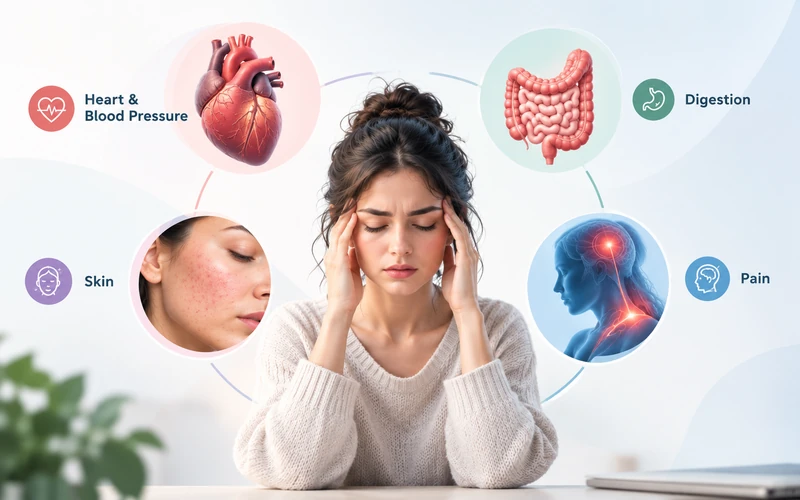
Because stress hormones reach every organ, symptoms vary a great deal from person to person. One person gets headaches and a racing heart, while another gets stomach trouble or flare ups of a skin condition. The subsections below cover the areas that researchers and clinicians see affected most often, starting with the cardiovascular system and moving on to digestion, skin, and pain.
Heart and Blood Pressure
Repeated stress responses raise heart rate and blood pressure, and when they happen day after day the cardiovascular system never gets a proper rest. Stress is also linked to habits that harm the heart, such as poor sleep, overeating, smoking, and drinking. Chronic stress is considered a contributing factor to cardiovascular risk, alongside well known ones like high blood pressure, high cholesterol, and inactivity. The practical takeaway is that managing stress is part of heart care, not a replacement for it. Keep up with regular checkups, track your blood pressure if your clinician suggests it, and treat stress relief as a routine habit.
Digestion, Skin, and Pain
The gut and brain are in constant conversation, so stress can trigger stomach pain, bloating, heartburn, and changes in bowel habits such as constipation or diarrhea. It can also worsen skin conditions such as eczema and acne, partly by increasing inflammation. Many people with chronic stress report tension headaches, jaw clenching, sore shoulders, and migraine flare ups. A helpful habit is to keep a short diary of when symptoms appear. If flare ups cluster around deadlines, conflict, or poor sleep, stress is likely playing a part, and that pattern is worth sharing with your doctor. If you want the background, here is how the immune system works.
Stress and the Immune System
Your defenses are closely tied to your mood, your workload, and your sleep, so a rough season of life often shows up as more sniffles and slower recovery. The two subsections below look at how long-term pressure can quiet the immune system, and how that physical strain overlaps with mental health in ways that can feed each other if nothing interrupts the cycle.
Weaker Defenses Over Time
Short-term stress can briefly boost immune activity, which is part of how the body prepares for injury. Prolonged stress does the opposite and suppresses it, because cortisol dampens the activity of white blood cells over time. Studies show stressed people are more likely to catch colds and may heal wounds more slowly. Vaccines can also produce a weaker response in people under heavy, ongoing stress. None of this means stress alone makes you ill. It means that when you are run down, a virus that you would normally fight off easily has a better chance of taking hold, so rest and recovery deserve a place on your calendar.
Mental Health Overlap
Long-term stress is a recognized risk factor for anxiety and depression. These conditions in turn make physical symptoms feel worse, creating a loop that is easier to prevent than to break. For example, worry disrupts sleep, poor sleep lowers your tolerance for stress, and a stressed body produces more aches that fuel more worry. Warning signs include persistent low mood, loss of interest in things you usually enjoy, constant dread, or withdrawing from people. If these last more than a couple of weeks, talk with a doctor or mental health professional. Early support works well and is nothing to be embarrassed about.
Proven Ways to Lower Stress

You cannot remove all stress, but you can change how your body processes it. These approaches have solid support from major health organizations. The first group focuses on physical habits that calm the body directly, while the second focuses on relationships and limits that reduce how often your alarm system gets triggered in the first place. Small, repeatable steps tend to beat dramatic overhauls.
Move, Breathe, and Rest
Regular physical activity burns off stress hormones and releases mood-lifting chemicals, and even a brisk 20 minute walk can take the edge off a hard day. Slow breathing exercises, such as inhaling for four counts and exhaling for six, activate the parasympathetic nervous system and help the body calm down. Protect your sleep too, since tired brains react more strongly to stress. Try keeping a consistent bedtime, dimming screens in the last hour of the evening, and keeping caffeine for the morning. Combined, these three habits give your body a daily chance to reset instead of carrying tension into tomorrow.
Build Support and Boundaries
Talking with friends, family, or a counselor lowers the sense of threat, and the National Institute of Mental Health lists social support among core coping tools. Mindfulness, time in nature, and setting limits on work and news can make a visible difference. A boundary can be as simple as turning off work notifications after dinner or checking headlines once a day instead of every hour. Seek professional help when stress interferes with daily life, such as when it disrupts your work, relationships, or sleep for weeks at a time.
A Five-Minute Reset You Can Use Anywhere
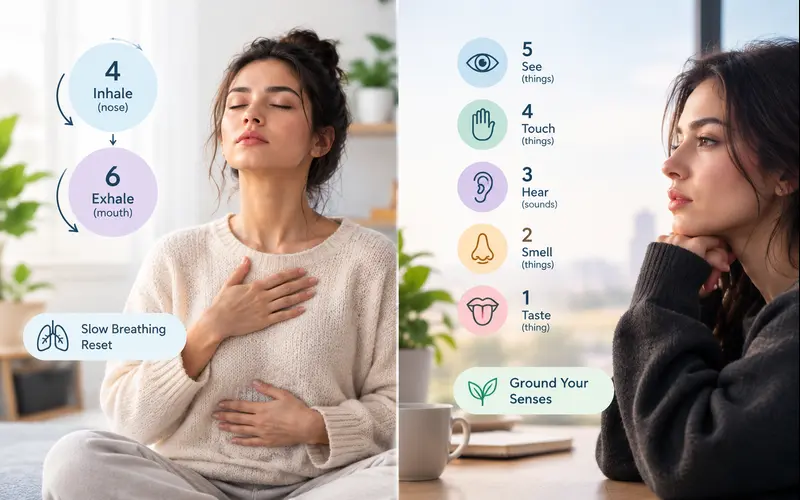
When stress spikes, you need tools that work quickly and quietly. These two steps take only a few minutes and need no equipment, so you can use them at your desk, in a parked car, or in a hallway before a hard conversation. One works through your breathing and the other through your attention, and you can combine them if you have a few extra minutes.
Try the Slow Breathing Reset
Sit comfortably and relax your shoulders. Breathe in through your nose for four counts and out through your mouth for six. Repeat for five minutes. The longer exhale signals the nervous system to settle, which slows the heart rate and eases muscle tension. Let your belly rise as you inhale rather than lifting your chest, and keep the breath smooth rather than forced. If you feel lightheaded, return to normal breathing for a moment. Many people find it helpful to practice once or twice a day when calm, so the technique feels familiar and automatic when stress hits.
Ground Your Senses
Name five things you can see, four you can touch, three you can hear, two you can smell, and one you can taste. This pulls attention away from racing thoughts and back to the present moment. It works because the brain has trouble focusing hard on sensory details and spiraling worries at the same time. Say the items quietly or in your head, and take your time with each one. Practice when calm so it comes easily when stressed. It is especially handy before a presentation, during a tense conversation, or when you wake at night with a busy mind.
Conclusion
Stress hormones help in emergencies and harm when they never rest. Over time, ongoing stress can strain the heart, gut, skin, sleep, and immune system, and it can feed anxiety and low mood. The good news is that small daily habits work. Move your body, breathe slowly, sleep well, stay connected, and set limits on work and news. Ask for help when stress becomes too heavy, because early support makes recovery easier.
Frequently Asked Questions
Can stress make you physically sick?
Stress does not cause every illness, but it can worsen existing conditions and contribute to problems such as high blood pressure, digestive trouble, and poor sleep. It also lowers your resistance to common infections over time. If you notice physical symptoms that keep returning during stressful periods, mention them to your doctor, who can check for other causes and suggest ways to cope.
How long does it take for the body to recover from stress?
After a short stressor, hormones return to baseline within hours. After prolonged stress, recovery can take weeks or longer, depending on rest, sleep, and support. The pace varies from person to person. Steady routines such as regular exercise, good sleep, and time with people you trust help the body settle faster, while continuing pressure keeps the alarm system switched on.
What are the warning signs of too much stress?
Frequent headaches, trouble sleeping, irritability, stomach problems, racing heart, and constant fatigue are common signs. Others include muscle tension, changes in appetite, difficulty concentrating, and pulling away from friends. One bad week is normal. If several signs last for weeks or start to interfere with daily life, it is a good time to talk with a healthcare professional.
Can stress cause high blood pressure?
Stress causes short-term rises in blood pressure, and long-term stress may contribute through unhealthy coping habits such as poor sleep, overeating, smoking, and drinking. The link to lasting hypertension is less direct than for factors like salt intake, weight, and inactivity. Managing stress still supports heart health, so have your pressure checked regularly and follow your clinician’s advice.
Does stress cause weight gain?
It can contribute. Cortisol and stress-related habits such as poor sleep, comfort eating, and less activity are linked with weight gain, particularly around the abdomen for some people. Responses vary, and some people lose appetite under stress. Regular meals, movement, and sleep help. If your weight changes sharply during stressful periods, speak with a clinician.
Does exercise reduce stress?
Yes. Physical activity lowers tension, improves mood, and helps sleep, and regular exercise can make the body less reactive to stress over time. Walking, cycling, swimming, yoga, and strength work all count, and even 10 minutes can help. Pick something you enjoy, and choose gentle options if you are new to exercise or have a medical condition.
Medical disclaimer: This article is for general education and is not medical advice. Talk to a qualified healthcare professional about your own health, symptoms, and medications. NuLifeSpan Rx is a free prescription discount program and is not insurance.