

Cholesterol treatment is rarely a short-term expense. Once a healthcare provider prescribes a cholesterol-lowering medication, many older adults take it for years or even decades, which means the monthly price becomes a permanent line in the household budget. Understanding cholesterol medication costs for older adults helps you plan ahead, ask better questions at the pharmacy counter, and avoid overpaying. A good first step is to compare prescription prices for your exact medication and dose before your next refill, because the range between the cheapest and most expensive option is often wider than people expect.
What Drives the Price of Cholesterol Medication
Several factors shape what you actually pay. The medication name matters most, since a decades-old generic and a newly launched injectable sit at opposite ends of the price spectrum.
Beyond that, your cost depends on whether you fill a generic or brand version, the dosage, the quantity, the pharmacy you choose, your ZIP code, your insurance or Medicare plan, and whether any discount applies. Because so many variables interact, two neighbors taking the same drug can pay very different amounts each month.
Generic Statins Versus Brand-Name Medications
Statins are the most commonly prescribed class of cholesterol medication. The MedlinePlus statins guide explains how they reduce the cholesterol your liver produces.
The financial news here is mostly good. The most widely used statins lost patent protection years ago, so atorvastatin, rosuvastatin, simvastatin, and pravastatin are all available as lower-cost generics. Brand versions of these same molecules typically cost far more without providing additional clinical benefit, since the FDA holds generics to the same standards for strength, quality, and effect.
Common Lower-Cost Generic Statins
If your provider has prescribed a statin, there is a strong chance it is already one of the affordable generics:
- Atorvastatin (generic for Lipitor)
- Rosuvastatin (generic for Crestor)
- Simvastatin (generic for Zocor)
- Pravastatin (generic for Pravachol)
These are examples for education only, not recommendations. Statin choice depends on your cardiovascular risk, medical history, age, other medications, and how you tolerate treatment. Not every older adult needs a statin, and only your healthcare provider can weigh those factors for you.
Non-Statin Cholesterol Medications
Some patients need a different or additional medication. Common categories include:
- Cholesterol absorption inhibitors, such as ezetimibe, which limit cholesterol uptake in the intestine. Ezetimibe is available as a generic.
- Bile acid sequestrants, an older oral class that binds cholesterol-carrying acids in the digestive tract.
- PCSK9 inhibitors, injectable biologic medications typically reserved for higher-risk patients.
- Other newer therapies, including additional oral and injectable options approved in recent years.
The American Heart Association’s overview of cardiac medications describes how these treatments fit into heart health care.
Why Newer Injectable Treatments Cost More
PCSK9 inhibitors and other biologic therapies are complex to manufacture and remain under patent protection, so they sit in the higher-cost brand category. Insurance plans usually place them on specialty tiers with higher cost sharing.
If your provider recommends one of these medications, the manufacturer may operate a patient assistance or copay support program. It is worth asking your provider’s office or pharmacist about these options before assuming the medication is out of reach.
How Medicare Part D Handles Cholesterol Medication
Medicare Part D plans organize covered drugs into cost tiers on a list called a formulary. Generic statins usually sit on the lowest tiers with modest copays, while brand and specialty medications sit on higher tiers with larger cost sharing.
In 2026, the maximum Part D deductible is $615, and your out-of-pocket spending on covered drugs is capped at $2,100 for the year. After you reach that cap, your plan pays the full cost of covered medications through December. The official Medicare Part D costs page explains each coverage stage in detail.
Prior Authorization and Step Therapy
For expensive cholesterol medications, your plan may require prior authorization, which means your provider must confirm the medication is medically necessary before the plan pays. Some plans also use step therapy, which asks you to try a lower-cost option first unless your provider documents a reason not to.
These requirements can delay a fill, so ask your provider’s office to submit paperwork early. If a request is denied, you have the right to appeal, and your provider can support the appeal with medical records.
Compare Your Copay With the Cash and Discount Price
For inexpensive generic statins, your insurance copay is not automatically the best deal. Sometimes the pharmacy cash price or a discount program price is lower.
Remember that a discount card and insurance generally cannot be combined on the same prescription transaction, and discount card purchases generally do not count toward your deductible or out-of-pocket maximum. The practical habit is simple. Ask your pharmacist to check every available price before you pay. This guide on how to save on prescriptions without insurance covers the same comparison approach for readers without drug coverage.
Ask About FDA-Approved Generic Options
If you take a brand-name cholesterol medication, ask your provider whether an FDA-approved generic exists for it or for a similar medication in the same class. The FDA’s generic drug overview confirms that approved generics deliver the same clinical effect as their brand counterparts.
Never change medications on your own. Your provider needs to confirm that any switch fits your risk profile and the rest of your medication list.
Use 90-Day Fills and Local Price Comparison
Two habits consistently trim long-term statin costs. First, ask whether a 90-day supply is appropriate, since the per-pill price is often lower than three 30-day fills and adherence tends to improve.
Second, compare local pharmacies before choosing where to fill. Prices vary between chains, grocery pharmacies, and independents in the same ZIP code. A quick check with a prescription savings app shows nearby prices in seconds, so you can decide before leaving home.
Check Extra Help and Manufacturer Assistance
Medicare Extra Help reduces Part D premiums, deductibles, and copays for beneficiaries with limited income and resources. If your income is modest, apply through Social Security even if you are unsure you qualify.
For higher-cost brand medications, manufacturer patient assistance programs may provide the drug at reduced or no cost to eligible patients. Your provider’s office can usually help with applications.
When NuLifeSpan Rx May Help
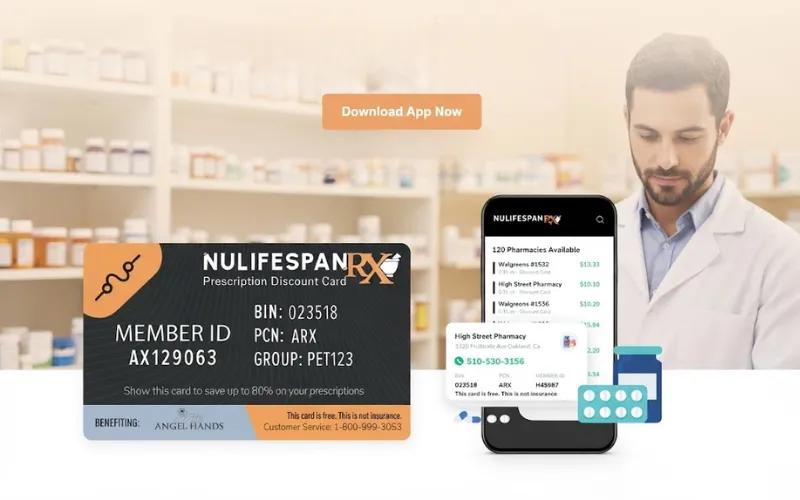
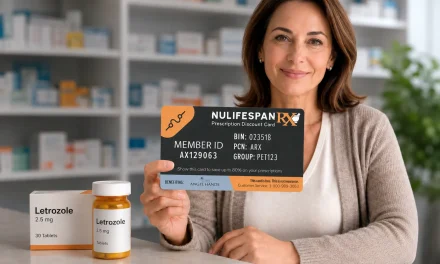
NuLifeSpan Rx is a free prescription discount program that negotiates prices on eligible prescriptions at participating pharmacies. It is not health insurance and not a Medicare prescription drug plan, and savings vary by medication and pharmacy.
For generic cholesterol medications, members can save up to 80% on eligible prescriptions at participating pharmacies, with the actual discount depending on the drug, dose, quantity, and location. The program does not always provide the lowest price, so compare the discount price against your insurance copay, Medicare price, pharmacy cash price, and any assistance program before completing the transaction. Your pharmacist can run the comparison at the counter.
Adherence and Safety Come First
Skipping doses or splitting pills to stretch a prescription can undermine the entire purpose of cholesterol treatment, which is reducing your long-term risk of heart attack and stroke. If cost is forcing you to cut corners, tell your provider. There is almost always a lower-cost path, whether that is a generic, a different medication in the same class, a 90-day fill, or an assistance program.
Also report muscle pain, unusual fatigue, or other new symptoms to your provider, since these can be medication side effects that deserve attention. Cost decisions and safety decisions belong in the same conversation with your healthcare team. The MedlinePlus cholesterol medicines page is a reliable place to read more about how these treatments work.
The Bottom Line
Cholesterol medication costs for older adults range from very affordable generic statins to expensive specialty injectables, and where you land depends on your prescription, your coverage, and how carefully you compare prices. Ask about generics, use 90-day fills when appropriate, understand your Part D tiers, and check a discount price before every fill. Get your free NuLifeSpan Rx card and compare the price of your cholesterol prescription at pharmacies near you today.
Frequently Asked Questions
How much cheaper are generic statins compared with brand-name versions?
Generic statins such as atorvastatin, rosuvastatin, simvastatin, and pravastatin generally fall into the lowest-cost category of prescription medications, while brand versions of the same molecules cost substantially more. Exact prices vary by dose, quantity, pharmacy, and ZIP code, so compare the generic price at two or three local pharmacies rather than relying on a single quote.
Does Medicare cover statins and other cholesterol medications?
Most Medicare Part D and Medicare Advantage drug plans cover common cholesterol medications, with generic statins usually placed on low-cost formulary tiers. Newer injectable therapies often sit on specialty tiers with higher cost sharing and may require prior authorization. In 2026, out-of-pocket spending on covered Part D drugs is capped at $2,100 for the year.
Can I use a prescription discount card together with my insurance for a statin?
No, a discount card and insurance generally cannot be applied to the same prescription transaction. For each fill, you choose whichever price is lower. Keep in mind that a discount card purchase generally does not count toward your insurance deductible or out-of-pocket maximum, so ask your pharmacist to compare both prices before you pay.
Why is my pharmacy charging more for the same cholesterol medicine than the pharmacy across town?
Every pharmacy sets its own cash prices, and negotiated discount rates differ by chain, location, and region. Dose and quantity also change the total. Because the spread can be significant even within one ZIP code, checking prices at several nearby pharmacies before filling a long-term prescription is one of the most reliable ways to reduce your yearly cost.
Will a 90-day supply of my statin save money?
It often does. Many pharmacies and Medicare drug plans price 90-day supplies below the combined cost of three 30-day fills, and longer supplies help you avoid missed doses. Confirm two things first. Ask your healthcare provider whether a 90-day prescription is appropriate for you, and ask your pharmacist whether the 90-day price actually lowers your total spending.
What if I cannot afford the cholesterol medication my provider prescribed?
Do not stop or skip the medication on your own. Tell your provider that cost is a problem, because options usually exist, including FDA-approved generics, a different medication in the same class, Medicare Extra Help for those with limited income, manufacturer patient assistance for expensive brands, and free prescription discount programs at participating pharmacies.









Trackbacks/Pingbacks