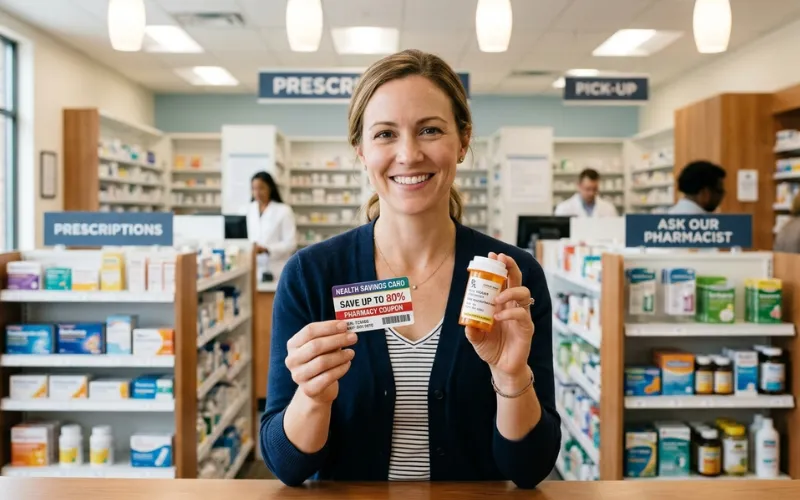
You can save up to 80 percent on prescription medications without insurance by using a free prescription discount card, switching to generic equivalents wherever clinically appropriate, comparing prices across multiple pharmacies before every fill, requesting a 90-day supply instead of 30 days, and applying for manufacturer patient assistance programs when eligible. Using two or more of these strategies simultaneously on the same prescription consistently delivers the largest reductions.
More than 25 million Americans are currently uninsured, and millions more are underinsured with deductibles so high that insurance offers little practical help for routine prescriptions. The full retail cash price of a prescription drug in the United States is one of the least regulated prices in any consumer market, which means the difference between the most and least expensive way to fill the same prescription can be several hundred dollars per month. This guide covers every proven strategy for reducing that gap significantly, without requiring insurance, income verification, or complex enrollment processes.
Why Prescription Drug Prices Vary So Dramatically
Prescription drug prices in the United States are so high because the market lacks the regulation and negotiation structures that control costs in most other developed countries. Manufacturers set list prices largely without constraint. Pharmacy benefit managers negotiate rebates that do not consistently pass through to patients. Retail pharmacies apply their own markups on top of acquisition costs. The result is a tiered pricing system where the uninsured cash-paying patient almost always pays the highest price available for any given drug.
Prices also vary substantially between pharmacies for identical products. The same 30-tablet supply of a common generic blood pressure medication can cost $4 at one pharmacy and $38 at another within the same neighborhood. Pharmacy prices for the same drug differ significantly even within a single chain due to regional cost structures, local market conditions, and which discount programs individual locations participate in. This variability is not random: it is a function of how each pharmacy negotiates with suppliers and which patient savings programs it has agreed to honor.
Understanding this structure is important because it reframes the savings opportunity. You are not negotiating against a fixed price. You are navigating a landscape where multiple legitimate discounting mechanisms exist simultaneously, and the only thing standing between you and a much lower price is knowing which tools to use and where to use them.
Strategy 1: Use a Free Prescription Discount Card
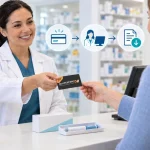
A prescription discount card is the single most accessible and highest-impact tool available for uninsured patients. It costs nothing to obtain, requires no enrollment, no insurance, and no income documentation, and it can be used at thousands of pharmacies nationwide. When you present it at the pharmacy counter alongside your prescription, the pharmacist applies the discounted network rate rather than the standard retail cash price. The reduction is applied immediately at checkout.
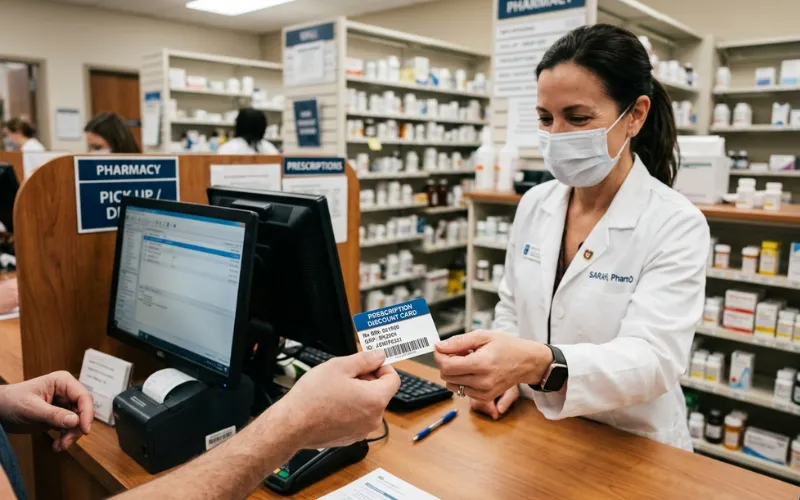
Discount cards work because they operate within negotiated rate networks. The card provider has pre-arranged a reduced price with each participating pharmacy, and presenting the card instructs the pharmacy to apply that rate. For generic medications, the discounted price is often 60 to 80 percent below the retail cash price. For brand-name medications, the reduction is typically smaller but still meaningful.
Understanding exactly how these discount cards reduce your price at the pharmacy counter helps you use them confidently and avoid common mistakes, such as forgetting to present the card before the pharmacist processes the transaction. Once a prescription is rung up without the card, many pharmacies cannot retroactively apply the discount to the same transaction.
Discount cards are also accepted for veterinary prescriptions at many retail pharmacies. If you have a pet on long-term medication, applying a pharmacy discount card to your dog’s or cat’s prescriptions at a retail pharmacy rather than filling at the vet clinic can produce savings of 30 to 60 percent or more per fill.
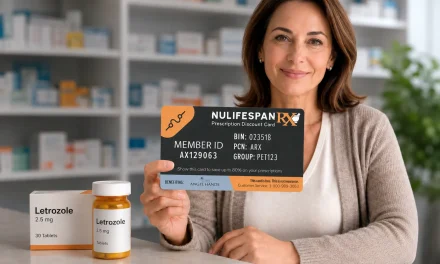
The NuLifeSpan Rx Discount Card: Free Savings of Up to 80% at 35,000+ Pharmacies
The NuLifeSpan Rx prescription discount card is completely free, requires no sign-up, no insurance, and never expires. It is accepted at over 35,000 pharmacies nationwide and delivers savings of up to 80 percent on thousands of covered medications for both people and pets.
Simply present it at the pharmacy counter the next time you drop off a prescription. The discounted price is applied at checkout with no paperwork, no claims process, and no waiting period. It takes less than 30 seconds to use and works on every eligible fill from the first day you have it.
Strategy 2: Switch to Generic Medications
Generic medications contain the same active ingredient at the same strength and dosage form as the brand-name original and are required by the FDA to demonstrate bioequivalence before approval. They cost an average of 80 to 85 percent less than their brand-name equivalents, yet they produce the same therapeutic effect. Generics accounted for approximately 90 percent of all prescriptions dispensed in the United States in 2024 while representing only about 12 percent of total prescription drug spending, which illustrates how dramatically the switch to generic changes the financial equation.
Many patients continue filling brand-name prescriptions simply because their prescriber wrote the brand name on the prescription and they did not know to ask for the generic equivalent. Most physicians are willing to prescribe generically when asked directly, and pharmacists are generally authorized to substitute a generic when the prescriber has not specified brand-name only. The conversation takes less than a minute at your next appointment and can reduce a monthly prescription cost by $50 to $200 or more for common medications.
When a generic may not be the right choice
For a small number of medications, including certain thyroid drugs, antiepileptic medications, and some psychiatric drugs, the margin between therapeutic and subtherapeutic blood levels is narrow enough that switching from a brand to a generic, or between generic manufacturers, warrants extra monitoring. If you take any of these medications, discuss the switch explicitly with your prescribing physician before changing rather than requesting a generic substitution at the pharmacy unilaterally.
Strategy 3: Compare Pharmacy Prices Before Every Fill
Price comparison is the most consistently underused savings behavior among prescription drug buyers. Because there is no regulatory requirement for pharmacies to post or standardize prices, the cash price for identical medications at pharmacies within the same zip code can vary by 30 to 500 percent. A medication that costs $180 at one pharmacy may cost $22 at another three blocks away, for the same manufacturer, same strength, and same quantity.
Finding the cheapest pharmacy for any given prescription requires a simple process: call at least two or three pharmacies before filling and ask for the cash price on your specific medication, strength, and quantity. Then ask what the price would be with a discount card applied. The discounted price at one pharmacy may still be higher than the undiscounted cash price at another, which is why both data points matter.
Pharmacies to compare should include large retail chains, warehouse club pharmacies (which often have the lowest prices on common generics), independent community pharmacies, and licensed online pharmacies with strong accreditation records. Each category has different pricing structures, and the lowest-cost option for one medication is not necessarily the lowest for another.
| Pharmacy Type | Typical Pricing Strength | Best For |
| Large retail chain | Moderate; varies by location and program participation | Convenience; discount card compatibility; loyalty rewards |
| Warehouse club pharmacy | Often lowest for common generics | High-volume generic fills; patients who already shop there |
| Independent community pharmacy | Variable; sometimes negotiates on price for regular customers | Personalized service; willingness to price-match or discuss options |
| Licensed online pharmacy (accredited) | Often competitive; may offer 90-day supply savings | Chronic medications; patients who plan ahead; AutoShip programs |
| Grocery store pharmacy | Moderate; some offer $4 generic programs | Convenience; bundling with grocery shopping |
| Veterinary clinic | Typically highest markup available | Emergency fills only; not recommended for routine chronic prescriptions |
Strategy 4: Buy a 90-Day Supply Instead of 30 Days
Most pharmacies charge a lower per-pill or per-dose price when you fill a larger quantity in a single transaction. A 90-day supply of a generic maintenance medication often costs meaningfully less per day than three separate 30-day fills of the same drug. The savings come from reduced dispensing overhead spread across more doses and, in some programs, from bulk pricing incentives that pharmacies pass to patients who purchase larger quantities.
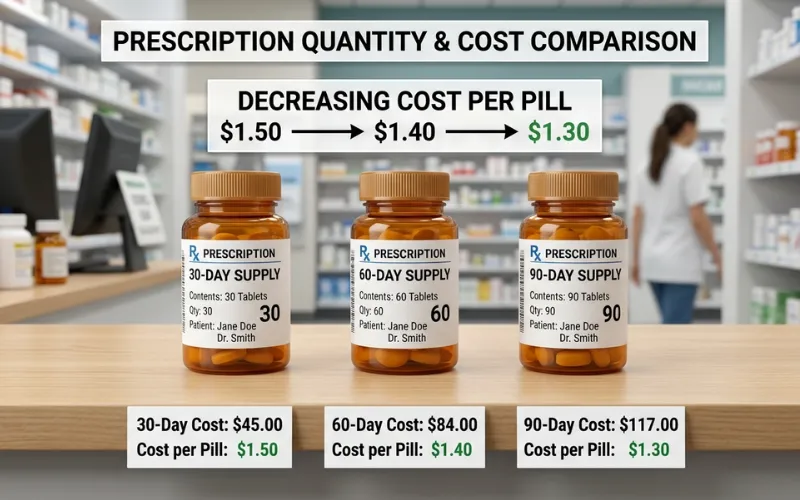
To use this strategy, ask your prescribing physician to write a 90-day prescription at your next appointment for any medication you take daily for a chronic condition. State pharmacy regulations vary on maximum supply quantities, and some controlled substances have legally mandated supply limits, but most common maintenance medications for conditions like hypertension, diabetes, high cholesterol, depression, and thyroid disorders can be dispensed in 90-day supplies at most pharmacies.
The 90-day fill strategy also reduces the annual pharmacy trip frequency from twelve fills to four, which saves time and eliminates the risk of a supply gap if a busy schedule prevents a timely refill. Navigating the pricing and fill-quantity options at major retail pharmacy chains without insurance is more straightforward once you know to ask for the larger supply format.
Strategy 5: Apply for Manufacturer Patient Assistance Programs
Pharmaceutical manufacturers that produce brand-name medications operate patient assistance programs (PAPs) that provide free or deeply discounted drugs to qualifying patients who cannot afford them. These programs are separate from and in addition to copay cards, which are designed for commercially insured patients. PAPs are specifically designed for uninsured or underinsured individuals whose income falls below program-specific thresholds.
Eligibility requirements vary by manufacturer and by drug, but most programs require proof of income, a valid prescription from a licensed physician, and confirmation that the patient does not have insurance coverage that would otherwise cover the medication. Applications are submitted directly to the manufacturer through their patient support website or through nonprofit intermediaries such as NeedyMeds and the Patient Advocate Foundation, both of which maintain searchable databases organized by medication name.
Processing times vary from a few days to a few weeks depending on the program, so PAPs are most effective as part of a planned long-term savings strategy rather than an emergency solution for an immediately needed medication. If you are on a brand-name drug with no generic available, identifying the relevant manufacturer PAP and applying early in your treatment is one of the highest-value steps you can take.
Strategy 6: Use AutoShip Programs from Licensed Online Pharmacies
Licensed online veterinary and retail pharmacies frequently offer automatic refill programs, typically called AutoShip or auto-refill, that deliver a discount of 5 to 15 percent on every order compared to one-time order pricing. Prescriptions are shipped on a schedule that matches your refill cycle, eliminating last-minute pharmacy runs while also reducing per-fill cost.
When evaluating an online pharmacy for AutoShip, verify that it is licensed and accredited. In the United States, the National Association of Boards of Pharmacy (NABP) maintains a list of accredited online pharmacies under its NABP Verified Internet Pharmacy Practice Sites (VIPPS) program. Only use pharmacies that appear on this list or carry equivalent state licensing verification. Unaccredited online pharmacies represent a serious patient safety risk and are not a legitimate source of prescription savings.
AutoShip pricing stacked with a 90-day supply quantity and a discount card produces three overlapping savings levers on the same fill, each compounding the others, which brings the effective per-dose cost to its lowest achievable point for most generic maintenance medications.
Strategy 7: Look Into Government and State Assistance Programs
IMAGE SUGGESTION (In-Section): A senior or low-income individual meeting with a benefits counselor at a desk, reviewing paperwork for a government assistance program. Alt text: “Patient meeting with a benefits counselor to apply for a government prescription assistance program.”
For patients whose income falls below defined thresholds, government programs provide the most substantial prescription cost relief available, sometimes reducing out-of-pocket costs to near zero. These programs require an application process and eligibility review, but for those who qualify, they represent a level of savings no discount card or coupon program can match.
Medicare Extra Help, also called the Low-Income Subsidy, caps Part D drug costs at $12.65 per covered prescription in 2026 for qualifying Medicare beneficiaries. Medicaid provides comprehensive prescription coverage for qualifying low-income individuals who are not yet Medicare-eligible. State Pharmaceutical Assistance Programs (SPAPs) supplement federal coverage for residents who do not qualify for federal programs or who need additional support beyond what federal programs provide.
Even patients who are unsure whether they qualify should apply. Eligibility determinations are free, and many people with incomes slightly above common thresholds still qualify for partial assistance under one program or another. The application process is managed through your state’s Medicaid agency or through the Social Security Administration for Medicare-related programs. Your local Area Agency on Aging or State Health Insurance Assistance Program (SHIP) office can provide free enrollment support.
If you are currently uninsured and actively working through prescription costs with no government program assistance yet in place, a complete breakdown of how to afford prescriptions without insurance covers every option available at each income level.
Strategy 8: Ask Your Doctor for Samples or a Lower-Cost Alternative
Physicians who prescribe brand-name medications often receive manufacturer samples that they can provide to patients at no charge for a defined period. While samples are not a long-term solution, they can bridge the cost gap while you apply for a patient assistance program, wait for insurance enrollment, or pursue another savings strategy. Ask directly at your next appointment whether samples are available for the medication you have been prescribed.
Additionally, your prescriber may have prescribed a brand-name drug out of habit or formulary familiarity when a therapeutically equivalent generic or a lower-cost alternative in the same drug class is clinically appropriate for your situation. A direct conversation about cost, framed as a request to review whether a lower-cost option exists, rarely offends and frequently results in a prescription change that saves $30 to $200 per month. Physicians generally appreciate the opportunity to reduce a patient’s financial burden when a clinically equivalent option is available.
Strategy 9: Stack Multiple Savings Methods on the Same Prescription
The most important insight in prescription savings is that these strategies are not mutually exclusive. Many of them can be applied simultaneously to the same transaction, compounding the total reduction. The table below shows which methods are compatible with each other and which require a choice.
| Strategy | Compatible With Discount Card? | Compatible With Generic Switch? | Compatible With 90-Day Supply? |
| Prescription discount card | N/A | Yes (strongest savings combination) | Yes |
| Generic switch | Yes | N/A | Yes |
| 90-day supply | Yes | Yes | N/A |
| AutoShip from online pharmacy | Usually yes | Yes | Yes |
| Pharmacy loyalty rewards | Usually yes (earn on discounted total) | Yes | Yes |
| Cashback credit card | Yes | Yes | Yes |
| Manufacturer copay card | No (must choose one or the other) | Not applicable (brand-name only) | Sometimes |
| Patient assistance program (PAP) | No (replaces all other pricing) | Not applicable (brand-name only) | Varies by program |
For a patient filling a generic chronic medication without insurance, the highest-return stack is: generic drug plus discount card plus 90-day supply plus pharmacy loyalty enrollment plus cashback credit card. All five layers operate simultaneously with no conflict and together can reduce a medication that retails at $120 for a 30-day supply to under $25 for a 90-day supply at the right pharmacy.
NuLifeSpan Rx Pet Prescriptions: The Same 80% Savings for Your Animals
Every savings strategy in this article applies equally to pets. The NuLifeSpan Rx pet prescriptions savings program gives you access to the same free discount card that works for human prescriptions, accepted at participating retail pharmacies for veterinary medications including insulin, thyroid drugs, pain management, and allergy treatments.
Ask your vet for a written prescription at your next visit, fill it at a retail pharmacy with the NuLifeSpan Rx card, and immediately reduce what you pay per fill, every fill, with no enrollment and no fee.
Your Complete Savings Checklist
Before Your Next Prescription Fill
- Ask your doctor for a written prescription so you can fill it at a pharmacy of your choice
- Ask whether a generic equivalent exists and whether it is clinically appropriate for you
- Request a 90-day supply if the medication is a long-term chronic prescription
- Call two or three pharmacies to compare the cash price and the discount card price before choosing where to fill
- Obtain a free prescription discount card and present it at the pharmacy counter
- Enroll in the pharmacy’s loyalty program if you fill prescriptions there regularly
- Pay with a cashback credit card to capture an additional 2 to 5 percent back
- Search for a manufacturer patient assistance program if the medication is brand-name with no generic available
- Apply for Medicare Extra Help, Medicaid, or a State Pharmaceutical Assistance Program if your income may qualify
- Consider an AutoShip arrangement from a licensed online pharmacy for the best ongoing rate on chronic prescriptions
Frequently Asked Questions About Saving on Prescriptions Without Insurance
How can I get prescription medications for free or nearly free without insurance?
The closest to free that most patients without insurance can reach is through manufacturer patient assistance programs (PAPs), which provide brand-name medications at no cost to qualifying patients based on income. For generic medications, free or near-free pricing is achievable at pharmacies that offer $4 or $0 generic programs for a defined list of common drugs. Government programs such as Medicaid and Medicare Extra Help eliminate or cap costs for eligible individuals. Combining all available tools, including a free discount card, generic switching, and a PAP where available, brings most patients within reach of very low out-of-pocket costs on their most essential medications.
Is a prescription discount card the same as insurance?
No. A prescription discount card is not insurance and does not function as insurance in any legal or practical sense. Insurance involves a risk-pooling arrangement where premiums are paid to cover a share of future claims. A discount card simply provides access to a pre-negotiated reduced price at participating pharmacies. There is no coverage, no claims process, no deductible, and no premium. You pay the discounted price in full out of pocket at the time of the transaction. For many uninsured patients filling generics, the discount card price is lower than what they would pay even if they had insurance with a typical copay, which is why these two mechanisms should be evaluated separately for each prescription rather than assuming one is always better.
Can I use a discount card if I have insurance?
You can use a discount card as an alternative to your insurance on any prescription transaction, but most pharmacies cannot apply both simultaneously to the same fill. The most common scenario where this is beneficial is when you have insurance but have not yet met your deductible, meaning your insurance is not actually paying anything yet and you are paying full retail cash price. In that situation, the discount card price may be significantly lower than what your insurance charges you before the deductible is met. It is always worth asking the pharmacist to check both your insurance price and the discount card price before finalizing any transaction.
Does switching to a generic always save money?
In nearly all cases, yes. The average cost difference between a brand-name drug and its generic equivalent is 80 to 85 percent in favor of the generic, and for common chronic medications the difference in monthly cost is often $50 to $200. The rare exception occurs when a manufacturer coupon or patient assistance program reduces the brand-name cost below the generic price, which sometimes happens with newer drugs in the first few years after launch as manufacturers incentivize adoption. In those cases, the manufacturer’s offer may make the brand-name temporarily the more affordable option, but this advantage typically disappears when the coupon program ends or when the patient assistance program income threshold changes.
What should I do if my prescription is not covered by any savings program?
If a prescription falls outside discount card coverage and no manufacturer program is available, several additional options remain. Ask your physician whether a different medication in the same therapeutic class would achieve the same clinical goal at lower cost. Request that your physician document the medical necessity of the current drug in writing, which may support an appeal to an insurance plan, Medicaid, or a patient assistance program that initially denied the request. Contact nonprofit pharmaceutical assistance organizations such as NeedyMeds, the Patient Advocate Foundation, or RxAssist, which maintain broad databases of assistance programs that are not always visible through standard search tools. Finally, ask your pharmacist whether any manufacturer samples for the medication are currently available in the clinic or have been distributed to local physician offices.
Are prescription discount cards accepted for pet medications?
Yes, at many participating retail pharmacies. Veterinary prescriptions filled at retail pharmacy locations are eligible for the same discount card pricing as human prescriptions. The key step is obtaining a written prescription from your veterinarian rather than purchasing the medication at the clinic. Veterinary clinics apply some of the largest prescription markups in the entire pharmaceutical supply chain, so switching to a retail pharmacy with a discount card on a pet’s long-term medication routinely saves $25 to $75 per fill on common veterinary drugs such as thyroid medications, insulin, allergy treatments, and pain management drugs.
How do I find the cheapest pharmacy near me for my specific medication?
The most reliable method is to call pharmacies directly and ask for specific price quotes. Provide the exact drug name, strength, and quantity, then ask for both the cash price and the price with a discount card applied. The same comparison strategy applies whether the prescription is for a person or a pet, and takes under ten minutes to complete for two or three pharmacies. Online price-checking tools can provide a starting point, but prices displayed online are not always the price the pharmacy will charge at the counter, particularly after factoring in which discount card network the pharmacy participates in and at what rate. A direct phone call produces the most accurate current price for any given pharmacy visit.
Conclusion
Saving 80 percent on prescription medications without insurance is not a marketing exaggeration. It is the realistic outcome of applying the right combination of tools consistently. A free prescription discount card reduces the purchase price immediately. Switching to a generic eliminates most of the cost premium of brand-name pricing. Requesting a 90-day supply reduces the per-dose cost further. Comparing pharmacies before every fill ensures you are applying those tools at the location with the most favorable network rate. And manufacturer assistance programs, government programs, and AutoShip arrangements layer additional savings on top for patients who qualify.
None of these strategies require insurance, income verification, or significant effort after the initial setup. The most important action is the first one: obtaining a free discount card and presenting it on your next prescription fill. Everything else builds from there. Visit the NuLifeSpan Rx prescription savings blog for detailed guides on specific medications, pharmacy chains, and programs tailored to every household and healthcare situation.