Low testosterone treatment cost without insurance is made up of several separate expenses, not one flat price: a doctor visit, blood testing, the prescription medication itself, and ongoing follow-up testing. Each of these is billed separately, and only one of them, the prescription filled at a retail pharmacy, is the kind of expense a prescription discount card can help with. This article breaks down what drives the total cost and what uninsured patients can do to manage it.
If you already have a prescription in hand, you can go straight to the NuLifeSpan Rx price search to compare pharmacy prices for that exact medication near you.
What Low Testosterone Is
Low testosterone, sometimes called Low T or hypogonadism, means the body is not producing a typical amount of the hormone testosterone. According to MedlinePlus, a testosterone blood test measures the total amount of testosterone in the blood, and a second sample is often needed to confirm a low result. Not everyone with symptoms has a level low enough to warrant treatment, and testosterone therapy is not recommended for healthy older men whose levels are normal, since unnecessary use may carry its own risks. A healthcare provider determines whether testing and treatment are appropriate based on symptoms, blood work, and overall health.
Common Symptoms and How Low T Is Diagnosed
According to MedlinePlus, symptoms associated with low testosterone can include low sex drive, erectile difficulty, infertility, loss of muscle mass, and in some cases thinning bones or anemia without a known cause. Symptoms alone are not enough for a diagnosis, since several of them overlap with other conditions.
Diagnosis relies on a blood test that measures total testosterone. MedlinePlus notes that the best time for this blood draw is generally between 7 a.m. and 10 a.m., when levels are typically highest, and a second sample is often needed to confirm a result that comes back lower than expected. This is why the testing category of the total cost often includes more than one lab visit, and why it is billed separately from the treatment itself.
What Makes Up the Total Cost?
A Low T workup and treatment plan typically involves several separate cost categories:
- Initial healthcare visit. A consultation to discuss symptoms and determine whether testing is appropriate.
- Testosterone testing. Blood work to measure testosterone levels, often repeated to confirm a low result.
- Follow-up testing. Ongoing labs to monitor levels and safety once treatment begins.
- Prescription medication. The testosterone product itself, filled at a pharmacy or, in some cases, administered in a medical office.
- Administration costs. If an injection is given in a clinic rather than self-administered at home, the office may bill separately for administering it.
A prescription discount card may potentially help with the prescription medication portion of this list when it is filled at a participating retail pharmacy. It does not reduce the cost of the office visit, the blood testing, or a clinic’s charge for administering an injection. While a prescription discount card may help with an eligible medication filled at a participating pharmacy, it does not reduce the cost of laboratory testing or the medical appointment itself.
Typical Treatment Cost Factors
Testosterone therapy cost varies substantially from one patient to the next because several factors change the total price:
- Injectable testosterone, topical gels, and other FDA-approved prescription forms are priced differently from one another.
- Strength and quantity. Higher doses or larger supply quantities affect the total prescription cost.
- Brand versus generic. Generic testosterone products are typically available and are usually less expensive than brand-name equivalents.
- Cash prices for the same medication can differ meaningfully between pharmacies in the same area.
- Regional pricing differences are common for both office visits and pharmacy fills.
- Treatment frequency. Some formulations are dosed daily, others weekly or less often, which changes how often a prescription is filled.
- Where it is administered. A prescription picked up and self-administered at home is billed differently than an injection given and billed by a medical practice.
Monitoring While on Treatment
Testosterone therapy is not a one-time prescription. MedlinePlus notes that a doctor may adjust the dose based on blood testosterone levels and how the patient responds over time, which is why follow-up testing is a recurring cost category rather than a one-time expense. Regular monitoring also helps a provider watch for side effects and confirm the medication is working as intended. This is a clinical process managed by the prescriber, not something to self-adjust based on cost alone.
How Much Does It Cost Without Insurance?
Because formulation, strength, quantity, and pharmacy all affect price, there is no single accurate number for what testosterone therapy costs without insurance. Rather than presenting a misleading average, the more useful approach is to search the exact prescription, strength, and quantity your provider writes, at pharmacies near you, once you have a written prescription in hand. This is also true for the testing and office-visit portion of the total cost, which is billed separately by the clinic or lab and should be confirmed directly with that provider before your appointment.
How to Reduce Prescription Costs Without Insurance

A few practical steps can help lower the medication portion of Low T treatment for uninsured or cash-paying patients:
- Ask your prescriber whether an appropriate generic version of the prescribed testosterone product is available.
- Compare cash prices for the exact prescription across several nearby pharmacies rather than filling at the first one you visit.
- If clinically appropriate, ask about different fill quantities, since price per unit does not always scale evenly.
- Ask the prescriber whether a different, medically appropriate formulation might be less expensive for your situation.
- Check the pharmacy’s cash price before assuming a discount card is automatically cheaper.
- Use the NuLifeSpan Rx medication price search to compare participating pharmacy prices for the specific product prescribed.
- Present the NuLifeSpan Rx card at the pharmacy when its price is lower than the cash price offered.
Never change a medication, dose, or formulation on your own. Any switch should be discussed with the prescriber who is managing your treatment and monitoring your levels.
How NuLifeSpan Rx May Help
Once you have a written prescription for an eligible testosterone product, using NuLifeSpan Rx is straightforward:
- Search the exact prescription, strength, and quantity using the NuLifeSpan Rx pricing tool.
- Review the prices shown at participating pharmacies near you.
- Select the pharmacy and offer that fits your situation.
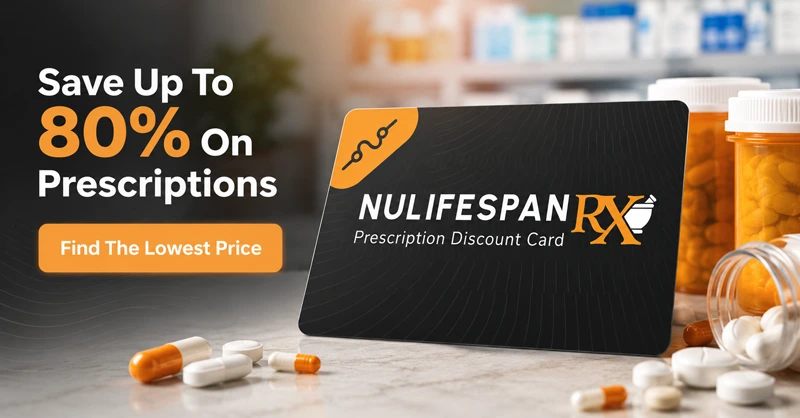
- Access your free NuLifeSpan Rx discount card digitally, or download and print it.
- Present the card when you pick up the eligible prescription.
- Pay the discounted cash price if it is your preferred payment option for that fill.
Because testosterone products vary in formulation, strength, and quantity, searching the exact prescription rather than assuming a fixed discount gives the most accurate comparison price.
Important Limitations
- NuLifeSpan Rx is a prescription discount program. It is not insurance.
- Savings vary by medication, strength, quantity, and pharmacy, so no fixed percentage applies to every testosterone prescription.
- The card does not reduce the cost of the testosterone blood test, the physician consultation, or an office’s charge for administering an injection.
- The card cannot be combined with insurance for the same prescription transaction.
- Discount-card purchases do not count toward any insurance plan’s deductible or out-of-pocket maximum.
- This article is educational and does not diagnose Low T or recommend any dose. Testing and treatment decisions should be made with a licensed healthcare provider.
Conclusion
Low testosterone treatment cost without insurance is really several costs bundled together: the visit, the testing, and the medication. Only the prescription medication portion is something a discount card can help with, and even that varies by formulation, strength, and pharmacy. The most reliable way to manage the expense is to get a written prescription, ask about generic options, and search the exact medication using the NuLifeSpan Rx price search before you fill it.
Frequently Asked Questions
What is the average cost of testosterone treatment without insurance?
There is no single accurate average, because formulation, strength, quantity, and pharmacy all change the price. The office visit, blood testing, and prescription medication are billed separately, so the most reliable approach is to search the exact prescription at nearby pharmacies once you have a written prescription in hand.
Does a prescription discount card cover the testosterone blood test?
No. A prescription discount card, including NuLifeSpan Rx, applies only to eligible prescription medications filled at participating pharmacies. It does not reduce the cost of laboratory testing, the physician consultation, or any office-administration fee.
Is generic testosterone available, and is it cheaper?
Generic testosterone products are typically available for several FDA-approved formulations and are usually less expensive than brand-name versions. Ask your prescriber whether an appropriate generic exists for the product they are prescribing.
Can I use NuLifeSpan Rx if my testosterone injection is given at a clinic?
NuLifeSpan Rx applies to prescriptions filled at a participating retail pharmacy. It does not apply to an injection that is administered and billed directly by a medical practice, since that is a facility or procedure charge rather than a pharmacy prescription.
How do I find the lowest price for my testosterone prescription?
Once your provider writes a prescription with the specific product, strength, and quantity, you can search it using the NuLifeSpan Rx pricing tool to compare prices at participating pharmacies near you before you fill it.
Does low testosterone always require treatment?
Not necessarily. According to MedlinePlus, testosterone therapy is not recommended for men without symptoms and normal levels, and unnecessary treatment may carry risks such as an increased risk of prostate cancer. A healthcare provider can help determine whether testing and treatment are appropriate.
How is low testosterone diagnosed?
Diagnosis is based on a blood test measuring total testosterone, ideally drawn between 7 a.m. and 10 a.m. when levels are typically highest. A second sample is often needed to confirm a low result before a provider considers treatment.
Why does testosterone therapy require ongoing monitoring?
A prescriber may adjust the dose over time based on blood testosterone levels and how the patient responds, and monitoring also helps watch for side effects. This is why follow-up testing is a recurring cost, not a one-time expense, and why dose changes should always be directed by the prescriber.